Redux Architecture
Explore Redux architecture through live coding, learning its core concepts and practical implementation for efficient application state management.
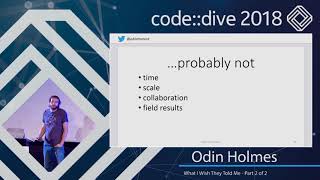
What I Wish They Told Me - Part 2 of 2
Insights on software engineering principles, code quality, and architecture from an electronic engineering perspective, offering a structured approach to understanding and improving programming practices.
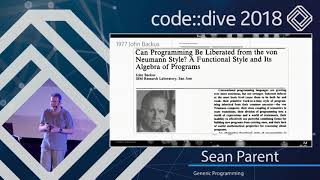
Generic Programming
Explore the origins, concepts, and impact of Generic Programming on software development, featuring insights from industry pioneers and its influence on C++ evolution.
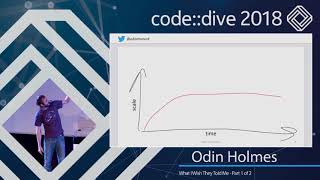
What I Wish They Told Me - Part 1 of 2
Insights from an electronic engineer on software development, covering work ethics, assembly, compiler behavior, code quality, project challenges, and practical advice for programmers.
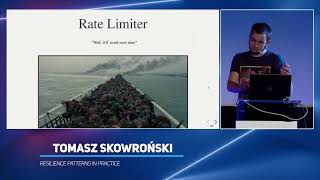
Resilience Patterns in Practice
Explore fault tolerance concepts for distributed systems, including bulkhead, rate limiter, circuit breaker, retry, and fallback patterns. Learn to build resilient software that stays responsive in the face of failure.
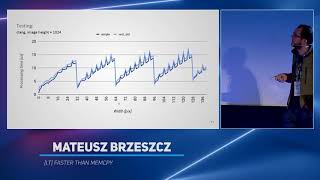
Faster than Memcpy
Explore optimization techniques for high-performance image processing, focusing on multi-threading and SIMD instructions for x86-64 architecture to achieve faster-than-memcpy speeds.
Hate Yourself? Keep Using Python 2
Discover why migrating from Python 2 to Python 3 is crucial, exploring benefits, challenges, and best practices for a smoother transition in software development.
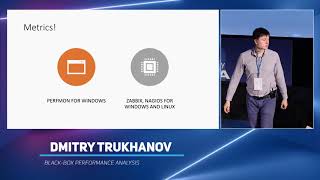
Black-box Performance Analysis
Explore end-user experience and performance analysis techniques for software design, focusing on blackbox methods, memory leaks, and practical strategies for system engineers.

What Do You Mean by "Cache Friendly"?
Explore cache-friendly data structures and algorithms for improved performance. Learn tools and techniques to analyze and optimize cache efficiency in modern CPUs.

Better Algorithm Intuition
Explore advanced algorithm intuition through competitive programming problems, enhancing C++ skills and problem-solving abilities for more efficient coding practices.
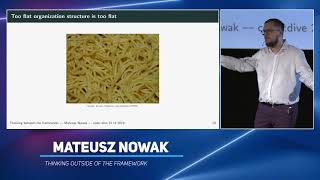
Thinking Outside of the Framework
Exploring unconventional approaches to software development, blending traditional and agile methodologies for improved team efficiency and project outcomes.
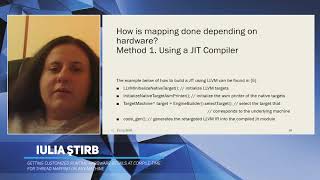
Getting Customized Runtime Hardware Details at Compile-Time for Thread Mapping on Any Machine
Explore compile-time techniques for obtaining hardware details crucial for static mapping algorithms, enhancing performance across diverse architectures. Learn from Iulia Ştirb's research on optimizing thread mapping and data locality.
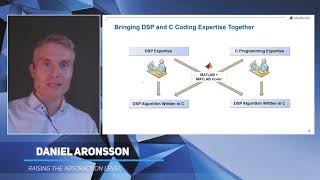
Raising the Abstraction Level
Explore how high-level MATLAB code can be converted to efficient C++ or CUDA, integrating hand-coded sources and using modern tools for bug detection and runtime error prevention.
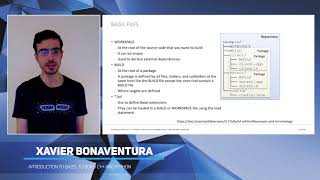
Introduction to Bazel to Build C++ and Python
Discover Bazel: a fast, reliable, multi-platform build tool for C++ and Python. Learn to define libraries, binaries, tests, combine languages, and set up toolchains in this comprehensive introduction.
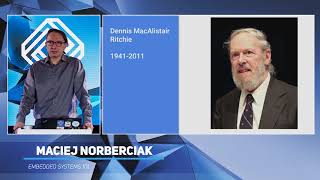
Embedded Systems 101
Comprehensive introduction to embedded systems, covering their importance, challenges, and development techniques. Ideal for computer science graduates seeking organized knowledge in this field.
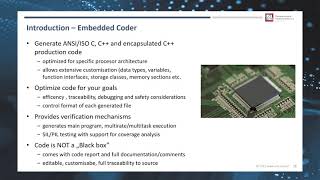
Automating Code Generation for Embedded Systems
Explore automated code generation for embedded systems, transforming high-level algorithms into optimized C/C++ code. Learn about enhancing efficiency, ensuring traceability, and meeting safety standards in software development.
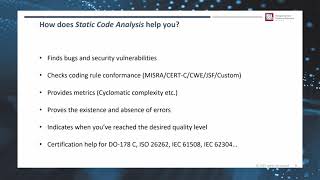
Implementing Innovations in a Safe and Secure Way
Explore automated static code analysis for software safety and security. Learn to prove absence of runtime errors using formal methods and tools like Polyspace for exhaustive testing.
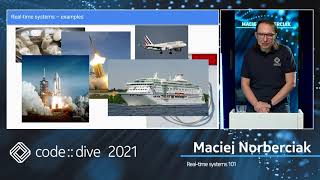
Real-Time Systems 101
Demystifying real-time systems: challenges, scheduling, and practical applications in computer science. Gain insights into this crucial aspect of modern computing from an experienced software architect.
Agile vs Waterfall - Are These Oil and Water?
Explore the benefits of combining agile and waterfall methodologies in software development, challenging polarized views and offering practical insights for effective project management.
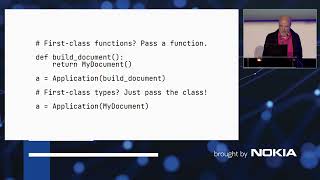
Classic Design Patterns - Where Are They Now
Explore the evolution and relevance of classic design patterns in modern programming, with insights on their applicability in dynamic languages like Python.

Static Code Analysis in Software Development Process
Explore static code analysis integration in DevOps workflows, code reviews, and verification pipelines to enhance software quality and streamline development processes.