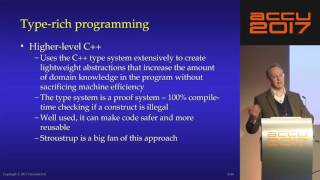
The C++ Type System Is Your Friend
Explore how C++ type system and templates can create efficient, safe, and reusable code through lightweight abstractions, type-rich APIs, and zero-overhead template techniques.
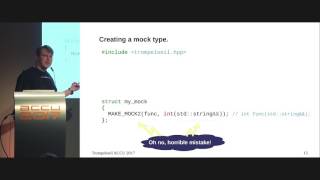
Using Trompeloeil, a Mocking Framework for Modern C++
Explore Trompeloeil, a C++14 mocking framework, through TDD. Learn basic to advanced usage, testing patterns, and techniques for effective unit testing in modern C++ development.
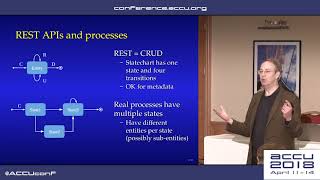
Read and Write Considered Harmful
Explores differences between reading and writing data across various topics, offering alternative approaches for improved system design and architecture.
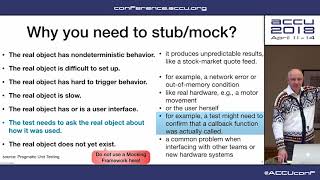
Mocking Frameworks Considered Harmful
Explore test automation challenges, mocking frameworks' drawbacks, and alternative approaches for effective unit testing in C++. Learn refactoring techniques and simpler mocking solutions.
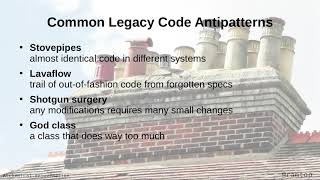
Alchemical Code Rejuvenation
Hands-on workshop exploring techniques to refactor legacy code efficiently, focusing on separating and disentangling small bits of code at a time without risky rewrites. Learn to apply TDD for sustainable design in big code bases.
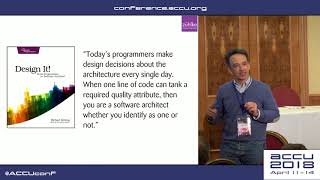
Creating an Incremental Architecture for Your System
Learn to create flexible software architecture incrementally, balancing upfront design with adaptability. Discover techniques for evolving system design as requirements change, focusing on key qualities and delaying non-critical decisions.
Class Template Argument Deduction in C++17
Comprehensive introduction to Class Template Argument Deduction in C++17, covering usage, benefits, pitfalls, and language rules for cleaner, shorter code in both standard library and custom classes.

Nothing Is Better Than Copy or Move
Explore C++ move semantics, copy elision, and temporary materialization through practical examples, focusing on efficient object creation and optimization techniques.

Procedural Programming - It’s Back? It Never Went Away
Explore procedural programming's enduring relevance, its influence on language design, and its relationship with functional and OO paradigms in modern software development.
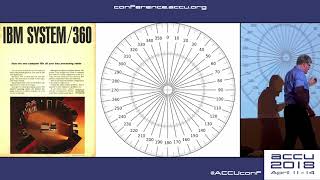
C++ Today - The Beast is Back
Explore C++'s resurgence, its historical significance, and why it remains the top choice for performance-driven software engineering in modern computing environments.
Swift Driven Development
Explore Swift-specific TDD techniques, leveraging language features and tooling to maximize productivity and code quality. Live demo showcases practical application.
Best Practices When Accessing Big Data or Any Other Data
Explore best practices for efficient data access on local and shared file systems, backed by real-world examples. Learn to improve performance, reliability, scalability, and portability in data-intensive applications.
Implementing Physical Units Library for C++
Explore challenges and solutions in designing a Physical Units Library for C++, leveraging C++20 features for improved usability, maintainability, and extensibility.

M-PIN Authentication in Vehicle Tracking
Explore Apache Milagro for secure IoT authentication in vehicle tracking. Learn about post-PKI internet, stronger security, and independence from third-party trust authorities through a C++14 fleet management example.

Better Embedded Library Interfaces with Modern C++
Explore modern C++ features to create safer, user-friendly embedded library interfaces without sacrificing efficiency. Learn to apply namespaces, enums, overloading, and templates in embedded systems.
Impact on Maintainability and Refactoring for Higher-Level Design Features
Explores strategies for refactoring C++ code at various abstraction levels, discussing the impact on maintainability and the challenges of evolving interfaces in complex systems.
Keynote - Technical Agile Coaching With the Samman Method
Explore the Samman Technical Coaching method for improving agile practices in development teams through ensemble programming and focused learning sessions.
Dynamic Polymorphism With Code Injection and Metaclasses
Explore advanced C++ techniques for dynamic polymorphism using code injection and metaclasses, offering alternatives to traditional virtual functions and inheritance for improved performance and flexibility.
Typical Type Typos
Explore common C++ type-related bugs and performance issues, including sliced objects, dangling pointers, and unnecessary temporaries. Learn to identify and fix these problems in your code.

How Technical Debt Can Kill Your Business - How F1 Teams Crack Technical Debt
Explore how Formula One teams manage technical debt under pressure, with real-life scenarios comparing business failures to F1 successes. Learn valuable lessons for improving software delivery and product development.
An Overview of Standard Ranges
Comprehensive exploration of C++20 ranges, showcasing their benefits in reducing verbosity, enhancing code correctness, and potentially improving performance. Includes practical examples and implementation insights.