
Bubble Sort - Theory and Optimised Code - Best-Worst Case Complexity
Comprehensive guide to Bubble Sort algorithm: theory, implementation, optimization, and complexity analysis. Includes code examples and practical use cases.

Binary Search Interview Questions - Google, Amazon, Microsoft
Solve binary search interview questions from top tech companies. Learn approaches, implementations, and dry runs for efficient problem-solving in coding interviews.

Time and Space Complexity - How to Avoid Time Limit Exceeded
Learn time and space complexity concepts to optimize code performance and avoid time limit exceeded errors. Includes practical examples and problem-solving techniques.
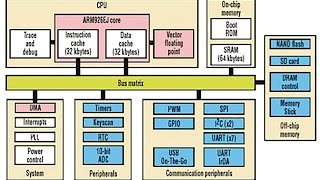
System Architecture
Explore system architecture fundamentals, from performance optimization to memory types, with insights on CPU design, I/O, and graphics in this comprehensive talk by Bil Herd.

Understanding Code You Didn't Write - Code Review
Learn effective techniques for understanding and reviewing unfamiliar code, including identifying entry points, self-documenting practices, and best practices for structuring classes and variables.
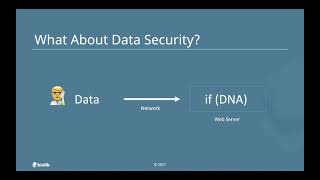
Getting Machine Learning Models into Use
Practical guide to deploying bioinformatics machine learning models, focusing on scalability, user-friendliness, data security, and maintainability for real-world impact.

PHP Framework Pro - Create a PHP Framework Step by Step
Build a custom PHP framework from scratch, covering key components like front controllers, routing, and dependency injection for a comprehensive understanding of framework architecture.
Advanced Cisco Network Design
Comprehensive guide to advanced Cisco network design, covering enterprise architecture, routing protocols, WAN technologies, data center integration, and network security. Ideal for IT professionals seeking to enhance their networking expertise.
Grass Rendering in OpenGL - Code Review
Explore advanced OpenGL techniques for efficient grass rendering, covering shader optimization, buffer management, and performance improvements in C++.
Database Scaling Patterns - How to Perform Step by Step Scaling
Learn step-by-step database scaling patterns, including query optimization, vertical and horizontal scaling, CQRS, replication, and data partitioning for improved performance and reliability.

Design Special Stack Problem - C++ Placement Course
Learn to implement a special stack with O(1) time complexity for getMin() operation, exploring efficient approaches and optimized code for this challenging data structure problem.

Towards Verified Deep Learning
Explore formal methods for verifying deep learning systems, focusing on robustness, semantic analysis, and applications in cyber-physical systems with UC Berkeley's Sanjit Seshia.
Applied Machine Learning for Startups - Arshak Navruzyan
Applied ML strategies for startups: practitioner training, team structures, guidelines, and cutting-edge techniques in NLP and deep learning.

Turing Lecture 2021 - Abstractions, Their Algorithms, and Their Compilers
Explore computational thinking through abstractions, algorithms, and compilers. Delve into compiler design, large dataset handling, and quantum computation, with insights from renowned computer scientists.

Deep Learning and Software Engineering - A Retrospective and Paths Forward
Explore deep learning's impact on software engineering, including code suggestion and program repair. Discover current research, challenges, and future directions in this emerging field.

The Four Pegs of Requirements Engineering with Bertrand Meyer
Explore the four pillars of requirements engineering with Bertrand Meyer, covering concepts, definitions, and practical guidelines to improve software project outcomes.
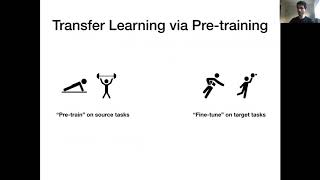
KDD2020 - Transfer Learning Joshi
Explore transfer learning via pre-training, focusing on BERT, span-based efficient pre-training, and ROBERTA. Discover advancements in contextualized representations and future directions in few-shot learning and non-parametric memories.
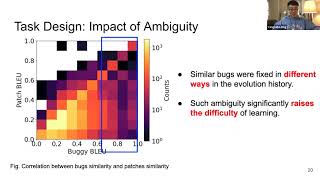
Patching as Translation: The Data and the Metaphor
Explore neural machine translation for code patching, examining data collection, task design, and architectural approaches to improve automated bug fixing in software development.

SIGCOMM 2020 - An Open Platform to Teach How the Internet Practically Works
Explore an innovative platform for teaching Internet functionality through hands-on experience, covering topology, connectivity, and practical networking concepts.

Tradeoffs in the Software Workflow
Explore tradeoffs in software workflows, balancing fast releases with best practices. Learn strategies for reducing work-in-progress, optimizing value delivery, and managing technical debt in modern software engineering.

Software Engineering at Google
Explore Google's software engineering principles: time, scale, and tradeoffs. Learn sustainable practices for maintaining large codebases and managing change in long-term projects.