
Go Without the Operating System
Explore Go programming without an operating system, delving into bare-metal development and runtime implementation for embedded systems and specialized environments.
CONTRIBUTING - The Talk
Explore the process of contributing to Go, from reporting bugs to advanced contributions, with insights on tools, guidelines, and best practices for effective collaboration.
Grow Your Users from an Unlikely Source - Windows Developers
Strategies for attracting Windows developers to Go, addressing cross-platform challenges, and fostering a more inclusive Go community for diverse operating systems.
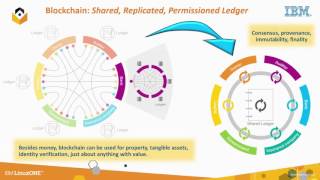
Porting Go to the IBM Z Architecture
Explore porting Go to IBM z Architecture, covering mainframe basics, blockchain applications, and the porting process. Gain insights into optimization techniques and cryptographic implementations.
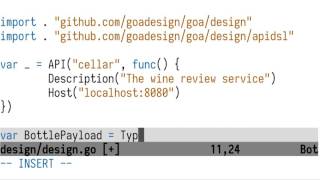
Goa - A New Approach to Microservice Development in Go
Explore goa, a novel framework for building microservices in Go. Learn its design-first approach, code generation capabilities, and how it streamlines API development and documentation.

Go Build Modes
Explore Go's diverse build modes beyond static binaries, including c-archive, c-shared, shared, pie, and plugin, with examples and OS-specific considerations.
Go Anti-Patterns
Explore common Go anti-patterns, their impact on code quality, and learn effective refactoring techniques to write more idiomatic and maintainable Go code.

Advanced Testing with Go
Explore advanced Go testing techniques for complex, distributed systems. Learn about subtests, fixtures, golden files, networking, subprocessing, and custom frameworks to ensure robust, reliable software.
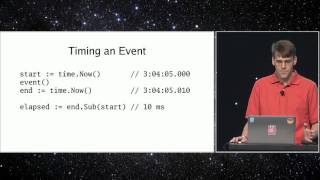
The Future of Go
Explore the future of Go programming language, discussing potential changes, community involvement, and addressing key challenges in language evolution.
Go Says WAT
Explore Go's quirky behaviors and hidden complexities, gaining insights into the language's inner workings and improving your understanding of its design principles.
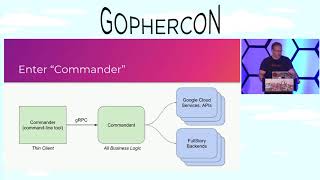
gRPC Reflection and grpcurl
Explore gRPC reflection and grpcurl for dynamic gRPC interactions. Learn about protocol buffer descriptors, introspection, and building a versatile command-line client without code generation.

Asynchronous Networking Patterns
Explore asynchronous networking patterns in Go, covering goroutines, resource management, and net.Conn implementations. Gain insights applicable to net/http, crypto/tls, and protocol development.
Machine Learning on Go Code
Explore machine learning applications for Go code, including embeddings, code completion, and bug prediction. Discover how ML can enhance developer productivity and code quality.
Becoming a Go Contributor
Discover how to become a Go contributor through small, consistent efforts. Learn practical steps to engage with the Go community and make meaningful contributions to the language.
Detecting Incompatible API Changes
Explore API compatibility in Go, learn to detect breaking changes, and discover techniques for future-proofing your code against API breakage.
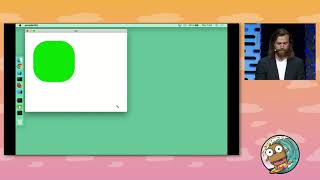
Portable, Immediate Mode GUI Programs for Mobile and Desktop in 100% Go
Explore Gio, a Go library for creating cross-platform GUI programs. Learn about its design, simplicity, portability, and performance advantages for Android, iOS, macOS, Linux, and Windows development.
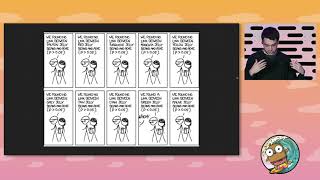
Optimizing Go Code Without a Blindfold
Explore techniques and tools for effective Go code optimization, covering benchmarks, performance analysis, and practical tips for reliable improvements.

Two Go Programs, Three Different Profiling Techniques
Explore three profiling techniques for Go programs to diagnose and improve performance, including CPU and memory profiling, execution tracing, and understanding Amdahl's Law.
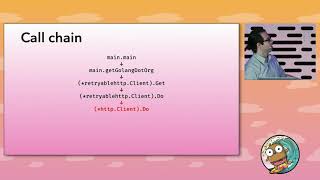
Tracking Inter-process Dependencies
Explore static analysis in Go to detect inter-process dependencies in service-oriented architectures, covering libraries, obstacles, and solutions for effective system tracking.

Go Linters - Myths and Best Practices
Demystifying Go linters: Learn their power, benefits, and implementation. Discover tips, tricks, and best practices for integrating linters into your Go projects effectively.

Go is Boring - And That's Fantastic
Explore how Go's simplicity and stability are its strengths, enabling developers to build maintainable, adaptable software that meets user needs effectively.