
Coding for Safety, Security, and Sustainability in C++ - Panel Discussion
Expert panel explores C++'s future, addressing safety, security, and sustainability challenges. Discusses language evolution, competition, and community needs for improved software development.
Requirements for C++ Successor Languages
Exploring challenges and considerations for transitioning large-scale C++ codebases to successor languages, emphasizing practical adoption strategies and ecosystem changes.
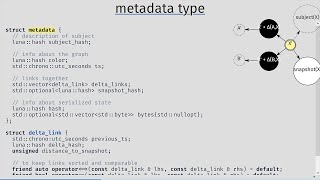
A Graph Based Update System in C++ - Lightning Updates
Explore modern C++ techniques for efficient data updates using graph-based systems and generic programming, presented by Hana Dusíková at CppNow 2023.
Future of C++ Programming with AI Bots at Hand
Explore the impact of AI on C++ development, examining challenges, opportunities, and future implications. Learn from AI-generated code mistakes and prepare for the evolving landscape of software creation.
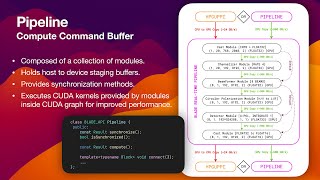
BLADE - The Allen Telescope Array CUDA-Accelerated Real-Time DSP Library
Explore GPU-accelerated real-time DSP for radio astronomy, focusing on BLADE software's innovative techniques for processing massive data streams from the Allen Telescope Array.

What is Low Latency C++? - Part 1
Explore low latency C++ across industries, examining challenges and techniques for efficient programming in time-critical systems like finance, audio, and gaming.

Nobody Can Program Correctly - A Practical and Interactive Guide to Debugging C++ Code
Practical guide to debugging C++ code, covering the entire process from crash to fix. Learn to reproduce, locate, understand, and prevent bugs using real-world examples and effective tools.
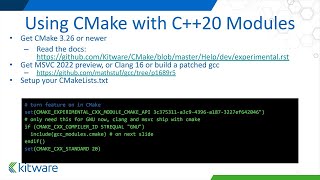
Import CMake - 2023 State of C++20 Modules in CMake
Comprehensive overview of C++20 modules support in CMake, covering implementation, API, challenges, and best practices for integrating modules into CMake projects.
Integer Type Selection in C++ - Safe, Secure and Correct Code
Explore integer type selection in C++ for safe and secure coding. Learn about signed vs. unsigned, exact width integers, and best practices to avoid common pitfalls and vulnerabilities.
Introducing a Memory-Safe Successor Language in Large C++ Code Bases
Explore memory-safe programming in large C++ codebases using Swift's interoperability, enabling incremental adoption without massive rewrites. Learn design aspects and lessons for a safer future.
Carbon Language Successor Strategy - From C++ Interop to Memory Safety
Explore Carbon Language's successor strategy, C++ interoperability, and memory safety features. Learn about its unique approach, implementation challenges, and potential impact on large-scale C++ codebases.
Developing With Doctests - Using Xdoctest As A Backend
Explore doctests for embedding examples in docstrings, learn about Xdoctest as an alternative to Python's builtin module, and discover how to enhance test-driven development with interactive code demos.
Comprehensible Comprehensions
Demystifying Python list comprehensions: learn when, why, and how to use them effectively. Explore set and dictionary comprehensions, generator expressions, and best practices for readability and appropriate usage.

Beautiful Python Refactoring
Discover techniques for elegant Python refactoring, transforming verbose code into concise, expressive solutions. Learn to identify anti-patterns and create more declarative implementations.
Hands-On Web App Test Automation
Learn to build reliable automated tests for web apps using Python, pytest, and Selenium. Hands-on project testing DuckDuckGo searches, covering browser switching and avoiding race conditions.

The Hidden Power of the Python Runtime
Explore Python's hidden runtime events, memory model, and frame objects. Learn to leverage runtime information for powerful debugging, tracing, and development tools.
It's Officially Legal so Let's Scrape the Web
Learn Python web scraping techniques to automatically collect data from websites, covering HTML basics to advanced pipeline methods for dataset compilation.
Goodbye Print, Hello Debugger
Discover powerful debugging techniques beyond print statements. Learn to use command-line and graphical debuggers to examine program state, modify variables, and efficiently troubleshoot complex code situations.
Charla: Detección automatizada de archivos maliciosos en el repositorio PyPI
Detección automatizada de malware en PyPI: vectores de ataque, sistema de detección integrado, tipos de chequeos implementados y cómo combatir amenazas en el repositorio.
Using Python to Detect Vulnerabilities in Binaries
Explore Python-based CVE Binary Tool for detecting software vulnerabilities. Learn its functionality, usage, and contribute to enhancing cybersecurity for all.
Write Less and Test More with Data Regression Testing
Explore data regression testing with pytest-regressions to enhance test completeness for complex data structures, simplifying testing of datasets, objects, and APIs.