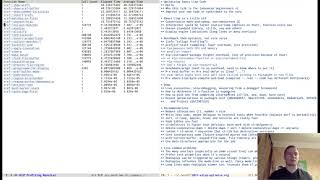
Optimizing Emacs Lisp Code
Explore techniques for optimizing Emacs Lisp code, including benchmarking, live evaluation, and byte-compilation. Learn to identify bottlenecks and choose efficient alternatives for improved performance.
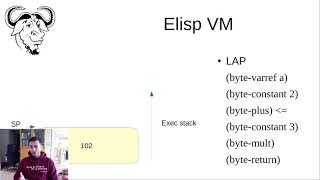
Emacs Lisp Native Compiler - Current Status and Future Developments
Explore the current status and future developments of Emacs Lisp native compiler, enhancing performance and functionality for Emacs users and developers.
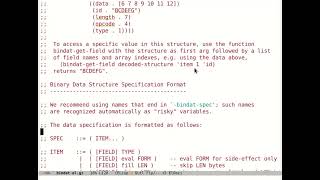
Turbo Bindat
Explore Emacs's BinDat library rewrite: improved efficiency, flexibility, and kitten-friendly binary data manipulation for niche packages like Websocket and EMMS.
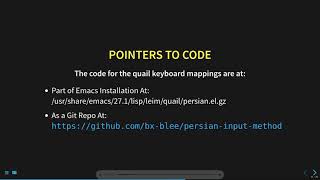
Perso-Arabic Input Methods and Making More Emacs Apps BIDI Aware
Demonstrating Emacs as a comprehensive environment for Perso-Arabic users, covering input methods, bidirectional support, and applications like email, calendars, and typesetting.

CLEDE - The Common Lisp Emacs Development Environment
Explore CLEDE, an innovative Common Lisp development environment for Emacs. Learn how it enhances productivity and streamlines Lisp programming workflows with powerful features and seamless integration.
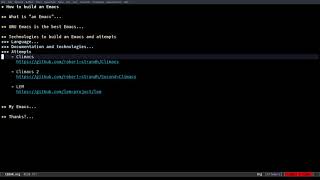
How to Build an Emacs
Discover the process of building Emacs from source code, exploring compilation techniques and customization options for this powerful text editor.

Emacs as Design Pattern Learning
Explore Emacs as a tool for managing complexity, implementing design patterns, and fostering a collaborative learning environment. Discover how its customizable nature models innovative approaches to knowledge and community.
Emacs Journalism - Or Everything's a Nail if You Hit It with Emacs
Explore how Emacs can revolutionize journalism workflows, from literate configuration to collaborative writing with Org Mode and Pandoc, enhancing productivity and streamlining content creation processes.

Writing and Organizing Literature Notes for Scientific Writing
Explore efficient literature note-taking and organization techniques for scientific writing using Emacs tools like org-roam, ivy-bibtex, and zetteldesk.el to enhance research productivity.
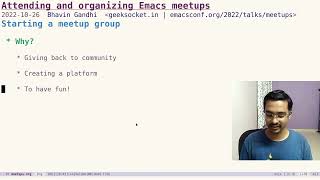
Attending and Organizing Emacs Meetups
Discover the benefits of Emacs meetups, learn how to find and join them, and get tips on organizing your own. Gain insights on making connections and enhancing your Emacs experience through community engagement.
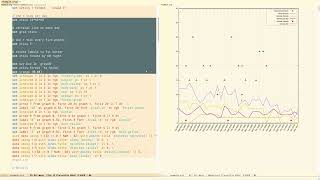
Health Data Journaling and Visualization with Org Mode and GNUplot
Learn to use Org Mode and GNUplot in Emacs for health data journaling and visualization. Explore techniques for daily tracking, data organization, and creating insightful charts to monitor personal health metrics.
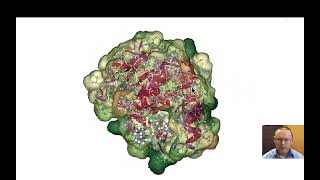
Edit Live Jupyter Notebook Cells with Emacs
Edit live Jupyter notebook cells with Emacs using GhostText and Atomic Chrome. Learn setup, supported browsers, and precautions. Includes demos for Python and Julia code editing.
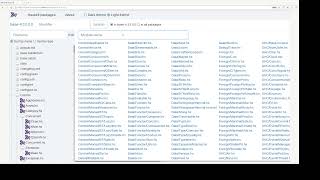
Haskell Code Exploration with Emacs
Explore Haskell code efficiently using Emacs with powerful tools like Haskell Code Explorer. Learn about monads, navigate declarations, find references, and leverage integrated help features for enhanced productivity.
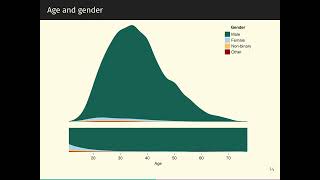
Results of the 2022 Emacs Survey
Comprehensive analysis of the 2022 Emacs User Survey, covering methodology, results, and future plans. Insights into user demographics, preferences, and Emacs usage patterns.
The Wheels on D-Bus
Explore D-Bus in Emacs: learn its model, interfaces, and native support. Discover Debase for object management and see demos of remote evaluation and Org capture.
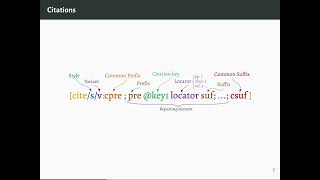
This Year in Org
Comprehensive overview of Org-mode's recent developments, including new features, improvements, and ecosystem growth, highlighting key advancements in functionality and user experience.

What I'd Like to See in Emacs
Richard Stallman discusses Emacs' future, emphasizing Lisp's importance, freedom concerns with JavaScript, and potential improvements in package naming, command interface, modularity, and text editing capabilities.
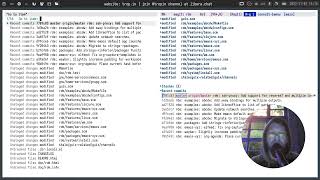
RDE Emacs Introduction
Explore rde, a functional Emacs configuration framework. Learn about its vanilla-flavored approach, feature management, and integration with Guix for reproducible setups.
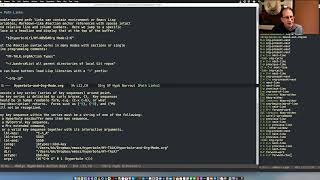
Powerful Productivity with Hyperbole and Org Mode
Discover how to boost productivity using Hyperbole and Org Mode in Emacs. Learn about smart keys, action buttons, and outliners to streamline your workflow and enhance efficiency.
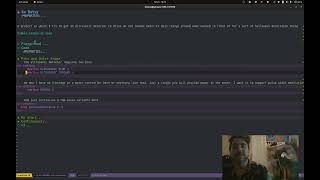
Org Workflows for Developers
Explore Org mode workflows for developers, including note-taking, Git integration, literate programming, and productivity enhancements in Emacs.
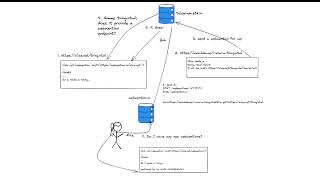
Putting Org Mode on the Indieweb
Explore integrating Org mode with Indieweb principles for decentralized website management, enhancing personal web presence through Webmentions and custom publishing frameworks.