
Software Development - Social, Environmental and Economic Sustainability
Explore how agile practices can reduce energy consumption and promote environmental, social, and economic sustainability in software development, with practical insights and assessment tools.
A Tour of C++ Recognised User Type Categories
Explore C++ user type categories, their advantages, and pitfalls. Learn about trivial, standard layout, implicit-lifetime, aggregate, literal, and structural types to write better code and avoid undefined behavior.
Test-Driven Development of C++ Embedded and System-Level Software
Learn TDD techniques for C++ embedded and system-level software, covering design principles, unit testing, dependency injection, and integration testing strategies to improve code quality and developer productivity.
Improving C++ Compilation Times - Tools & Techniques
Explore practical tools and techniques to enhance C++ compilation speed, including benchmarking, precompiled headers, unity builds, and reducing dependencies between components.
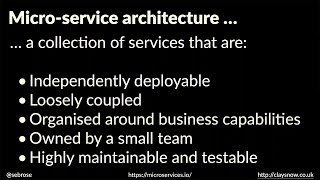
Micro-Service Delivery Without the Pitfalls
Explore strategies for effective micro-service architecture implementation, focusing on contract testing to avoid configuration issues and ensure seamless integration in distributed systems.

The Practices That Make Continuous Integration
Explore practices enabling Continuous Integration for fast workflow, increased feedback, stability, and throughput. Learn to gain benefits beyond tooling for better software delivery.
Applied C++20 Coroutines
Practical guide to implementing C++20 coroutines in real-world applications, focusing on web server development, performance evaluation, and future C++ updates.
C++23 Ranges - Functional Programming With New View Adaptors and Other Utilities
Explore C++23 Ranges' conceptual changes and practical utilities, including owning views, new algorithms, and adaptors like std::generator for implementing range adaptors and printing ranges.
Programming in Modern C with a Sneak Peek into C23
Explore modern C programming features, including compound literals, flexible array members, and upcoming C23 additions. Enhance code readability, safety, and performance in low-level programming.

Linux Debuginfo Formats - DWARF, ELF, dwo, dwp - What are They All?
Explore Linux debugging tools, debug info formats, and compiler options for effective troubleshooting. Learn about ELF, DWARF, split dwarf, and debuginfod to enhance your debugging experience.

Psychology of Software Development - We’re Only Human After All
Explore the human aspects of software development, understanding how psychology impacts team dynamics, problem-solving, and coding practices for improved collaboration and productivity.
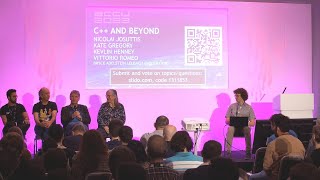
C++ And Beyond - Discussion
Expert panel discusses C++'s future, evolution, and challenges in the face of new programming languages, exploring topics like backward compatibility, standardization, and community-driven progress.
CMake - A Case Study
Explore advanced CMake techniques for integrating unsupported libraries and tools, focusing on embedded SQL in C++ applications with Oracle databases. Learn expert-level build setup strategies.

Spooky Action at a Distance - Revisiting C++ Observers
Explore C++ Observer pattern implementations, trade-offs, and practical applications in various scenarios. Learn from real-world examples to improve code structure and design.
Concurrency Approaches - Past, Present, and Future
Explore the evolution of concurrency approaches, analyzing their pros and cons, and discover a new model that promises safety, efficiency, structure, and ease of use in concurrent programming.
Comparing 'Classic C++' and 'Modern C++' Ways to Solve Programming Tasks
Explore the evolution of C++ programming techniques, comparing classic and modern approaches to solve common tasks, with insights on readability, efficiency, and best practices.

Binary File Format Engineering and Reverse Engineering
Explore binary file formats, from basics to advanced techniques. Learn engineering principles, reverse engineering methods, and practical applications in software development.
The Art of Addictive Software - The Digital Narcotic
Explore the ethics of addictive software design, its impact on users, and the responsibility of developers in creating digital products that can influence human behavior.

Fumbling Forward - Embracing Mistakes in Agile Teams
Transforming mistakes into opportunities for growth in Agile teams. Learn strategies to embrace failures, overcome self-doubt, and foster a positive mindset for successful software engineering.
How Bloomberg Uses Behavior-Driven Development to Test Distributed Systems
Explore Bloomberg's approach to testing distributed systems using Behavior-Driven Development and the 'behave' framework for enhanced end-to-end coverage and reliability.
Modified Condition - Decision Coverage in Gcc - An Introduction, Motivation, Intuition and Tooling
Explore Modified Condition/Decision Coverage: its importance in safety-critical software, benefits, and implementation using GCC, with insights for automotive and aviation industries.