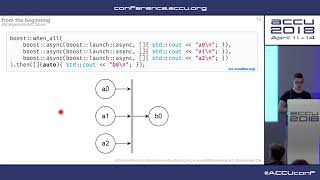
Zero-Allocation & No Type Erasure Futures
Explore composable futures without dynamic allocation and type erasure in C++. Learn design, implementation, and benchmarking of an experimental future library using C++17 features.
Software Development - Learning to Walk Again
Explore foundational aspects of software development through analogies, comparing mountainous paths to unit testing, scope creep, and CI pipelines. Emphasizes deliberate practice and improvement over speed.
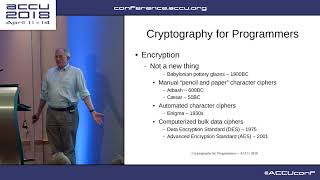
Cryptography for Programmers
Explore cryptographic techniques and their software applications in this programmer-focused introduction, covering key concepts, APIs, and security measures for today's hostile digital landscape.
Swift Driven Development
Explore Swift-specific TDD techniques, leveraging language features and tooling to maximize productivity and code quality. Live demo showcases practical application.

Emotional Code
Explore how emotions influence coding practices and their impact on software development. Learn to recognize emotional traces in code and strategies for creating more effective, neutral code.
CPU Optimized Data Structures - More Fun With Assembler
Explore CPU-optimized data structures for poker hand evaluation using assembler, comparing performance with C++ and leveraging SIMD instructions on x86-64 architecture.
A New Open Source Virtual File System - Running on Windows in User Mode
Explore user-mode virtual file systems on Windows, including SMB2/3 implementation, programmable filepath recipes, and innovative applications like just-in-time media generation and database embedding.
Allocator-Aware Software
Explore allocator-aware software benefits, costs, and implementation styles in C++. Learn about performance gains, integration challenges, and future language-based approaches for efficient memory management.
Fighting Git Workflows
Honest case study on transitioning from SVN to Git in a medium-sized team. Explores workflows, challenges, and DevOps considerations for CI/CD pipelines, offering practical insights and workarounds.

Navigating the Development and Evolution of a Library
Comprehensive guide on library development, covering code quality, testing, documentation, release management, and user engagement. Insights from Boost and libc++ experiences.

Higher-Order Functions and Function_Ref
Explore higher-order functions in C++, including lambda expressions and function_ref, to enhance code flexibility, safety, and reduce repetition. Learn practical applications and optimization techniques.
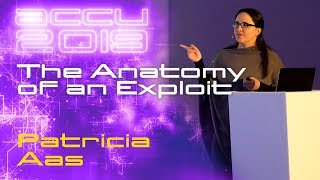
The Anatomy of an Exploit
Explore exploit development through C and x86_64 assembly, gaining insights into security vulnerabilities and the attacker's perspective for more secure coding practices.

Assume Worst Intent - Designing for the Abusive Ex
Explore designing apps with consideration for vulnerable users, focusing on potential misuse by stalkers or abusive individuals. Learn threat models and strategies to enhance user safety.
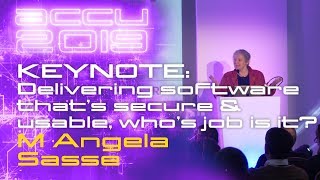
Delivering Software That Is Secure and Usable - Whose Job Is It?
Explore the intersection of security and usability in software development with insights from a leading expert in human-centered security and privacy solutions.

JSR-385 - Learning from the $125 Million Mars Climate Orbiter Mistake
Explore how JSR-385 prevents costly unit conversion errors in software development, inspired by NASA's Mars Climate Orbiter disaster. Learn to handle quantities safely and effectively in your code.
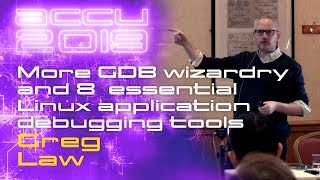
More GDB Wizardry and 8 Other Essential Linux Application Debugging Tools
Practical demonstration of advanced GDB features and essential Linux debugging tools, enhancing programming effectiveness through live demos of powerful techniques and utilities.
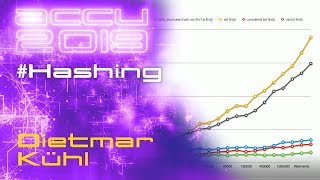
Hashing - Hashing Values
Comprehensive exploration of hashing techniques for efficient associative containers, covering hash functions, byte sequences, and considerations for user-defined types. Emphasizes best practices and common pitfalls.

Secure by Design - Security Principles for the Working Architect
Explore key security principles for system design, focusing on practical application in mainstream development. Learn to create securable systems without relying on specialized security engineering jargon.
The Dawn of a New Error
Explores modern C++ error handling approaches, focusing on the "Zero-overhead deterministic exceptions" proposal and related concepts, comparing with other languages like Swift.
Make Your Programs More Reliable with Fuzzing
Explore fuzzing techniques to enhance program reliability when handling external data. Learn about its history, current tools, and real-world applications in libc++ and Boost.

A Test of Strength - ACCU Online Meetup
Explores best practices for writing effective software tests, covering organization, naming, scope, and design for testability. Challenges common misconceptions and provides strategies to create robust, maintainable test suites.