Learnfun and Playfun - A Nintendo Automation System
Explore an innovative approach to automating NES gameplay using lexicographic ordering and time travel. Learn how a program deduces winning strategies by observing human players and searches for optimal button sequences.

CodeGen with Types, for Humans, by Humans
Explore a code generation engine built in Elm for creating readable, typesafe, and maintainable code, featuring automatic imports, formatting, and built-in type checking.

All About Regular Expressions
Explore the history, implementations, and best practices of regular expressions in programming, including their origins, language-specific variations, and strategies for efficient usage.
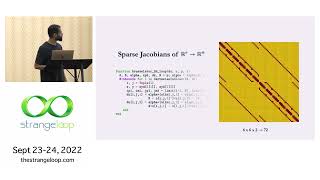
Symbolic Numeric Programming in Julia
Explore Symbolics.jl for computer-algebra metaprogramming in Julia, enabling powerful code transforms, optimization, and automatic differentiation with symbolic techniques.
A Distributed File System for Secure P2P Applications
Explore WebNative File System: a content-addressed, encrypted forest of blocks enabling secure, user-centric collaborative software without platform dependence. Learn its applications in decentralized, multiuser scenarios.

Python Performance Matters
Explore Python's unique performance challenges and discover Scalene, a cutting-edge profiler offering faster, more accurate, and actionable insights for optimizing CPU, GPU, and memory usage.

A Commerce-centric Approach to Queuing Fairly at High Throughput
Explore Shopify's evolution from edge-tier rate limiting to application-tier user queueing, enhancing fairness and UX during high-traffic events. Learn strategies for load testing and migrating throttling mechanisms.
The Secure Software Supply Chain
Explore tools and live demos for securing the software supply chain, addressing industry-wide attacks and shifting approaches to writing and shipping software.
Expert Software Developers' Approach to Error
Insights on how expert developers and high-performing teams leverage errors as opportunities for better software, based on decades of research with professionals in the industry.
Functional Distributed Systems Beyond Request - Response
Explore event-driven patterns for building composable, scalable, and resilient distributed systems, moving beyond traditional request/response models to simplify cloud-native architecture.
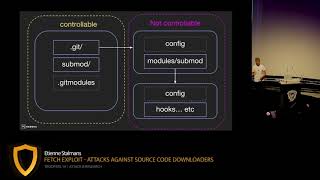
Fetch Exploit - Attacks Against Source Code Downloaders
Explore attacks against source code downloaders and learn techniques to exploit vulnerabilities in fetch mechanisms, enhancing your cybersecurity knowledge.
Intel ME - The Way of the Static Analysis
Explore static analysis techniques for Intel Management Engine, uncovering its inner workings and potential security implications through reverse engineering.

Demystifying COM
Explore the intricacies of Component Object Model (COM) technology, its security implications, and potential vulnerabilities in Windows systems with expert James Foreshaw.
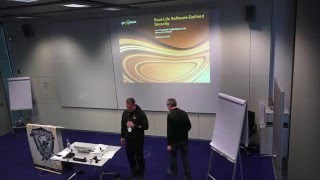
Real Life Software Defined Security
Explore practical implementations of software-defined security, examining real-world applications and strategies for enhancing cybersecurity through programmable, adaptable solutions.

Towards a LangSec Aware SDLC
Explore integrating Language-theoretic Security principles into the Software Development Life Cycle for enhanced system security and robustness.
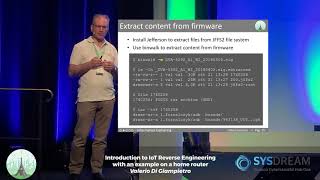
Introduction to IoT Reverse Engineering
Introduction to firmware reverse engineering for IoT devices, focusing on information gathering, emulation environment setup, and analysis techniques. Includes a practical example using a home router.
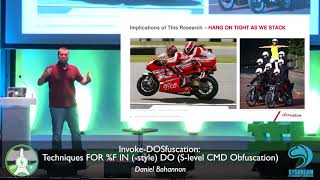
Invoke-DOSfuscation - Techniques for S-level CMD Obfuscation
Explore advanced CMD obfuscation techniques used by threat actors, including string manipulation and encoding methods. Learn about new obfuscation approaches and their detection implications for cybersecurity professionals.
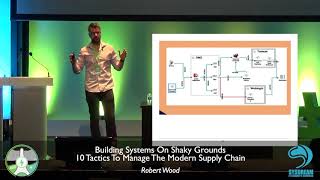
Building Systems on Shaky Grounds - 10 Tactics to Manage the Modern Supply Chain
Explore 10 tactics for managing modern software supply chains, balancing open-source benefits with security risks. Learn to assess vendors, conduct red team exercises, and implement effective incident response strategies.
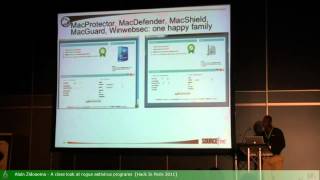
A Close Look at Rogue Antivirus Programs
Comprehensive analysis of rogue security software, examining characteristics, behavioral patterns, and potential benefits. Explores methods to differentiate from legitimate antivirus programs and investigates the financial aspects behind these products.
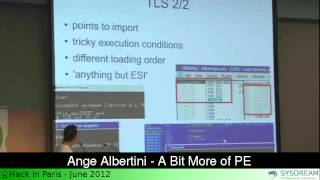
A Bit More of PE
Explore the intricacies and limits of the PE format, uncovering its peculiarities and pushing boundaries in this detailed examination of file structure weirdness.

iPhone Hacking - Fuzzing and Payloads
Explore advanced iPhone hacking techniques, focusing on fuzzing methodologies and payload creation for exploiting vulnerabilities in iOS devices.