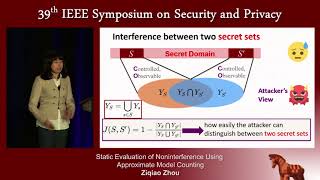
Static Evaluation of Noninterference Using Approximate Model Counting
Explore quantitative information flow and interference assessment in software security using approximate model counting, with applications to real-world scenarios like search engines and TCP.
Data-Oriented Programming - On the Expressiveness of Non-Control Data Attacks
Explores data-oriented programming technique for non-control data attacks, demonstrating Turing-completeness and constructing expressive exploits in x86 programs, bypassing ASLR and DEP defenses.
Verification State-Space Reduction Through Restricted Parsing Environments
Explore state-space reduction in verification through restricted parsing environments. Learn about Crema language and its application in simplifying input-handling software verification.
VUDDY - A Scalable Approach for Vulnerable Code Clone Discovery
Scalable approach for detecting vulnerable code clones in open-source software, enhancing security by identifying and managing potential vulnerabilities efficiently and accurately.
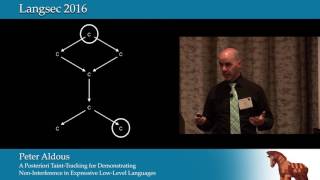
A Posteriori Taint-Tracking for Demonstrating Non-Interference in Expressive Low-Level Languages
Explore a novel approach to information-flow analysis in low-level languages, focusing on non-interference proofs, taint-tracking optimization, and performance improvements in security applications.
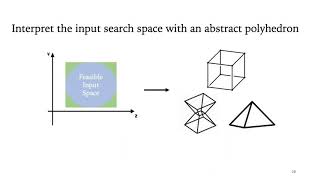
Pangolin - Incremental Hybrid Fuzzing with Polyhedral Path Abstraction
Explore incremental hybrid fuzzing techniques using polyhedral path abstraction to enhance efficiency in bug detection and input generation for software testing.
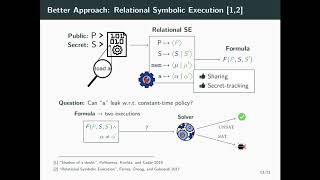
Efficient Relational Symbolic Execution for Constant-Time at Binary-Level
Efficient binary-level verification tool for constant-time programming, providing bug-finding and bounded-verification through relational symbolic execution and optimizations for information flow analysis.
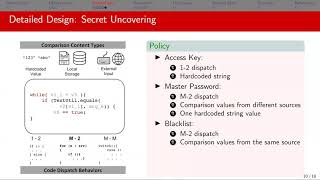
Automatic Uncovering of Hidden Behaviors from Input Validation in Mobile Apps
Uncovers hidden behaviors in mobile apps through input validation analysis, revealing backdoors and blacklists. Presents INPUTSCOPE tool for automatic detection of execution context and content in user input validation.
IJON: Exploring Deep State Spaces via Fuzzing
Explore advanced fuzzing techniques for deep state spaces, covering high-level mutation, feedback mechanisms, and practical applications in software testing and security.
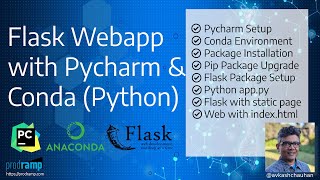
Develop Python App in PyCharm with Flask-Based Static Content in Conda Python 3.8 Runtime
Learn to develop a Flask-based static website using PyCharm and Conda, covering project setup, configuration, package installation, coding, debugging, and environment variable usage.
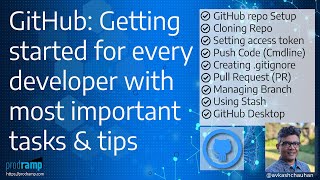
Hands-on GitHub for Every Developer with Most Important Tasks and Tips
Comprehensive GitHub tutorial covering essential tasks using command line and desktop app, from repo setup to pull requests and stash feature.
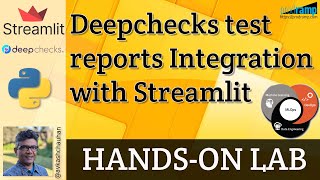
Create Streamlit Data Validation App With Deepchecks Test Suites and Pandas-Profiling Reports
Build a Streamlit app integrating Deepchecks test suites and pandas-profiling reports for data validation and analysis. Learn to create interactive data quality checks and visualizations.
Creating Python Gradio UI for Stable Diffusion Models - Part 2
Learn to create a Python Gradio UI for Stable Diffusion models, covering UI design, prompt validation, tab creation, and integration of various functionalities in this hands-on coding tutorial.
Your Step by Step Guide on Python Libraries Development
Comprehensive guide on advanced Python library development, covering class implementation, package creation, and PyPi upload using practical examples and step-by-step instructions.
How to Build Combined Interfaces and Dynamic UI for Python Application
Learn to create dynamic user interfaces for Python applications using Gradio, with step-by-step guidance on building tabbed interfaces and practical coding examples.
Data Processing Fundamentals - Create GUI for Data Application with Gradio
Learn to create a GUI for data applications using Gradio, covering combined interfaces, tabbed layouts, validation, and integrating filters for enhanced data processing and visualization.
Data Processing Fundamentals - Create GUI for Data Application with Gradio
Learn to create a dynamic GUI for data applications using Gradio, covering installation, input components, integration with data processing, and class-based implementation.
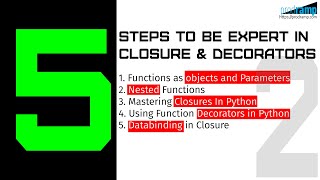
Gaining Expertise and Confidence With Python Closure and Decorators
Master Python closures and decorators in 5 steps: functions as objects, nested functions, closures, decorators, and data-binding. Gain expertise and confidence in these advanced concepts.
FastAPI - Live Implementation and Debugging Python Code with PyCharm and VS Code IDE
Live implementation of FastAPI, covering setup, debugging, and integration with PyCharm and VS Code. Learn to create a basic FastAPI application with templates and API endpoints.

Learn Clojure Programming Language Together - Clojure Tutorial
Step-by-step introduction to Clojure, covering installation, setup, and basic programming concepts. Explores local and cloud-based development environments, with AI-assisted learning.
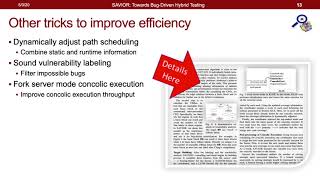
SAVIOR: Towards Bug-Driven Hybrid Testing
Explore bug-driven hybrid testing with SAVIOR, a novel approach combining compile-time analysis and runtime instrumentation to enhance bug detection efficiency in software development.