A Case For Outside-In Design
Explore outside-in design as an alternative approach to software architecture, focusing on user needs and business outcomes to drive domain modeling and system design.
Cloud Chaos and Microservices Mayhem
Explore cloud and microservices challenges, learn new management models, and discover how contract testing can enhance robustness and independent deployment in microservices architecture.
Legacy Systems and Digital Transformations
Explore legacy systems' impact on digital transformations, learn recognition techniques, common patterns, and strategies for breaking down complex systems to ensure successful modernization.

I Made Everything Loosely Coupled - Does My App Fall Apart?
Explore nuances of integrated systems, including loose coupling, messages vs. events, and cloud automation's impact on integration. Learn to tackle challenges in modern, interconnected cloud applications.
Intro to Functional Programming in Rust
Explore functional programming in Rust, covering algebraic data types, pattern matching, ownership, higher-order functions, and advanced topics. Compare Rust's strengths and weaknesses as a functional language.
Why You Should Look Into Low Code
Explore the potential of low-code development to boost productivity, enable citizen developers, and meet growing application demands. Learn its benefits, limitations, and future prospects in software engineering.
The Lost Art of Software Design
Rediscovering software design's importance: balancing upfront planning with agile practices to create efficient, maintainable systems and reduce costly rework through meaningful architecture discussions.
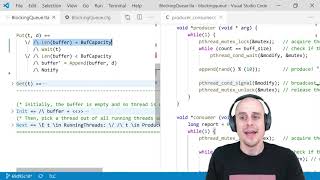
Weeks of Debugging Can Save You Hours of TLA+
Explore TLA+ for reliable system design through a hands-on approach, solving a subtle concurrency issue to demonstrate its power in preventing critical failures and reducing debugging time.
Computer Security - Textbook View
Explore computer security challenges, from software design to system management, with insights on trust issues, complexity, and evolving threats in the digital landscape.
Clean Architecture with ASP.NET Core 3.0
Practical guidance on building web applications using Clean Architecture with ASP.NET Core 3.0, covering project organization, design strategies, and maintenance best practices.
The Art of Unit Testing
Dive into unit testing with experts Roy Osherove and Dave Farley, exploring key concepts, best practices, and strategies for effective test-driven development in software projects.
Life After Business Objects - Confessions of an OOP Veteran
Exploring the transition from OOP to functional programming in F#, highlighting advantages in development speed, operational stability, and handling large-scale data processing with improved performance and scalability.
Is Software Engineering Still an Oxymoron?
Alan Kay explores the evolution of software engineering, discussing progress, pitfalls, and the future of the field. He shares insights on effective development approaches and the importance of understanding human factors in technology.
Life After Business Objects - Confessions of an OOP Veteran
Explore the transition from OOP to functional programming, discussing advantages in performance, scalability, and development speed. Learn about F# features and their impact on software design and implementation.
Growing Your Personal Design Heuristics
Explore personal design heuristics to enhance software design skills. Learn to cultivate, refine, and consciously apply heuristics for better problem-solving and continuous improvement in your design practice.

How to Get Started With Process Automation
Explore process automation best practices and anti-patterns with experts Bernd Rücker and Richard Seroter. Learn how automation can benefit your company and gain insights from their practical experience.

Practical - A.K.A. Actually Useful - Architecture
Discover 10 practical recommendations for effective software architecture, focusing on team setup, organizational structure, decision-making, and iterative improvement to create malleable, efficient systems.
Software Fails - Design by Contract, Not Coincidence, Next Times
Explore design by contract principles to create robust software, reducing failures and assumptions. Learn to define clear expectations and behaviors in your code for improved reliability.
Data-Oriented Programming
Explore data-oriented programming: a paradigm that simplifies software design using generic immutable structures, streamlining state management and enhancing code clarity across multiple languages.

Intentional Code - Minimalism in a World of Dogmatic Design
Explore intentional code design, challenging dogmatic patterns for simpler, more meaningful software. Learn to prioritize human-centric development and radically simplify your approach.
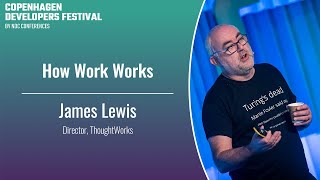
How Work Works
Explore software engineering defaults, value flow, and team structures through Information Theory and Complexity Science. Gain insights to improve development practices and reduce batch sizes.