The Coordination of Centralised and Distributed Generation - René Aid, Université Paris-Dauphine PSL
Explores mean-field games for optimizing energy production and storage, focusing on coordinating centralized and distributed generation systems in the energy industry.
Some Aspects of the Mean-Field Stochastic Target Problem - Boualem Djehiche, KTH, Stockholm
Explores mean-field stochastic target problems, focusing on theoretical aspects and potential applications in high-dimensional distributed optimization for energy and environmental challenges.
Turnpike Theory for Mean-Field Games - Connecting Stationary and Dynamic Solutions
Explores turnpike theory in mean-field games, connecting stationary and dynamic solutions. Part of a workshop on MFG applications in energy and environmental optimization.
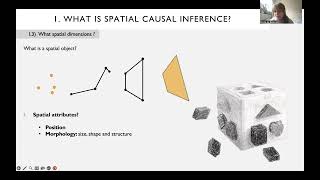
Spatial Causal Inference and Neighborhood Effects
Explore spatial causal inference, interference problems from social interactions, and neighborhood effects in multilevel analyses. Examine agent-based models to question area-level effects and their causal interpretations.
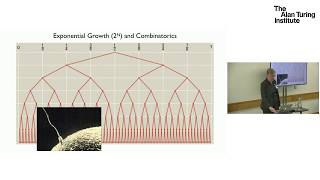
There Is No AI Ethics - The Human Origins of Machine Prejudice - Dr Joanna Bryson
Exploring the human roots of machine bias and challenging the concept of AI ethics. Dr. Bryson discusses the societal implications of AI and the importance of interdisciplinary approaches in addressing ethical concerns.
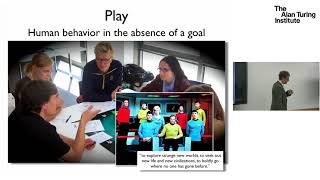
Operationalizing Creativity - The Data Science of Innovation from Elites to Vox Pop - Dr Simon Dedeo
Explore data-driven approaches to creativity and innovation, from elite to popular levels. Learn about operationalizing creativity, quantifying development, and analyzing innovation dynamics.
Mobile Crowdsourcing and Socio-Physical Analytics for Smart City Services
Explore urban sensing technologies combining human-centric and infrastructural data for proactive understanding of city conditions, enabling fine-grained event localization and neighborhood characterization.

Towards Human Behavior Modelling from Mobile Data - Dr. Nuria Oliver
Exploring human behavior modeling through mobile data, covering topics like personality inference, financial responsibility, boredom detection, and crime prediction using advanced data analysis techniques.
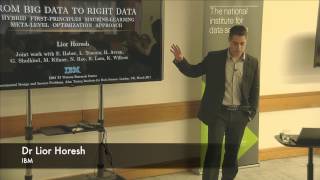
From Big Data to Right Data - Dr. Lior Horesh, IBM
Explore a hybrid approach combining first-principles and machine learning for meta-level optimization, shifting focus from big data to right data in experimental design and inverse problems.
Mathematical Models and Planning of Urban Infrastructure Networks
Explore mathematical models for urban infrastructure planning, focusing on network analysis and optimization techniques to enhance city development and resource allocation.
Social Data Science Masterclass - Dr Suzy Moat and Dr Tobias Preis, University of Warwick
Explore how online data from sources like Google and Twitter can measure and predict real-world human behavior, with insights from leading researchers in behavioral science and data analysis.
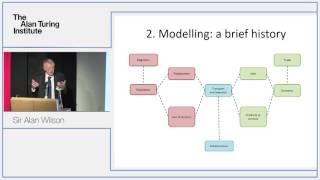
Turing Lecture - Smarter Cities - Sir Alan Wilson, Turing CEO
Explore urban evolution, innovative techniques, and data-driven approaches shaping smarter cities, with insights on modeling, sustainability, and the future of urban living.
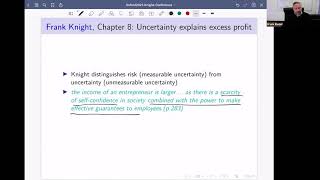
Frank Knight, the Economics of Uncertainty, and 21st Century Finance
Explore Frank Knight's influential work on risk and uncertainty in economics, its impact on probability theory, and its relevance to modern finance and economic challenges.
Data as an Instrument of Coloniality
Exploring how data perpetuates colonial practices, from historical mapping to modern algorithms. Examines digital colonialism's impact on racial injustice, privacy, and democracy, drawing insights from anti-colonial movements.
Challenging Power in Data Science
Explore ethical data practices through a feminist lens, examining power dynamics, classification systems, and invisible labor to create more equitable data science approaches.
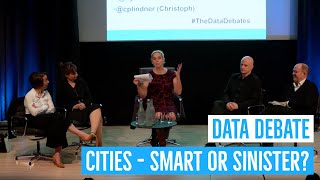
Data Debate - Cities – Smart or Sinister?
Exploring the impact of AI on urban development, this debate examines the benefits and risks of smart cities, addressing privacy concerns, ethical implications, and societal consequences.
A Full Classification of Finite Adversarial Partial Monitoring - Tor Lattimore
Explore finite adversarial partial monitoring, its classification, and implications for multi-armed bandit problems and full-information games. Learn about regret dependence on game structure.
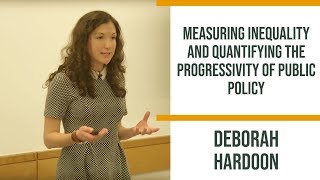
Measuring Inequality and Quantifying the Progressivity of Public Policy - Deborah Hardoon, Oxfam
Explore global wealth distribution, economic inequality metrics, and government policies' impact on inequality. Learn about data quality and coverage in assessing policy progressivity across 150+ countries.

Basics of Urban Modelling - Professor Sir Alan Wilson, CEO - The Alan Turing Institute
Explore urban systems modeling with entropy-maximizing flow models and Lotka-Volterra dynamics. Learn to analyze cities as complex nonlinear systems and apply these tools to various fields.
Community Leaders Tell All - Building Inclusive and Sustainable Open Source Communities
Insights from community leaders on building inclusive, sustainable open source communities. Learn strategies for growth, engagement, and measuring impact in tech projects.

Improve Vulnerability Management with OCI Artifacts - It Is That Easy
Learn to enhance vulnerability management using OCI artifacts. Discover how to efficiently utilize SBOMs, signed attestations, and open-source tools for improved supply chain security at scale.