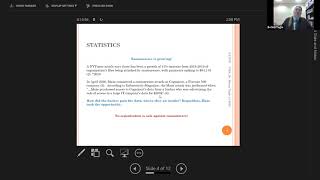
Ransomware First Response
Learn essential strategies for responding to ransomware attacks, including incident response techniques, backup protocols, and security policy implementation.

Cyberworld Meets Cognitive Neuroscience and Public Policy
Explore the intersection of cybersecurity, neuroscience, and policy, examining challenges in information warfare, cyber defense, and collaborative governance across local to international levels.
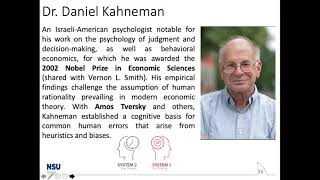
The Human Factor in Cybersecurity
Explore the critical role of human behavior in cybersecurity, focusing on business email compromise, cognitive biases, and strategies to enhance organizational resilience against cyber threats.
Towards an Assessment of Audio, Visual, and Haptic Alerts and Warnings
Explore human-centric cybersecurity, focusing on behavioral economics, email compromise detection, and cyber situational awareness to enhance alert systems and reduce human error.
Public Sector Critical Infrastructure
Explore critical infrastructure security challenges in local government, including technology-enabled services, unique threats, and a policy-based control to reduce vulnerabilities by 40%.
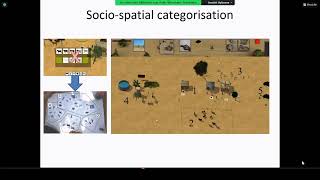
Heike Winschiers Theophilus - Bridging Worlds: Indigenous Knowledge in the Digital World - Talk
Explore the integration of Indigenous knowledge in digital spaces, addressing challenges and proposing innovative solutions for inclusive representation and preservation.

How to Use Broadcasting in Laravel - What Is Broadcasting in Laravel
Learn to implement real-time event sharing between server-side Laravel and client-side JavaScript using broadcasting, with step-by-step guidance on setup, configuration, and practical implementation.
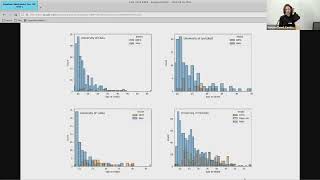
Digital Education for All - Multi-University Study of Increasing Competent Student Admissions at Scale
Explore strategies for increasing competent student admissions in digital education through a multi-university study, focusing on open university intake and demographic factors.

Into the Garden Virtual Field Trip - Unlocking the Mysteries of Easter Island - Part II
Uncover Easter Island's mysteries through virtual exploration, examining ancient statues, prehistoric living conditions, and Polynesian traditions. Gain insights into archaeological evidence and modern interpretations.
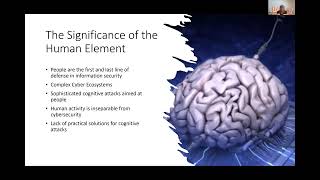
Hacking the Human - Exploring the Human Factor
Explore the human element in cybersecurity, focusing on cognitive hacking techniques, human limitations, and strategies to enhance human performance in defending against cyber threats.
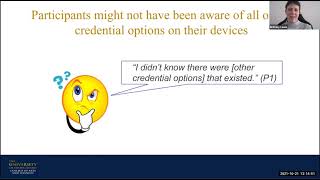
Understanding How People with Upper Extremity Impairments Authenticate on Their Personal Devices
Explore authentication challenges for people with upper extremity impairments, examining existing processes, barriers, and potential solutions for improved device accessibility.
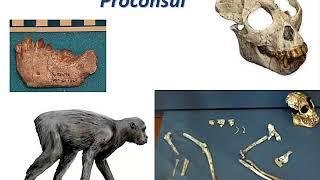
Fossil Monkeys and Apes from the East African Rift Valley
Explore early primate evolution in East Africa through fossil discoveries, focusing on monkeys and apes predating Lucy. Learn about ancient landscapes and their impact on primate diversity.

The Role of Beringia in the Global Dispersal of Modern Humans
Explore the role of Beringia in human migration, examining archaeological data, genetics, and climate to understand how this region influenced the global dispersal of modern humans.
Neural Sense Relations and Consciousness - A Diagrammatic Approach
Explores neural sense relations and consciousness through inversion symmetry, proposing a topological model linking subject-object domains in brain function, with implications for understanding subjective experience.
Expected Float Entropy Minimisation: A Relationship Content Theory of Consciousness
Explores a mathematical theory of consciousness called Expected Float Entropy minimization, proposing how the brain defines conscious content through relationships and information processing.
Generalised Integrated Information Theories
Exploring generalizations of Integrated Information Theory to address technical issues and extend applicability beyond classical systems, using category theory and process theories.
A Double-Categorical Framework for Constructive Cognitive Architectures
Explore a mathematical framework for cognitive architectures using category theory, examining rewriting, virtual equipments, and profunctor optics to formalize complex cognitive mechanisms.

Making Up Our Minds
Explore how minds and thoughts are constructed through cognitive processes, examining the nature of consciousness, memory, and perception using interdisciplinary models and mathematical frameworks.
An Integrated Information Decomposition Account of Emergent Mental Phenomena
Explore the intersection of Integrated Information Theory and Partial Information Decomposition to understand consciousness and causal emergence, offering new perspectives on mental phenomena and selfhood.
How Morphological Computation Shapes Integrated Information in Embodied Agents
Exploring the relationship between morphological computation and integrated information in embodied agents, highlighting their antagonistic nature and impact on brain-body-environment interactions.
Sketches of a Mathematical Theory of Qualia
Exploración matemática de los qualia: definición, estructura y relación con la teoría cuántica. Propone un modelo de conciencia basado en principios abstractos del comportamiento de dispositivos que detectan qualia.