Better Scientific Modeling for Ecological and Social Justice
Exploring how mathematical models can encode blind spots and create externalities, emphasizing the need for rigorous empiricism to achieve ecological and social justice through better scientific modeling.
Social and Economic Networks - Understanding Power, Beliefs, and Behaviors
Explore how social networks shape power, beliefs, and behaviors, and their impact on information spread, economic resilience, and societal structures with Stanford economist Matthew Jackson.
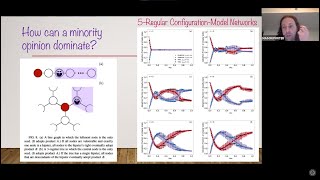
Opinion Dynamics and Spreading Models on Social Networks
Explore how social networks influence opinion dynamics, social contagions, and polarization through mathematical models and real-world applications in online communities.

Free of Scale - Structural Balance
Explore the concept of structural balance in complex systems and its implications for understanding social networks, organizational dynamics, and decision-making processes.
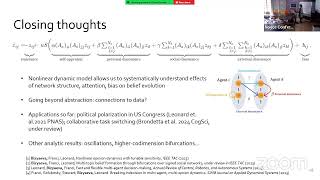
Nonlinear Dynamics of Beliefs over Social Networks
Explore how social networks, internal biases, and belief systems shape group dynamics and decision-making in complex social environments.
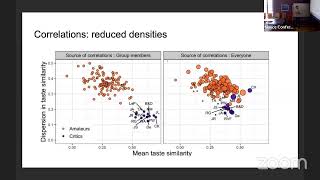
A Recommender Network Perspective on the Informational Value of Critics and Crowds
Explore the informational value of critics and crowds through a recommender network lens, offering insights into decision-making and information processing in complex systems.

Are Some Cities More Punishing for Low-Income Families? - Urban Inequality and Poverty
Exploring urban inequality: How city differences impact poverty experiences, safety nets, and opportunities for low-income families in high-poverty neighborhoods across the United States.

Machine Learning on Dynamic Graphs - Temporal Graph Networks
Explore Temporal Graph Networks for dynamic graph analysis, unlocking insights in evolving systems like social networks and financial transactions.
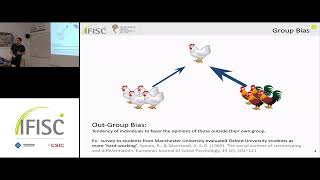
Opinion Dynamics in Social Networks under Bias - A Study Based on the DeGroot Model
Explore opinion dynamics in social networks, analyzing bias effects using the DeGroot model. Gain insights into complex systems and network influence on collective beliefs.
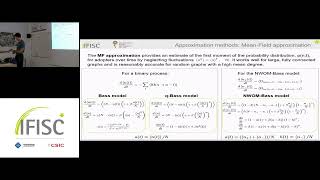
Innovation Diffusion Models
Explore innovation diffusion models and their applications in understanding how new ideas and technologies spread through society.

Social Media Management - Best Social Media Management Tools
Explore social media management essentials, top networks, and tools. Learn strategies to leverage social platforms for business growth and audience engagement.

How Sensor and Social Networks Enable Adaptive Water Management
Explore adaptive water management through sensor and social networks, focusing on improved outcomes in irrigation communities and government cooperation.
Computer Vision Meets Social Networks
Explore the intersection of computer vision and social networks, covering low-light enhancement, pose estimation, video attractiveness, classification, captioning, and natural language localization.

Ein Rätesystem fürs Fediverse? - Demokratische Entscheidungsfindung in Sozialen Netzwerken
Demokratische Entscheidungsfindung im Fediverse: Möglichkeiten und Herausforderungen eines Rätesystems für dezentrale soziale Netzwerke. Philosophische Betrachtung digitaler Governance-Modelle.

NFT Phigitalizes Your Social Network - NFT 虛實整合你的社交圈
NFT 虛實整合社交圈:探討去中心化如何創造公平競爭環境,讓每個人都有機會在 NFT 世界中脫穎而出,實現烏托邦式的美好願景。

Rede é Afetos e Conexões - Gerando Bem Comum Através de Conexões Sociais
Conexões e afetos como base para redes sociais locais que promovem o bem comum. Everardo de Aguiar compartilha sua visão sobre o poder das relações humanas na transformação social e políticas públicas.

Some Considerations About Social Dynamics Models
Découvrez les modèles de dynamique sociale à travers le parcours d'une mathématicienne spécialiste des équations aux dérivées partielles. Explorez les systèmes de particules en interaction et les systèmes sur graphes.

如何建立熱情的社區 - How to Build a Passionate Community?
探索創業家Remo Giuffré近四十年的經驗,學習如何建立充滿熱情的社區。從成功到失敗,分享寶貴見解,激發創新思維,啟發持久的社區建設。

Multiplex Networks: Stability and Opinion Dynamics - Dynamic Games and Applications Seminar
Explore multiplex networks' stability and opinion dynamics. Analyze player interactions across layers, cost reduction strategies, and opinion distribution in two-layer networks using a general concealed voter model.
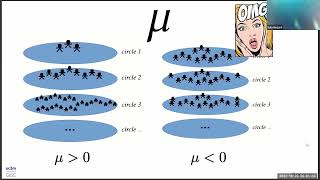
Aquellos Maravillosos Años - Los Círculos de Dunbar y las Amistades
Explora los círculos de Dunbar y la dinámica de las amistades a lo largo de la vida, analizando cómo evolucionan nuestras relaciones sociales.

Behavioral Economic Insights in Early Childhood Interventions
Explore behavioral economics insights to enhance early childhood interventions, focusing on choice structure, social influence, and social norms for optimizing program impact and parent engagement.