
FixMatch - Simplifying Semi-Supervised Learning with Consistency and Confidence
Explore FixMatch, a powerful semi-supervised learning approach combining consistency regularization and pseudo-labeling for improved model performance with limited labeled data.
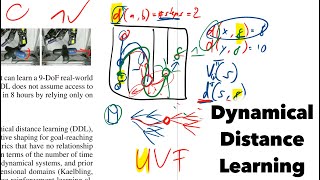
Dynamical Distance Learning for Semi-Supervised and Unsupervised Skill Discovery
Explore dynamical distance learning for reinforcement agents, enhancing policy learning through state distance estimation. Discover applications in semi-supervised and unsupervised skill acquisition.

Low Resource Machine Translation
Explore machine translation techniques for low-resource languages, covering evaluation methods, supervised and unsupervised learning approaches, and domain adaptation. Gain insights into Nepali-English translation case study.
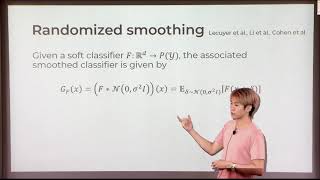
Provably Robust Deep Learning via Adversarially Trained Smoothed Classifiers
Explore adversarially trained smoothed classifiers for robust deep learning, covering theory, implementation, and experimental results in this technical talk.
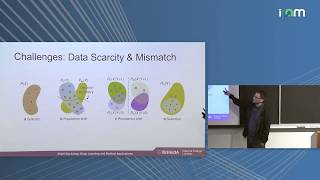
Causality Matters in Medical Imaging
Explore causal reasoning in medical imaging, addressing data scarcity and mismatch challenges. Gain insights on predictive models, semi-supervision limitations, and strategies for successful machine learning implementation.
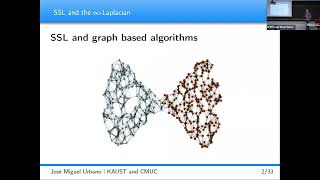
Lipschitz Learning and the Infinity-Laplacian
Explore Lipschitz learning, infinity-harmonic functions, and their applications in Semi-Supervised Learning. Dive into the Lipschitz extension problem and AMLE, with insights on regularity and open challenges.

NeurIPS 2023 Research Highlights - Circuits, Collaborative Filtering, Clustering, and Privacy
Overview of NeurIPS 2023 poster presentations covering graph neural networks, collaborative filtering, semi-supervised learning, and privacy assessment in image reconstruction, with insights on cutting-edge machine learning research.
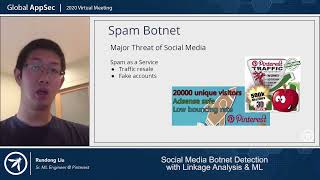
Social Media Botnet Detection with Linkage Analysis and Machine Learning
Explore techniques for detecting social media spam botnets using linkage analysis and machine learning, covering unsupervised and semi-supervised approaches and their applications.
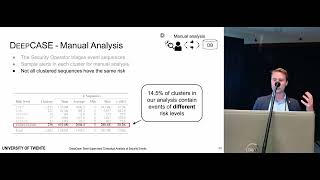
DeepCASE - Semi-Supervised Contextual Analysis of Security Events
Explore semi-supervised contextual analysis for security events with DeepCASE, enhancing threat detection and response in cybersecurity systems.
From Paper to Product - How We Implemented BERT
Explore the journey of implementing BERT in a natural language generation product, from initial research to production deployment. Learn about challenges, successes, and valuable lessons for NLP practitioners.
Propensity Measurement Using Positive-Unlabelled Bagging
Explore semi-supervised binary classification with Positive-Unlabelled learning for propensity measurement using PU bagging techniques.

AI-Based Wafer Defect Detection Using Anomaly Detection - Real-Time Implementation
Discover advanced AI techniques for real-time wafer defect detection through unsupervised and semi-supervised learning, focusing on anomaly detection and segmentation in industrial manufacturing environments.

Node Classification with Graph Convolutional Networks for Graph Machine Learning
Master Graph Convolutional Networks (GCN) implementation in PyG for node classification, featuring practical coding examples and theoretical foundations of spectral graph convolutions.
Deepnets for Stereo and Structure from Motion - Part 2
Explore semi-supervised depth prediction, wide context learning networks, and unsupervised monocular depth estimation techniques for advanced computer vision applications.
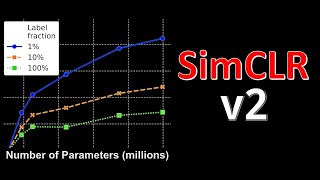
Big Self-Supervised Models Are Strong Semi-Supervised Learners
Explore SimCLRv2, a powerful semi-supervised learning approach combining self-supervised pre-training, fine-tuning, and distillation to achieve state-of-the-art results with minimal labeled data.

(Almost) All of Entity Resolution
Explore entity resolution's applications, history, and current research in data integration, from foundational work to modern approaches in various fields like human rights and medicine.
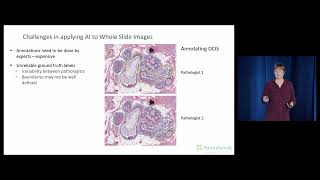
Artificial Intelligence and Digital Pathology: Making the Most of Limited Annotated Data
Explore semi-supervised and self-supervised approaches for efficient use of limited medical imaging datasets in AI, focusing on digital pathology applications.
Quantum-Assisted Machine Learning with Near-Term Quantum Devices
Explore quantum-assisted machine learning applications for near-term devices, focusing on generative models in unsupervised and semi-supervised learning. Discover recent experimental implementations.
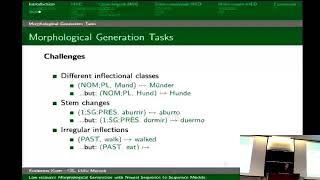
Low-resource Morphological Generation with Neural Sequence-to-Sequence Models
Explore neural sequence-to-sequence approaches for morphological generation in low-resource languages, including multi-task learning, cross-lingual transfer, and semi-supervised techniques.
Active Learning Loop on OpenShift
Implement an active learning pipeline on OpenShift using open-source tools for dynamic data labeling and improved model accuracy in machine learning operations.
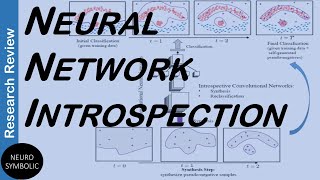
Neural Network Introspection - Approaches from Machine Learning and Knowledge Representation
Explore AI introspection approaches from ML and KR perspectives, covering ICNs, generative vs. discriminative models, and concept induction for enhanced machine learning understanding.