
Are LLMs the Beginning or End of NLP?
Explore tensions in NLP due to LLM advances: task-based vs. tech stacks, ML optimization vs. software engineering principles, and the complex capabilities and limitations of modern models.
Possible Impossibilities and Impossible Possibilities
Explore the limits and potential of large language models, questioning fundamental constraints and alternative paths beyond scale in this thought-provoking discussion on AI's future.
What Are Autonomous AI Agents - And Why You Should Care
Explore autonomous AI agents' potential in marketing, customer support, and content creation. Learn key characteristics and discover how they're revolutionizing AI interaction.
Why AI Is Harder Than We Think
Explores four fallacies in AI research leading to overconfident predictions, examining the complexity of intelligence and challenges in developing advanced AI technologies like self-driving cars and conversational companions.
On the Measure of Intelligence by François Chollet - The ARC Challenge - Paper Explained
Explores the ARC challenge for testing machine intelligence, focusing on rapid generalization tasks based on human core knowledge priors like object-ness and symmetry. Discusses goals, examples, and potential solutions.

GPT-4chan - This Is the Worst AI Ever
Explore the controversial GPT-4chan AI model trained on 4chan's /pol/ board, its capabilities, ethical implications, and the creator's experience building and deploying it as a chatbot.

Moderating End-to-End Encrypted Content - Balancing Privacy and Control
Exploring end-to-end encryption challenges, balancing privacy with content moderation needs. Proposes user-centric definitions and analyzes improvement strategies to maintain security while enhancing user experience.
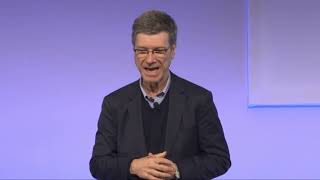
Artificial Intelligence and Society - In Conversation With Jeff Sachs
Exploring AI's societal impact, Jeff Sachs discusses potential utopian and dystopian outcomes, emphasizing the importance of governance in shaping the future of technology and its effects on work, wealth, and privacy.
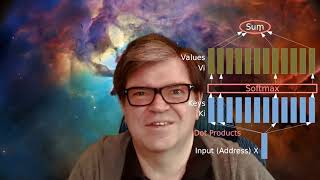
Differentiable Associative Memories, Attention, and Transformers
Explore differentiable associative memories, attention mechanisms, and transformers. Learn about energy minimization, planning, and various transformer applications in machine learning and AI.

Software Engineering at Google
Explore Google's software engineering principles: time, scale, and tradeoffs. Learn sustainable practices for maintaining large codebases and managing change in long-term projects.

The Art of Concurrency in Go
Explore Go's concurrency through hands-on coding of a network utility. Learn best practices, avoid pitfalls, and gain practical understanding of Go's powerful concurrency mechanisms.

The Information Bottleneck Theory of Deep Neural Networks
Explore the Information Bottleneck Theory's application to deep neural networks, examining statistical learning, information theory, and stochastic gradient descent in brain data analysis.
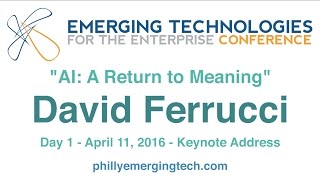
AI: A Return to Meaning - From Theory-Driven to Data-Driven Approaches
Explore AI's evolution from theory-driven to data-driven approaches, examining Watson's development and the future of machine learning, reasoning, and natural language understanding.

How to Use AI for Perfect Voice-to-Text Notes in Notion
Discover how to create perfect voice-to-text notes using AI tools like ChatGPT and Whisper, automating transcription and summarization for effortless note-taking in Notion.
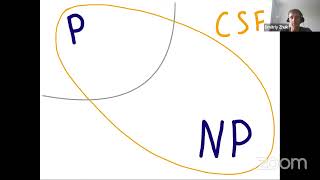
Constraint Satisfaction Problem - What Makes the Problem Easy
Explore constraint satisfaction problems, their complexity, and variants. Learn about polynomial-time solvable cases and NP-complete instances in this mathematical deep dive.
Reasoning Algorithmically- From Toy Experiments to AGI Modules
Explore neural networks' potential in algorithmic computation, from toy experiments to groundbreaking applications in mathematics and AI reasoning, with insights on their transformative impact on machine learning and computer science.
Computational Challenges and the Future of ML Panel
Experts discuss computational challenges in machine learning, exploring open problems and future directions in the field with insights from leading researchers.
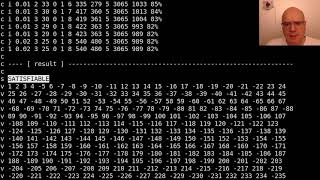
SAT-Solving
Explore the theory and practice of SAT-solving, delving into satisfiability concepts and advanced techniques in this comprehensive lecture by Armin Biere.
Training a GAN on Your Own Images - StyleGAN2 ADA PyTorch
Learn to install and use NVIDIA StyleGAN2 ADA for PyTorch on Windows 10, including setup, training, and image generation with new Ampere GPUs. Step-by-step guide for both beginners and advanced users.
TensorFlow 2.0 GPU, Keras, and Python 3.7 Installation Guide for Windows 10 - 2020 Update
Comprehensive guide for setting up TensorFlow 2.0 with GPU support on Windows 10, covering installation of necessary drivers, CUDA, cuDNN, and Anaconda environment configuration.
Statistical Learning - Robert Schapire, Microsoft Research
Explore statistical learning with Robert Schapire, covering strong/weak learning, boosting, and confidence in machine learning algorithms.