Novel Mixed Sand-Mud Bedforms, Cohesive Sediment Gravity Flow Behaviour, and Submarine Fans
Novel mixed sand-mud bedforms in submarine fan fringes: shapes, sizes, and implications for sediment gravity flows with cohesive clay. Insights into interpreting fan fringe environments and reconstructing sedimentary processes.
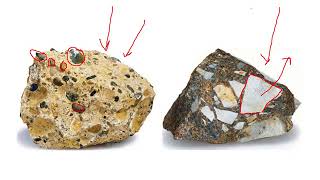
Sedimentary Rocks
Explore sedimentary rock formation, types, and structures. Learn about detrital, chemical, and organic rocks, their environments, and their role in understanding Earth's history.
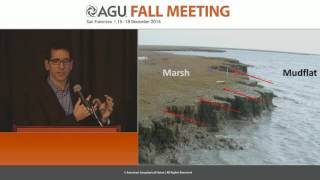
Living Landscapes: Present and Past Interactions Between Coastal Sediments and Biota - Sharp Lecture 2014
Exploring interactions between coastal sediments and biota, from modern wetland erosion to early life evidence in rocks, using models and experiments at the intersection of geomorphology, ecology, and paleontology.
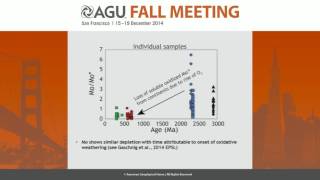
Using Ancient Glacial Diamictites to Track the Compositional Evolution of the Upper Continental Crust
Explore ancient glacial diamictites to understand the evolution of Earth's upper continental crust composition through geochemical analysis and sedimentary recycling insights.
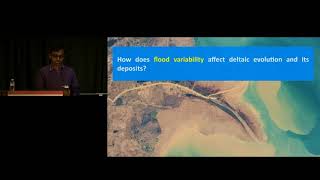
Variability in River Delta Mechanics and Deposits - 2015 Sharp Lecture
Insights into river delta mechanics, focusing on avulsions and their impact on delta formation. Explores backwater hydrodynamics, flood effects, and implications for delta management and stratigraphic interpretation.
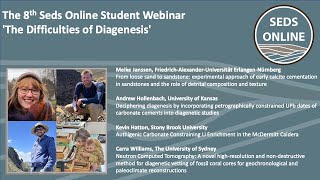
The Difficulties of Diagenesis - 8th Seds Online Student Webinar
Explore experimental approaches and novel techniques in diagenesis research, including calcite cementation, UPb dating, authigenic carbonate formation, and neutron computed tomography for fossil coral analysis.
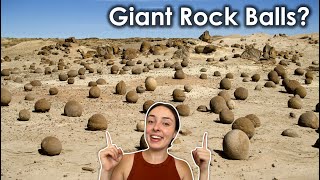
How Giant Rock Balls Form - Concretions in Geology
Explore the fascinating world of giant rock concretions, their formation process, and unique locations worldwide. Learn about their differences from geodes and their presence on Mars.

The Influence of a Rapidly Uplifting Orogen on the Preservation of Climate Signals
Explore how Taiwan's orogenesis affects climate signal preservation in sedimentary archives and its implications for interpreting past climate changes in the South China Sea.
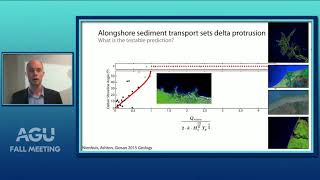
Testing Morphodynamic Theories by Comparing and Contrasting River Deltas
Explore coastal dynamics and river delta morphology, examining the impact of waves, tides, and fluvial forces on delta formation and future changes due to human activities and sea-level rise.
Loess and Wind-Blown Sediments - Episode Q with Mark Sweeney
Explore the fascinating world of loess with geologist Mark Sweeney in this in-depth discussion, covering its formation, distribution, and significance in understanding Ice Age floods and climate history.
Columbia Submergence - Ice Age Floods A to Z, Episode M
Explore the geological history of the Columbia Basin's submergence during the Ice Age, including Bretz's groundbreaking research and its implications for understanding prehistoric floods.
Hybrid Event Beds in Deep-Lacustrine Fan Models - New Insights from North Falkland Basin
Explore hybrid event beds in deep-lacustrine fan systems, analyzing their composition, distribution, and formation in the North Falkland Basin using 3D seismic data, wireline logs, and core samples.
Giant Sediment-Wave Field and Supercritical-Flow Bedforms in a Mississippian Carbonate Ramp, USA
Explore giant sediment waves in a Mississippian carbonate ramp, examining their formation, characteristics, and implications for understanding ancient marine environments and sedimentary processes.
Bonneville Flood - Ice Age Floods Series Episode 5
In-depth exploration of the Bonneville Flood, featuring expert discussions with Shawn Willsey and Jim O'Connor. Covers geological history, impact, and significance of this massive Ice Age flood event in the Pacific Northwest.
Glacial Lake Missoula - Ice Age Floods Series Episode U
Explore the fascinating history of Glacial Lake Missoula with geologist Larry Smith. Discover the impact of Ice Age floods on the Pacific Northwest landscape through expert insights and visual aids.
Exploring Coastal Peatland Systems - Case Studies from the Late Cretaceous and Paleocene
Discover the intriguing world of coastal peatlands through Late Cretaceous and Paleocene case studies, exploring their formation, preservation, and significance in geological history.
Submarine Channel-Lobe Transition Zones in Ancient Passive-Margin Turbidite Systems
Explore deep-water turbidite systems, focusing on channel-lobe transition zones. Gain insights into spatial and temporal development of ancient systems through detailed lithological and architectural analyses.
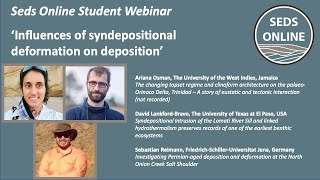
Influences of Syndepositional Deformation on Deposition
Explore how syndepositional deformation impacts depositional processes, examining case studies from Trinidad, USA, and Germany. Gain insights into the interplay between tectonics, eustasy, and sedimentation.
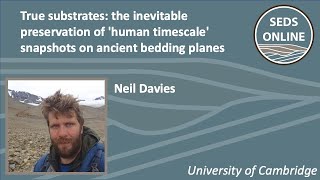
True Substrates: Preservation of Human Timescale Snapshots on Ancient Bedding Planes
Explore ancient bedding planes as preserved snapshots of past environments, revealing microscale topography and palaeoenvironmental information from deep time.
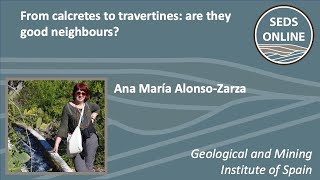
From Calcretes to Travertines - Understanding Continental Carbonates
Continental carbonates: exploring the interplay of climate, biota, CO2, and hydrology in forming calcretes and travertines, and their role in understanding Earth's critical zone.
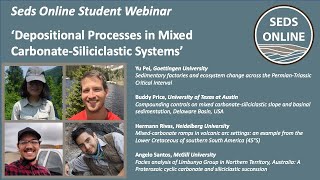
Depositional Processes in Mixed Carbonate-Siliciclastic Systems - Student Webinar
Explore diverse depositional processes in mixed carbonate-siliciclastic systems through case studies spanning geological eras and global locations, from the Permian-Triassic to the Proterozoic.