Braided Fusion Categories - Lecture 5: Witt Equivalence and Categorical Witt Group
Explore advanced concepts in braided fusion categories, including gauging, Picard groups, Witt equivalence, and categorical Witt groups. Suitable for graduate-level mathematics students.
Braided Fusion Categories - Lecture 4
Explore algebraic theory of semisimple braided tensor categories, covering properties, examples, centralizers, equivariantizations, gauging, and Witt equivalence. Suitable for graduate students.
Braided Fusion Categories - Lecture 2
Explore algebraic theory of semisimple braided tensor categories, covering structure, classification, and applications in quantum symmetries and topological quantum field theories.
W-algebras and Lax Operators - Lecture 1
Explore finite W-algebras, twisted Yangians, and Lax operators. Investigate relationships between these mathematical structures using advanced algebraic techniques.
Braided Fusion Categories - Lecture 1
Explore semisimple braided tensor categories, their structure, and classification. Learn about centralizers, non-degeneracy, equivariantizations, gauging, and Witt equivalence in fusion categories.
Dynamics of Quantum Integrable Systems via Coupled Heisenberg Equations
Explore quantum integrable systems dynamics using coupled Heisenberg equations. Analyze Onsager algebra models and Kitaev model, uncovering new analytical results for quench dynamics and related algebras.
Universality and Conformal Invariance in Critical Percolation Models
Explore critical percolation models' universal behavior and conformal invariance through Yang-Baxter integrable systems and Virasoro algebra representations. Gain insights into partition functions on cylinders and tori.
Onsager Algebras in Quantum Lattice Models
Explore Onsager algebras in quantum lattice models, their role in exactly solvable systems, and recent developments in integrable quantum physics.
Diagonalization of Heun-Askey-Wilson Operator Leonard Pairs and Algebraic Bethe Ansatz
Explore diagonalization of Heun-Askey-Wilson operators using Leonard pairs and algebraic Bethe ansatz. Delve into eigenstates, Bethe equations, T-Q relations, and connections to Askey-Wilson polynomials.
Duality, Onsager Algebra and Ising-Type Structures in Root-of-Unity Six-Vertex Models
Explore duality, Onsager algebra, and Ising-type structures in root-of-unity six-vertex models. Uncover connections between quantum group representations and symmetries in integrable systems.
New Solutions to the Tetrahedron Equation Associated with Quantized Six-Vertex Models
Explore new solutions to the tetrahedron equation RLLL = LLLR, focusing on quantized six-vertex models and their connections to q-oscillator and q-Weyl algebras.
The Origin of Trigonometric K-matrices - Part III
Explore the universal K-matrix in quantum integrable systems with boundaries, focusing on its role in generating trigonometric K-matrices for finite-dimensional representations.
Exact Results in Non-Equilibrium Statistical Mechanics - Part IV
Explore advanced concepts in non-equilibrium statistical mechanics, including Work Identities, Fluctuation Theorem, and Macroscopic Fluctuation Theory. Learn how integrability techniques yield exact solutions in nonequilibrium physics.
Exact Results in Non-Equilibrium Statistical Mechanics - Part III
Explore advanced concepts in non-equilibrium statistical mechanics, including Work Identities, Fluctuation Theorem, and Macroscopic Fluctuation Theory. Discover how integrability techniques yield exact solutions in nonequilibrium physics.
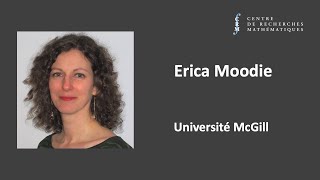
Estimating Individualized Treatment Rules Without Individual Data in Multicentre Studies
Explore precision medicine and individualized treatment rules using distributed regression and dynamic weighted OLS, focusing on depression treatment analysis from UK's Clinical Practice Research Datalink.
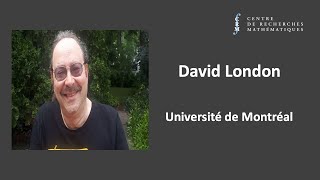
The Search for New Physics
Explore the Standard Model of particle physics, its limitations, and the quest for new physics beyond it with insights from David London's research contributions.
Systemic Sclerosis (Scleroderma) Treatment and CREST Syndrome - Pathophysiology and Management
Explore systemic sclerosis: types, pathophysiology, symptoms, and treatment. Learn about CREST syndrome, pulmonary involvement, diagnosis, and management of scleroderma.
Systemic Lupus Erythematosus (SLE) - Pathophysiology, Symptoms, Diagnosis, and Treatment - Lecture
Explore SLE's etiology, pathophysiology, symptoms, diagnosis, and treatment. Learn EULAR/ACR criteria, ASCVD risk assessment, and neonatal lupus. Gain comprehensive understanding for USMLE preparation.

Myocardial Infarction ECG Changes: Interpretation of Ischemia and Infarction - Lecture
Learn to interpret ECG changes in myocardial infarction, from ischemia to healed phase. Master ECG reading with detailed explanations and practice cases for various heart areas.
Wandering Atrial Pacemaker and Multifocal Atrial Tachycardia - ECG Interpretation and Treatment
Explore wandering atrial pacemaker and multifocal atrial tachycardia through ECG lectures, causes, management, and practice exercises. Master ECG interpretation for medical exams and clinical practice.
Sinus Arrhythmia, Sinus Block, Sinus Pause, and Sinus Arrest - ECG Interpretation and Treatment - Lecture 4
Master ECG interpretation for sinus arrhythmias, blocks, pauses, and arrests. Learn causes, treatments, and practice with real ECGs to enhance diagnostic skills for medical professionals and students.