
Exploring the Many Dimensions of Sex and Gender in the Genomics Era - Day 1, Part 2
Interdisciplinary symposium exploring complexities of sex, gender, and genomics. Experts discuss historical context, Y chromosome research, and policy implications. Aims to clarify scientific, ethical, and social dimensions.
Exploring the Many Dimensions of Sex and Gender in the Genomics Era - Day 2, Part 3
Experts discuss challenges in communicating sex, gender, and genomics, exploring data storage for trans individuals, and promoting equity in scientific publishing. Interdisciplinary insights for scientists and policymakers.
DNA Science and Human Genetics - Journeys in Human Genetics and Genomics Colloquium
Explore DNA science and human genetics with Dr. Lawrence Brody, covering scientific, clinical, and societal aspects of genomics and potential career opportunities in the field.

Molecular Polarity - Understanding Bond and Molecular Polarity
Explore molecular polarity's impact on chemical properties, from bond types to 3D shapes. Learn how polarity affects solubility, boiling points, and intermolecular forces through examples and visualizations.
Calculations Using Avogadro's Number and Molar Mass - Part 1
Learn to use Avogadro's number for converting between atomic mass units and grams, understanding moles, and calculating molar mass in chemistry calculations.
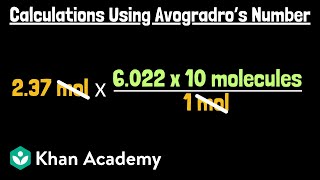
Calculations Using Avogadro's Number - Part 2
Learn to convert between grams, moles, molecules, and atoms using Avogadro's number. Practice with glucose and calcium carbonate examples to bridge microscopic and macroscopic chemistry concepts.
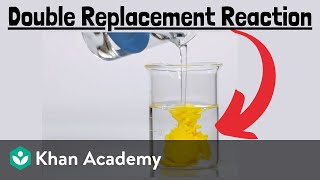
Double Replacement Reactions in Chemistry
Learn about double replacement reactions, their driving forces, and how to predict outcomes using solubility charts. Gain practical skills for understanding and analyzing chemical reactions in solution.
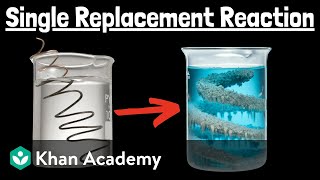
Single Replacement Reactions in Chemistry
Learn about single replacement reactions, including oxidation-reduction processes, the Activity Series, and practical examples to understand element reactivity and predict chemical outcomes.
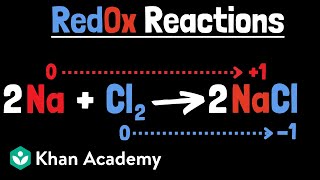
Simple Redox Reactions - Understanding Oxidation and Reduction
Learn about redox reactions, including oxidation, reduction, electron transfer, and practical examples. Understand key concepts and applications in chemistry.
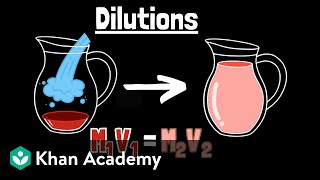
Dilutions - Chemistry Fundamentals and Practice Problems
Learn to calculate and prepare dilutions using the dilution equation, with practical examples and problem-solving practice for precise solution concentrations in chemistry experiments.
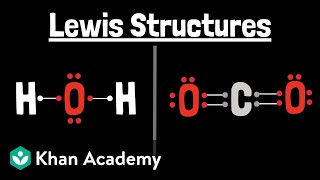
Lewis Diagrams for Molecules - Chemistry
Learn to create Lewis diagrams for molecules, visualizing atomic bonding and valence electron arrangements. Practice with examples like H2, O2, N2, H2O, NH3, and CO2.
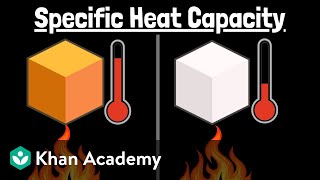
Specific Heat Capacity - Concept and Calculations
Explore specific heat capacity: definition, equation, and practical examples. Learn how different substances respond to heat and why their specific heats vary.

Electric Current - Fundamentals and Flow in Physics
Explore electric current concepts, including voltage, conductors, circuits, electron drift, and conventional current. Learn about charge flow, measurement units, and real-world applications like lightning.
Voltage - Understanding Electric Potential Difference
Explore electric potential, voltage, and its real-world applications in this concise physics lesson. Gain insights into voltage measurement, polarity, and practical examples like birds on power lines.

Work and Power in Physics
Explore work and power concepts in physics, including energy transfer, work-energy theorem, and practical applications like electrical power and roller coasters.
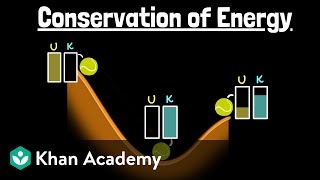
Conservation of Energy in Physics
Explore energy conservation principles across various systems, from friction to orbits and electron transitions, in this comprehensive physics lesson.
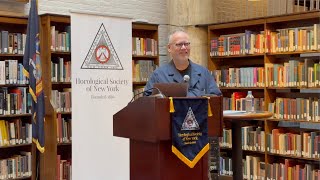
Ideal vs. Real: Searching for Perfection in an Imperfect Universe
Explore the pursuit of perfection in watchmaking and its philosophical implications, examining the tension between ideal concepts and real-world limitations in horology.

Volume Disorders in Clinical Medicine
Comprehensive exploration of volume disorders, covering pathophysiology, complications, diagnosis, and treatment for hypovolemia and hypervolemia. Ideal for medical students and healthcare professionals seeking in-depth understanding.
Neural Mechanisms of Intelligence - Part 2 of 3
Explore neural mechanisms of intelligence in animals, uncovering algorithms behind cognitive processes. Gain insights into measuring and understanding non-linguistic forms of intelligence.
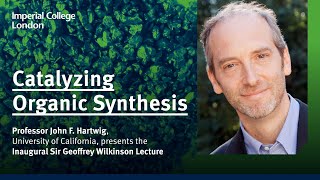
Catalyzing Organic Synthesis - The Inaugural Sir Geoffrey Wilkinson Annual Lecture
Explore catalysts for organic synthesis, from novel coupling processes to functional group introduction, enhancing pharmaceutical development and sustainable chemistry advancements.
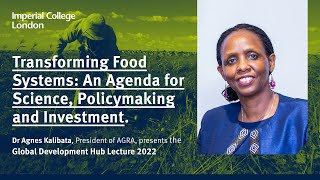
Transforming Food Systems: An Agenda for Science, Policymaking and Investment
Explore strategies for transforming food systems through science, policy, and investment, featuring insights from AGRA's President on driving innovation and evidence-based interventions.