Introduction to Robotics
This course is a bridge course for students from various disciplines to get the basic understanding of robotics. The mechanical, electrical, and computer science aspects of robotics is covered in this introductory course.
Geoenvironmental Engineering - Landfills, Slurry Ponds & Contaminated Sites
Comprehensive exploration of geoenvironmental engineering, covering landfill design, waste management, contamination control, and slurry disposal. Focuses on practical applications and environmental protection strategies.
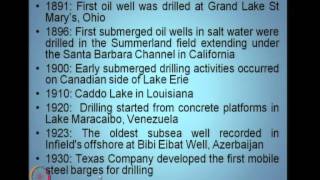
Ocean Structures and Materials
Comprehensive exploration of offshore and coastal structures, covering design, construction, materials, and environmental considerations for marine engineering applications.
Theory of Rectangular Plates - Part 1
Explore solid mechanics, energy principles, and plate theories. Learn governing equations, solution methods, and practical applications using MATLAB and ABAQUS.
Thermodynamics - Classical to Statistical
Comprehensive exploration of thermodynamics, from classical concepts to statistical mechanics, covering fundamental principles, applications, and advanced problem-solving techniques.
Phase Equilibrium Thermodynamics
Explore thermodynamic principles, phase equilibria, and solution behavior. Learn about laws, entropy, Gibbs energy, P-v-T relationships, chemical potential, fugacity, and ideal/non-ideal solutions.
Computational Fluid Dynamics for Incompressible Flows
Explore incompressible flow dynamics through finite difference and volume methods. Master equations, boundary conditions, and numerical techniques for solving fluid dynamics problems.
Astrophysics & Cosmology
Explore the wonders of the universe through comprehensive lectures on celestial bodies, cosmic phenomena, and the origins and evolution of our cosmos.
Introduction to Statistical Mechanics
This is an introductory course in classical and quantum statistical mechanics which deals with the principle of ensembles, Classical, Fermi and Bose ideal gases, Pauli paramagnestim, Debye and Einstein’s theory of specific heat and the 1D Ising model.
Experimental Physics - II
Comprehensive exploration of advanced experimental physics concepts, including optics, interference, diffraction, polarization, and quantum phenomena, with practical applications and hands-on experiments.
Introduction to Dynamical Models in Biology
This course is intended to introduce students of biology to elementary mathematical concepts and tools for dynamical models. The course will focus on modeling using ordinary differential equations (ODEs).
Phase Equilibrium Thermodynamics
Explore phase equilibrium thermodynamics, covering laws, entropy, spontaneity, Gibbs free energy, P-v-T behavior, chemical potential, and fugacity in various systems.
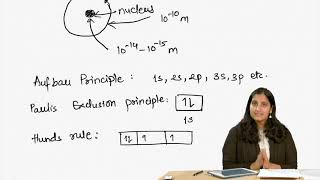
Introductory Organic Chemistry I
Explore atomic structure, molecular orbital theory, alkanes, cycloalkanes, and their properties in this comprehensive introduction to organic chemistry fundamentals.
Introduction to Classical Mechanics
This introductory course on Classical Mechanics covers the following topics: Euler Lagrange Equations, Small Oscillations, Central Force Problem, Rigid Body Motion.
Electronic Theory of Solids
Comprehensive exploration of solid-state physics, covering electron behavior, quantum mechanics, band theory, magnetism, and superconductivity, with applications in modern technology.
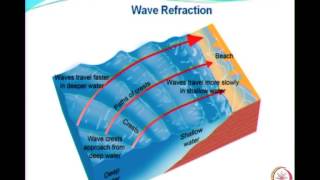
Coastal Engineering
Comprehensive study of wave dynamics, sediment transport, erosion protection, and coastal structures, focusing on engineering principles and practical applications in coastal environments.
Environmental Remediation of Contaminated Sites
The course details the usual remediation techniques practiced worldwide and provides an understanding of the relevant theoretical concepts. you will develop an understanding of integrated approaches to remediating contaminated sites
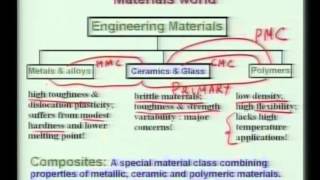
Introduction to Biomaterials
Comprehensive exploration of biomaterials: properties, applications, and innovations in medical technology. Gain expertise in this cutting-edge field through 39 in-depth lectures.
Nuclear Reactors and Safety - An Introduction
This course is expected to provide information to the graduate and post-graduate students undergoing courses in nuclear engineering in IITs and other Universities on all aspects of nuclear safety.
High Speed Aero Dynamics
Comprehensive exploration of high-speed aerodynamics, covering thermodynamics, gas dynamics, waves, supersonic flow, shock theory, and advanced topics like linearized problems and similarity rules.
Thermodynamics
Explore fundamental concepts, laws, and applications of thermodynamics, including system properties, energy conservation, and practical devices like heat exchangers and turbines.