Numerical Weather Prediction Methods
Explore numerical weather prediction methods, including data assimilation techniques, uncertainty estimation, and applications in atmospheric and climate modeling.
Satellite Data Assimilation - Techniques and Applications
Explore satellite data assimilation techniques for weather and climate modeling, focusing on theory, methods, and practical applications in atmospheric and oceanic sciences.
Data Assimilation and Dynamical Systems in Earth Sciences - Lecture 2
Explore data assimilation in Earth sciences, focusing on dynamical systems and their applications in weather and climate modeling. Learn theoretical foundations and practical implementations.
Data Assimilation and Dynamical Systems in Earth Sciences
Explore data assimilation in Earth sciences, covering theory, methods, and applications in weather, climate, and environmental monitoring. Gain hands-on experience with various techniques and uncertainty estimation.
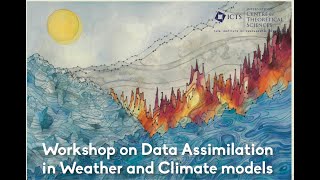
Data Assimilation - Basic Theory
Explore fundamental concepts and methods of data assimilation in weather and climate modeling, including uncertainty estimation and applications in atmospheric and oceanic sciences.
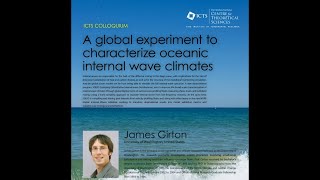
A Global Experiment to Characterize Oceanic Internal Wave Climates
Explore oceanic internal waves' impact on global climate, mixing processes, and circulation patterns through the SQUID program's innovative global observations and data analysis techniques.
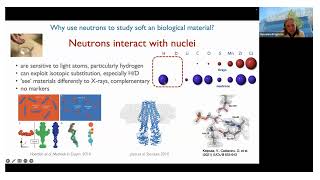
Neutron Scattering - Exploring Cell Membrane Mechanisms
Neutron scattering techniques for studying cellular membrane structure and dynamics, focusing on model membrane systems and their interactions with biologically relevant molecules.
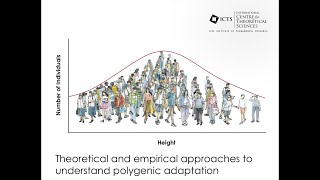
The Genetic Architecture of Repeated Local vs. Global Adaptation in Plants
Explore genetic architecture in plant adaptation, focusing on local vs. global patterns. Gain insights into polygenic traits and their role in evolutionary biology.
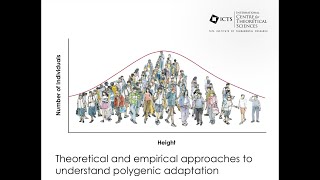
Polygenic Adaptation - Lecture 2
Explore polygenic adaptation in evolutionary biology, integrating diverse perspectives on adaptive dynamics and genetic variation's role in phenotypic traits. Gain insights into quantitative frameworks and empirical data analysis.
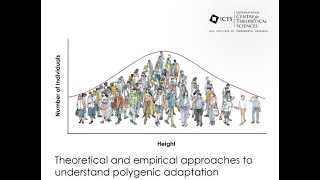
Ecology and Perpetual Evolution in High Dimensions
Explore ecological dynamics and evolutionary processes in complex, high-dimensional systems. Gain insights into adaptive mechanisms and their impact on biological diversity and ecosystem stability.
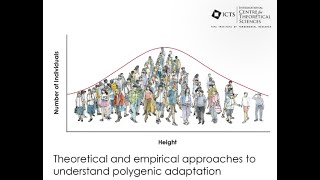
Modeling Polygenic Barriers to Gene Flow Between Species
Explore genetic architecture of phenotypic traits and polygenic adaptation through lectures, seminars, and discussions. Integrate diverse perspectives on adaptive dynamics in evolutionary biology.
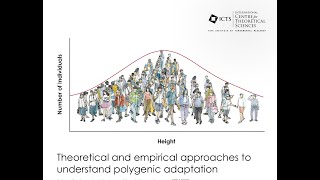
Polygenic Adaptation - Lecture 1
Explore polygenic adaptation in evolutionary biology, integrating diverse perspectives on genetic variation's role in phenotypic traits and adaptive dynamics.
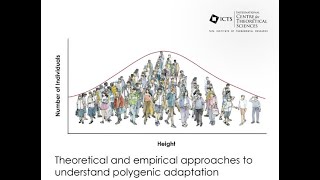
GWAS and Quantitative Genomics
Explore genetic architecture of polygenic traits, integrating adaptive dynamics theories and empirical data to understand phenotypic variation in biological evolution.
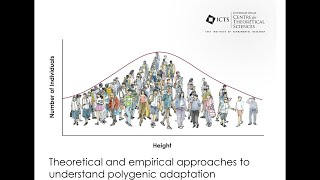
Drift and the Concept of Effective Population Size - Lecture 1
Explore genetic drift and effective population size in evolutionary biology, examining their impact on genetic variation and adaptation in populations.
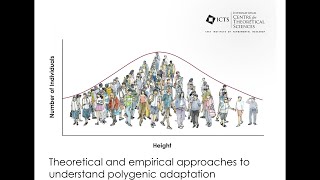
Adaptation at the Levels of Fitness and Traits
Explore polygenic adaptation in biological evolution, integrating diverse perspectives on adaptive dynamics and relating theoretical frameworks to empirical data.
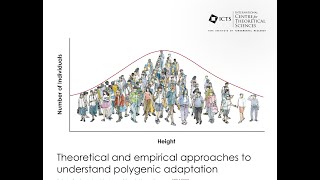
Detecting Quantitative Trait Loci (QTLs) - Bruce Walsh Lecture
Explore techniques for identifying Quantitative Trait Loci (QTLs) in genetic studies, focusing on statistical methods and experimental designs used in quantitative genetics research.
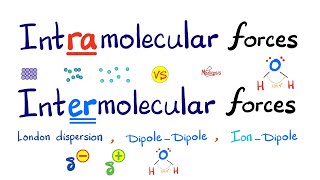
Intramolecular vs Intermolecular Forces - London Dispersion, Dipole-Dipole, Ion-Dipole Forces
Explore intramolecular and intermolecular forces, including London dispersion, dipole-dipole, and ion-dipole interactions. Understand their impact on molecular behavior and physical properties.

Eggs, Evolution, and Life on Earth
Explore evolution through eggs with zoologist Jules Howard. Discover their overlooked role in Earth's history, from dinosaur extinction to human brain development, in this fascinating journey.
Data Assimilation and Dynamical Systems in Earth Sciences - Lecture 3
Explore data assimilation theory and applications in Earth sciences, focusing on dynamical systems. Gain hands-on experience with practical techniques for integrating observations and forecasts in weather and climate models.
Application of Particle Filters on Data Assimilation
Explore particle filters in data assimilation, a powerful technique for integrating observations and forecasts to estimate atmospheric states and uncertainties in weather and climate modeling.
Data Assimilation Experiments for Operational Weather Forecast in NARL
Explore data assimilation techniques for operational weather forecasting, focusing on experiments conducted at NARL. Learn about integrating observations and short-range forecasts to improve atmospheric state estimation.