
Scales of Environmental Justice: Building a Transformative Politics
Explore environmental justice with experts discussing transformative politics, community initiatives, and intersectional approaches to address ecological challenges and social inequities.

Arctic Ghosts - Ecocruising the Death Spiral
Explore the environmental impact of Arctic tourism and its connection to climate change through Roy Scranton's thought-provoking analysis of ecocruising and the "death spiral."
Laboratory Diagnosis of Anaerobic Infections - Lecture 8
Comprehensive overview of anaerobic infection diagnosis, covering sample handling, cultivation, identification techniques, and pathogenesis of key anaerobic bacteria.
Breaking Bad News in Haemato-Oncology - Effective Communication Strategies
Explore effective techniques for delivering difficult news in haemato-oncology, addressing cultural and medical complexities to improve patient care and communication skills.
Gastrointestinal System: Conditions, Tests, and Clinical Applications
Explore gastrointestinal conditions, diagnostic tests, and treatment strategies, focusing on laboratory investigations to prioritize patients and assist in disease management.
Gene Therapy Solutions for Sickle Cell Disease - Lecture 15
Explore gene therapy solutions for sickle cell disease, including technologies, clinical achievements, risks, and benefits. Learn about antiviral vectors, CRISPR, and ongoing clinical trials.

Between Petro-Magic and the Pedestrian - Rethinking Energy Transitions
Exploring the concept of "petro-magic" in literature and society, examining its impact on imagination and lived experiences, and considering alternative perspectives on energy and modernity.

Barriers to Transforming Climate Dialogues - Tanner Lecture Two
Exploring historical policies' impact on land use practices and climate adaptation, with insights from Indigenous communities and focus on transforming climate dialogues.

On Resilience - A Capacity to Absorb Disturbances and Shocks
Exploring resilience in Indigenous communities facing climate change, Dr. Redsteer examines the capacity to absorb disturbances and shocks, highlighting tribal vulnerabilities and adaptations to environmental challenges.
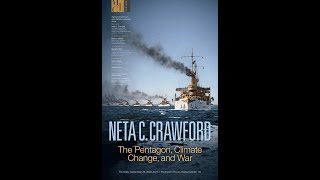
The Pentagon, Climate Change, and War - Environment Forum with Neta C. Crawford
Exploring the U.S. military's role in climate change, its energy consumption, and the need to rethink foreign policy and military doctrine for a sustainable future.
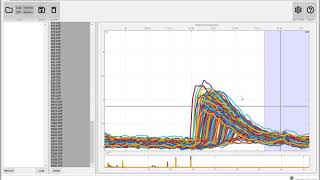
PARADISe 5.7 Beta for Untargeted GC-MS Analysis
Explore the revamped PARADISe 5.7 beta for enhanced untargeted GCMS data analysis, offering improved information extraction and advanced features for comprehensive analytical insights.
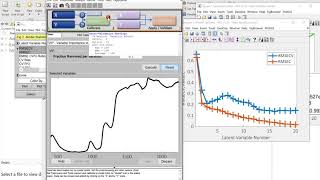
Variable Selection in PLS_Toolbox - Part 3
Explore advanced techniques for variable selection in PLS_Toolbox, enhancing your data analysis skills and improving model performance.
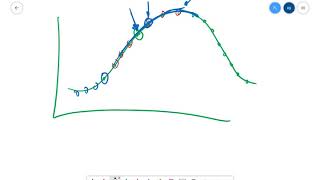
Preprocessing: Derivatives and Baseline Removal in Spectral Analysis
Learn techniques for removing baselines and artifacts from data, enhancing signal quality and improving analytical results in chemometrics and machine learning.
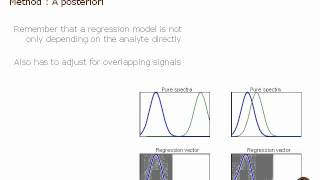
Variable Selection in Multivariate Data Analysis - Part 1
Explore key methods for variable selection in multivariate data analysis, including a-priori, a-posteriori, and model-based approaches. Learn their importance and applications.
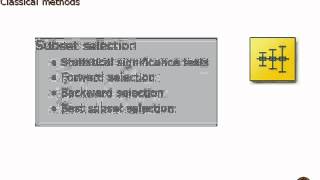
Variable Selection in Chemometrics: Advanced Methodologies - Part 2
Advanced methodologies for variable selection in chemometrics, including genetic algorithms, jack-knifing, and iPLS, building on fundamental concepts.
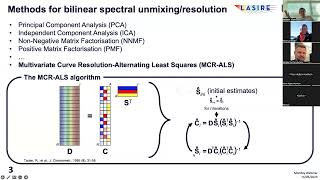
The Black Hole Effect in MCR with Raffaele Vitale
Exploring the black hole effect in Multivariate Curve Resolution, its impact on data analysis, and strategies to overcome this phenomenon in chemometrics and machine learning.
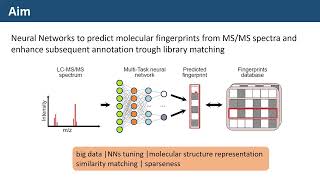
Chemometrics and Molecular Fingerprints to Enhance LC-MS/MS Spectral Match
Explore computational approaches to enhance LC-MS/MS spectral matching using chemometrics and deep learning for improved molecular structure prediction and compound identification.

The Intricacies of Splicing and RNA Data in Germline Variant Classification
Explore RNA splicing's impact on protein function and disease, focusing on complexities in interpreting RNA data and its role in germline variant classification.

Exome Sequencing for Prenatal Indications
Explore recent developments in prenatal exome sequencing, including technical challenges, diagnostic considerations, and expanded indications for fetal anomalies and pregnancy-related findings.

Quality in Genetic Testing Laboratories - Opening the Black Box
Explore quality measures for genetic testing accuracy and clinical utility, with case-based examples demonstrating their impact on next-generation sequencing panel testing.

Improvements in Clinical Interpretation of Copy Number Variants (CNVs)
Explore advancements in clinical interpretation of Copy Number Variants (CNVs), addressing challenges and showcasing how unified guidelines can enhance consistency and quality in genomic diagnostics.