A Journey Through Tides in Earth's History
Explore Earth's tidal history, lunar age discrepancies, and continental impacts on tides. Discover how tidal energy influences Earth's rotation and lunar distance, with implications for planetary systems.
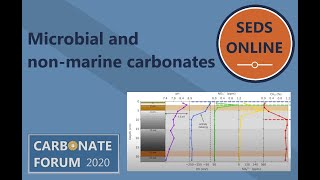
Microbial and Non-Marine Carbonates
Explore microbial and non-marine carbonates through analyses of freshwater dolomites, hydromagnesite-magnesite playa, and lacustrine microbial carbonates, offering insights into their formation and characteristics.
Emerging Technologies for Quantitative Interpretation of Carbonate Rock Images
Explore machine learning applications for automatic identification of carbonate facies using core images, improving accuracy and consistency in geological classifications.
Deep Water Sediment Deposition from Hybrid Contour-Turbidity Currents
Explore the interaction between sediment gravity flows and bottom currents in continental slope morphologies, revealing new insights from laboratory experiments on hybrid bottom-turbidity currents.
Virtual Graphic Logs: Applications for Teaching and Research
Explore virtual graphic logging for sedimentary research and teaching. Learn key geological field skills, improve observational techniques, and enhance inclusivity in classroom environments.
An Introduction to OSL Dating and Luminescence Signals
Explore the fundamentals of Optically Stimulated Luminescence dating, its applications in sedimentology, and how luminescence signals provide insights into transport-deposition processes.
Observing Turbidity Currents in the Wild - New Insights from Direct Field-Scale Measurements
Explore new insights into turbidity currents, powerful underwater sediment avalanches, through recent field-scale measurements. Learn about their impact on marine ecosystems and infrastructure.
The World's Most Unloved Sedimentary Structures - A New Process Model for Flutes and Tool Marks
Explore a new process model for flutes and tool marks in deep-marine environments, challenging long-standing theories and examining implications for sedimentology and flow dynamics.
Sequence Stratigraphy of Late Paleozoic Cyclothems
Explore the formation, characteristics, and sequence stratigraphy of cyclothems in Carboniferous and Permian paleotropical successions, examining their depositional environments and debating their origins.
Marine and Near Surface Diagenesis in Carbonate Systems
Explore marine and near-surface carbonate diagenesis through expert presentations on biogeochemical drivers, karst geobody extraction, microporosity distribution, and petrophysical properties of calcitic and aragonitic deposits.
The Carbonate Forum - Platform Scale and Fault Controlled Fluid Flow
Explore platform-scale fluid flow and fault-controlled dolomitization in carbonate systems through expert presentations on isotope analysis, localization controls, and reactive transport modeling.
Salt on Mars - Astrobiological Tombs?
Explore the potential of salt minerals on Mars to host microorganisms and organic compounds, and learn about their role in the search for extraterrestrial life during Mars sample return missions.
Advent of the Anthropocene Epoch - Quantifying Drivers and Impacts Since 1950 CE
Explores the Anthropocene epoch's onset around 1950, examining human energy consumption, population growth, and their profound impacts on Earth's systems and stratigraphic record.
Microtidal Meanders and Their Deposits - Lessons from the Venice Lagoon, Italy
Explore microtidal meanders in the Venice Lagoon, examining morphodynamics, sedimentary processes, and depositional patterns in this unique Mediterranean coastal environment.
Limestones: An Essential User Guide to Sediments That Dissolve, Precipitate and Grow
Explore limestone formation, importance, and applications in climate studies and sustainable solutions. Learn about carbonate sedimentology's role in understanding Earth's history and future environmental challenges.
A Guide to Earth, Life, and Terrestrial Carbonates for the Intergalactic Sedimentologist
Explore Earth's terrestrial carbonates through time, from soil to hot springs. Discover their role in studying planetary evolution and life's interplay with environments across the galaxy.
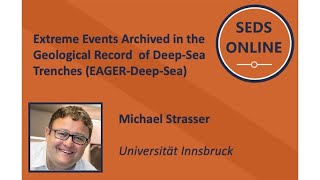
Extreme Events Archived in the Geological Record of Deep-Sea Trenches
Explore ultra-deep hadal trenches to unravel earthquake history and understand sediment mass and carbon transfer in this rarely-studied environment of our planet.
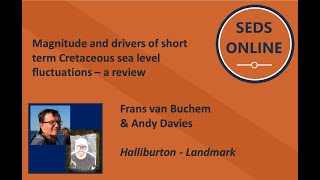
Magnitude and Drivers of Short-Term Sea Level Fluctuations in the Cretaceous - A Review
Explore Cretaceous sea level changes, their magnitudes, and driving forces. Discover the impact of aquifer eustasy and the role of glacio-eustasy in shaping Earth's ancient oceans.
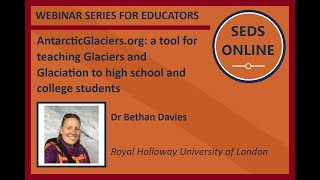
Teaching Glaciers and Glaciation with AntarcticGlaciers.org - Resources for High School and College Educators
Explore AntarcticGlaciers.org, a comprehensive resource for teaching glaciers and glaciation. Learn how to utilize its content, case studies, and activities to enhance your lessons for high school and college students.

A Brief Pre-History of the Domestic Cat
Explore cat domestication, migration, and human-animal interactions through biomolecular research, from Neolithic origins to modern challenges in wildlife conservation.

Deep-Time Beginnings of Bone Biology
Explore the origins of bone biology through advanced imaging techniques, uncovering the evolutionary history of this living tissue and its remarkable functions in early jawless fish.