
Introduction to Organic Chemistry
Comprehensive overview of organic chemistry fundamentals, covering covalent bonds, carbon structures, functional groups, and key concepts for MCAT, DAT, NEET, and university-level organic chemistry courses.
Von-Gierke Disease - Glycogen Storage Disease Type I
Explore Von-Gierke Disease, a rare genetic disorder affecting glucose metabolism. Learn about its biochemistry, genetics, symptoms, and impact on carbohydrate processing in the body.
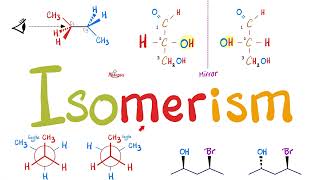
Isomers - Dextro- vs Levo-, Constitutional, Diasteriomers, Enantiomers, Mesocompounds, E- vs Z-
Comprehensive exploration of isomerism in organic chemistry, covering various types, configurations, and conformations. Essential for understanding molecular structures and properties.

Clostridium Bacteria Review - Difficile, Perfringens, Tetani, and Botulinum
Comprehensive review of Clostridium bacteria, covering difficile, perfringens, tetani, and botulinum. Explores microbiology, infectious diseases, and clinical implications of these important pathogens.

Nerve Impulse Transmission, Action Potential - Biology
Explore nerve impulse transmission and action potential in neurons, essential concepts for understanding the nervous system's communication mechanisms.

What's a Neuron?
Explore the structure and function of neurons, the fundamental units of the nervous system, in this concise biology lecture designed for medical entrance exam preparation.
Neonatal Immune-Mediated Thrombocytopenia
Explore maternal antibody-induced fetal platelet destruction, its causes, diagnosis, and management strategies for neonatal thrombocytopenia.

Cell Signal Transduction - Endocrinology Series
Explore cell signal transduction in this endocrinology preview, covering key concepts and mechanisms of cellular communication for a deeper understanding of hormone action.
Cardiovascular Physiological Changes During Pregnancy
Explore the significant cardiovascular adaptations that occur during pregnancy, including changes in blood volume, cardiac output, and systemic vascular resistance.

Pharyngeal Arches, Pouches, and Clefts - Grooves
Explore the embryonic development of pharyngeal structures, including arches, pouches, and clefts, and their significance in forming various anatomical features of the head and neck.

Clinically-Oriented Physiology - Nerves and Muscles
Explore nerve and muscle physiology with a clinical focus on Myasthenia Gravis and Lambert-Eaton Myasthenic Syndrome, enhancing understanding of these conditions.

Smooth Muscles Physiology and Myosin-Light Chain Kinase - Phosphatase
Explore smooth muscle physiology, focusing on myosin-light chain kinase and phosphatase mechanisms. Gain insights into the unique contractile properties and regulation of smooth muscle tissue.

Troponin, Tropomyosin, T-Tubules, Sarcoplasmic Reticulum, and the Neuromuscular Junction - NMJ
Explore key muscle structures and mechanisms, including troponin, tropomyosin, T-tubules, sarcoplasmic reticulum, and the neuromuscular junction. Gain insights into muscle physiology and function.
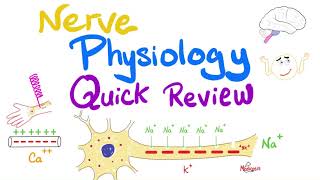
Nerve Physiology Quick Review
Comprehensive nerve physiology review for medical exams, covering key concepts and mechanisms for efficient exam preparation.
Genetic Diseases - Down, Edwards, Patau, Cri-du-chat, and Williams Syndromes
Explore five genetic syndromes: Down, Edwards, Patau, Cri-du-chat, and Williams. Learn their causes, characteristics, and clinical implications in this comprehensive overview.
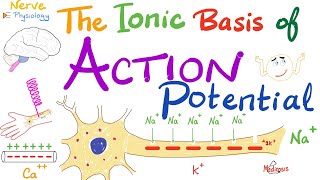
The Ionic Basis of the Action Potential - Absolute Refractory Period, Relative Refractory Period
Explore the ionic mechanisms behind action potentials, including sodium and potassium channel dynamics, gating processes, and refractory periods in nerve physiology.

Basics of Anesthesia - An Introduction to Anesthesiology
Comprehensive introduction to anesthesiology, covering general, regional, and local anesthesia types. Explores inhaled and intravenous methods, neuraxial and limb blocks, and ester/amide local anesthetics.

Nernst Potential and Goldman's Equation - Nerve Physiology
Explore Nernst potential, Goldman's equation, and their roles in nerve physiology. Understand ion movement, action potentials, and resting membrane potential in excitable tissues.

Resting Membrane Potential - Nerve Physiology
Comprehensive exploration of resting membrane potential in nerve physiology, covering polarized states, ion movements, and related concepts for a deep understanding of neural electrical activity.
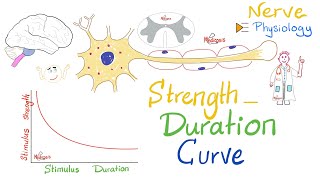
The Strength-Duration Curve - Nerve Physiology
Explore nerve excitability, action potentials, and the strength-duration curve. Learn about rheobase, chronaxie, and nerve structure for a comprehensive understanding of nerve physiology.

Stem Cells Types - Totipotent, Pluripotent, Multipotent, and Unipotent - Teratogens - Biology
Explore stem cell types and teratogens in biology, covering totipotent, pluripotent, multipotent, and unipotent cells, as well as their roles in development and potential risks.