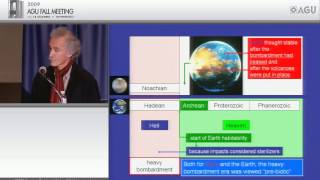
Mars Exploration: Bridging Our Past and Future
Explore Mars's geological history and its potential for hosting life through cutting-edge space missions and scientific discoveries, bridging our understanding of the Red Planet's past and future.
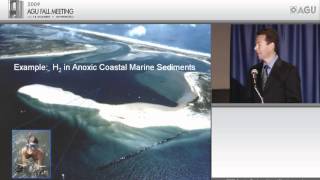
Life at the Common Denominator: Mechanistic and Quantitative Biology for Earth and Space Sciences
Explore life's fundamental requirements and potential across Earth and space through mechanistic and quantitative biology, examining energy, habitability, and environmental factors.
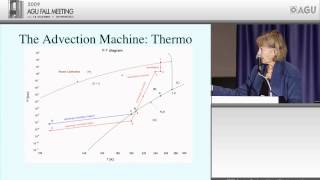
Enceladus: Oasis or Ice Ball? - Exploring Saturn's Enigmatic Moon
Explore Enceladus's intriguing features, from its size and chemistry to its unique terrains and geysers, drawing parallels with Earth's geothermal phenomena like Old Faithful.
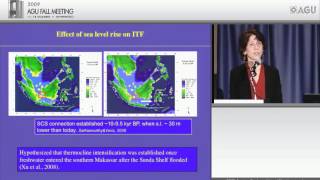
Holocene Changes in the Indonesian Throughflow Region
Explore Holocene-era changes in the Indonesian Throughflow region, examining climate patterns, ocean circulation, and their impacts on global systems over the past 11,700 years.
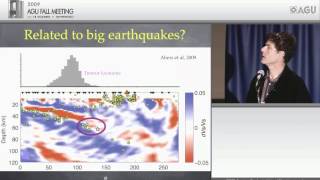
Tremor: The Curious Third Wheel of Fault Motion
Explore the intriguing phenomenon of tremor in fault motion, its characteristics, and implications for understanding earthquakes and tectonic processes.
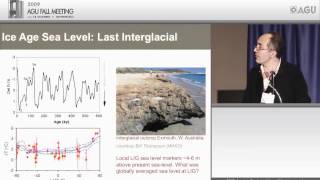
A Eulogy for Eustasy - Fall Meeting 2009 Birch Lecture
Explore the complexities of sea level change, challenging traditional models and examining new evidence from geological records, tide gauges, and satellite data.
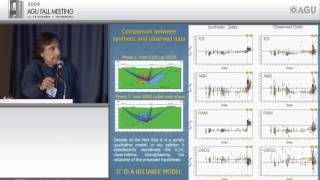
An Earthquake in an Ancient City - The April 2009 L'Aquila Seismic Sequence
Explore the seismic sequence of L'Aquila's April 2009 earthquake, examining its impact on the ancient Italian city and the scientific insights gained from this significant geological event.
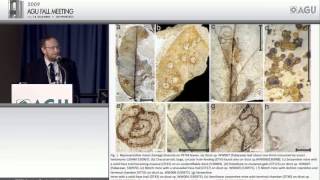
The Biggest Control Knob: Carbon Dioxide in Earth's Climate History
Explore Earth's climate history and CO2's pivotal role as the primary climate regulator, from ancient ice ages to modern global changes, with insights from geological evidence and ice cores.
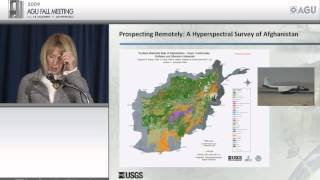
Frontiers of Geophysics - Advances in Earth Science Technologies
Explore cutting-edge geophysical technologies and their applications in earth sciences, from LiDAR to atmospheric rivers, with insights from USGS Director Marcia McNutt.
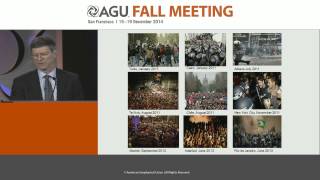
Frontiers of Geophysics - Lecture on Earth System Challenges
Renowned economist Jeffrey Sachs delivers a thought-provoking lecture on the intersection of geophysics, sustainable development, and global challenges in the 21st century.
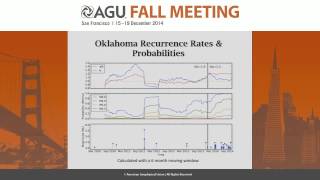
Multidisciplinary Approach to Identify and Mitigate Hazards from Induced Seismicity in Oklahoma
Explore Oklahoma's induced seismicity: causes, impacts, and mitigation strategies through multidisciplinary research and collaborative efforts.
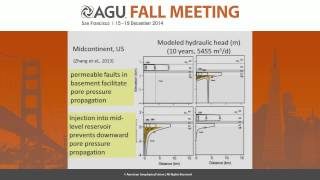
Connecting Wastewater Injection and Seismicity through Pore Pressure - AGU Lecture
Explore the link between wastewater injection and seismic activity through pore pressure analysis, covering key factors, physics, and modeling techniques.
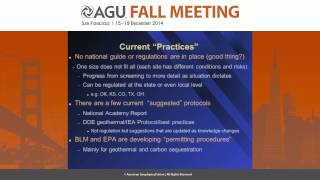
Latest Methods in Best Practices and Mitigation Efforts for Induced Seismicity
Explore cutting-edge techniques for managing and mitigating induced seismicity, focusing on best practices and innovative strategies to minimize earthquake risks associated with human activities.
Open NASA Earth Exchange: A Public-Private Partnership for Climate Change Research
Explore NASA's Earth Exchange initiative for climate research, focusing on community involvement, resource allocation, and practical solutions through public-private partnerships.
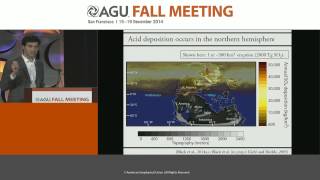
Reconstructing Permian-Triassic Climate during Siberian Traps Magmatism - Lecture U53A-08
Explore climate reconstruction during Siberian Traps magmatism, examining Large Igneous Provinces, volatile budgets, thermal modeling, and CO2 impacts on Permian-Triassic environments.
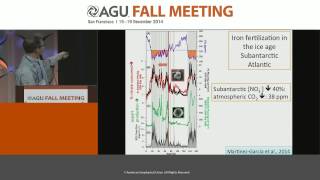
Southern Ocean Biogeochemical Control of Glacial-Interglacial Carbon Dioxide Change
Explore the Southern Ocean's role in glacial/interglacial CO2 fluctuations through Antarctic and subantarctic data analysis, modeling, and deglaciation insights.
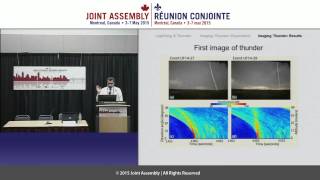
First Images of Thunder - Acoustic Signatures and Lightning Analysis
Explore groundbreaking research on capturing the first images of thunder, including acoustic beamforming techniques and triggered lightning experiments.
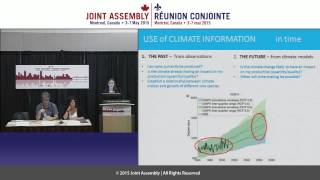
Climate Change and Winemaking in Quebec
Explore the impact of climate change on Quebec's wine industry, examining challenges and opportunities for winemakers in a shifting environment.
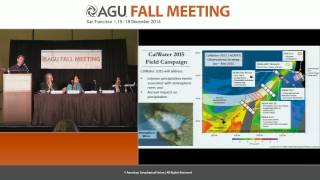
Refilling California's Reservoirs - Fall Meeting 2014 Press Conference
Explore strategies for replenishing California's water reservoirs amid drought conditions, examining innovative solutions and their potential impacts on the state's water security.
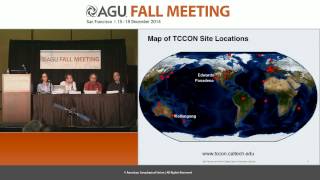
NASA's Orbiting Carbon Observatory Results - Fall Meeting 2014
Discover groundbreaking findings from NASA's Orbiting Carbon Observatory, revealing new insights into global carbon dioxide patterns and their impact on Earth's climate system.
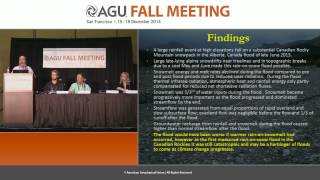
Rain on Snow Floods in a Changing Climate
Explore the impact of climate change on rain-on-snow floods, examining their frequency, intensity, and consequences for water management and ecosystems.