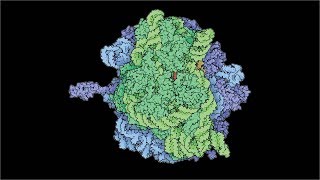
Origins of Life: Chemical Origins - Environments for Studying Origins of Life - Cuatro Ciénegas
Explora los ambientes únicos de Cuatro Ciénegas y su relevancia para el estudio del origen de la vida, examinando las condiciones químicas y geológicas que podrían haber facilitado la aparición de los primeros organismos vivos.
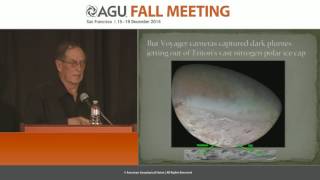
Active Volatile-Driven Geologic Processes Across the Solar System - Lessons for Planetary Explorers
Explore volatile-driven geologic processes across the Solar System and their implications for planetary exploration in this retrospective lecture by L.A. Soderblom.
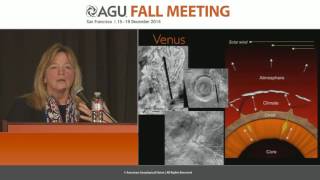
Searching for Earth-like Planets in Our Solar System and Beyond
Explore Earth-like planets in our solar system and beyond, comparing climates of Mars, Venus, and Titan to Earth's. Learn about exoplanet detection and future space missions.
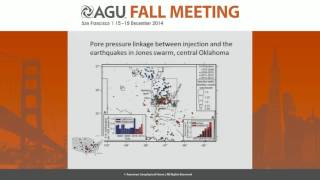
Connecting Wastewater Injection and Seismicity through Pore Pressure
Explore the link between wastewater injection and seismicity through pore pressure analysis, focusing on high-rate wells and permeable basement faults as key factors in induced earthquakes.
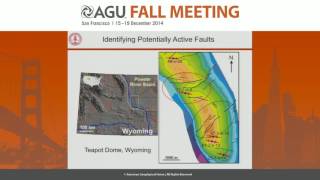
Managing the Risk of Triggered Seismicity: Identifying and Avoiding Potentially Active Faults in Oklahoma
Explore strategies to identify and avoid potentially active faults in Oklahoma, focusing on stress orientation data, injection practices, and geological factors to manage triggered seismicity risks.
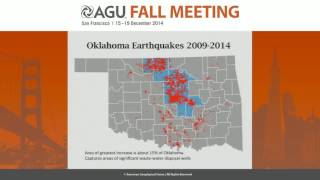
Multidisciplinary Approach to Identify and Mitigate Hazards from Induced Seismicity in Oklahoma
Exploring Oklahoma's increased seismicity: causes, challenges, and multidisciplinary research efforts to understand and mitigate risks associated with salt-water disposal wells and injection volumes.
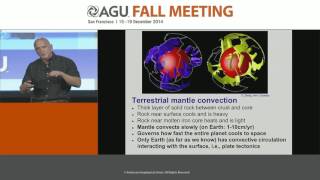
On the Origin of Plate Tectonics - The Birch Lecture
Explore the origins of plate tectonics, its relationship with Earth's climate and water, and its impact on planetary evolution through damage theory and grain-scale processes.
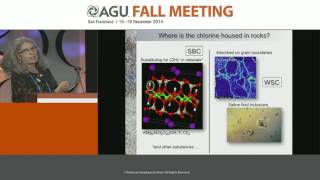
A Chlorine-Centric Perspective on Fluid-Mediated Processes at Convergent Plate Boundaries
Explore fluid-mediated processes at convergent plate boundaries through a chlorine-centric lens, examining geochemical interactions and their implications for volcanic and tectonic activity.
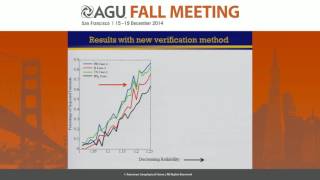
Maximizing Statistical Power When Verifying Probabilistic Forecasts of Hydrometeorological Events
Learn techniques to enhance statistical power in verifying probabilistic forecasts of hydrometeorological events, improving accuracy and reliability in weather and water-related predictions.
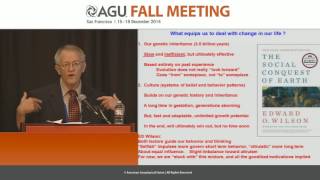
A Perspective on Accelerating Change
Exploring exponential environmental changes, human factors driving global challenges, and the need for new understanding modes to address complex prediction problems and foster progress.
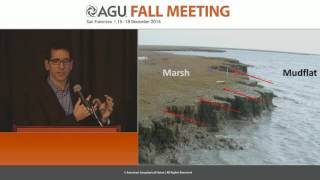
Living Landscapes: Present and Past Interactions Between Coastal Sediments and Biota - Sharp Lecture 2014
Exploring interactions between coastal sediments and biota, from modern wetland erosion to early life evidence in rocks, using models and experiments at the intersection of geomorphology, ecology, and paleontology.
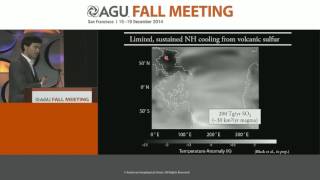
Trouble Upstairs: Reconstructing Permian-Triassic Climate during Siberian Traps Magmatism
Explore the impact of Siberian Traps magmatism on Permian-Triassic climate, examining its effects on atmospheric chemistry, ocean circulation, and potential extinction mechanisms.
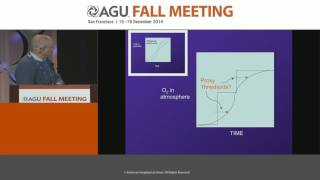
Ocean Ridges and Oxygen - Consequences for Planetary Habitability
Explore the connection between ocean ridges and oxygen, examining their role in planetary habitability and the Great Oxygenation Event through mass balance and thought experiments.
Responding to Evolution Doubt, Distortion, and Denial - Understanding Why People Reject Scientific Information
Strategies for addressing evolution skepticism, exploring cultural, religious, and scientific aspects to effectively communicate and defend evolutionary theory.
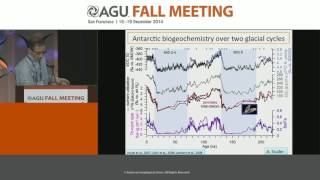
Southern Ocean Biogeochemical Control of Glacial/Interglacial Carbon Dioxide Change
Explore the Southern Ocean's role in glacial/interglacial CO2 changes through biogeochemical processes, Antarctic data, and model results in this comprehensive AGU presentation.
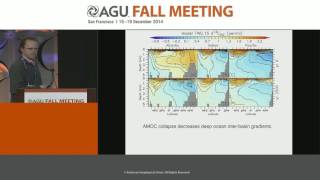
Carbon Isotopes and Atlantic Meridional Overturning Circulation Decline as Triggers for Early Deglacial CO2 Rise
Explore how carbon isotopes support the theory of Atlantic Meridional Overturning Circulation decline triggering early deglacial CO2 rise, challenging existing hypotheses.
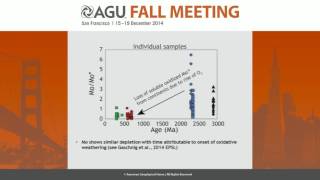
Using Ancient Glacial Diamictites to Track the Compositional Evolution of the Upper Continental Crust
Explore ancient glacial diamictites to understand the evolution of Earth's upper continental crust composition through geochemical analysis and sedimentary recycling insights.

Prediction of Geophysical Flow Mobility
Explore how grain size and flow volume affect geophysical flow mobility through lab experiments and simulations, focusing on energy dissipation and hazard assessment for natural phenomena.
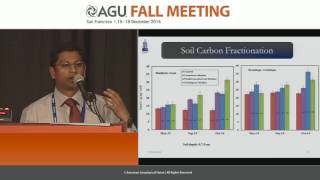
Influence of Biochar on Carbon and Nitrogen Transformation in Soil and Greenhouse Gas Emissions
Explore biochar's impact on soil carbon and nitrogen transformations, and its effects on greenhouse gas emissions in agricultural systems.
IODP Expedition 342 Newfoundland Documentary
Explore the IODP Expedition 342 to Newfoundland through this captivating documentary, showcasing groundbreaking oceanic research and scientific discoveries in the North Atlantic.
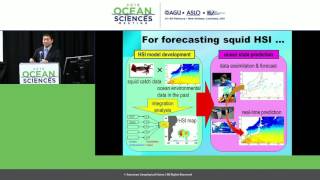
Forecasting Fisheries: Ocean Science Data for Sustainable Management
Experts discuss innovative ocean science data applications for sustainable fisheries management, exploring climate impacts and new forecasting methods to improve efficiency and conservation efforts.