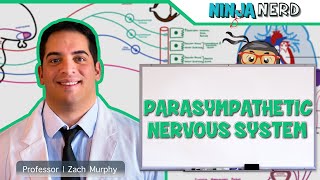
Neurology - Parasympathetic Nervous System
Comprehensive exploration of the parasympathetic nervous system, covering craniosacral outflow, target organs, effects, and associated ganglia. Ideal for those seeking in-depth understanding of neurological processes.

Development and Embryology of the GI Tract - Part 1
Explore embryonic gut development, including foregut, midgut, and hindgut formation, peritoneal structures, and related pathologies like omphalocele and Meckel's diverticulum.

Neurology - Abducens Nerve: Cranial Nerve VI
Comprehensive exploration of the abducens nerve, covering its anatomy, function, and clinical implications. Ideal for medical students and professionals seeking in-depth neurological knowledge.

Neurology - Facial Nerve: Cranial Nerve VII
Comprehensive exploration of facial nerve anatomy, including branches, fiber types, and target organs. Covers associated pathologies and clinical correlations for a deep understanding of Cranial Nerve VII.

Cardiovascular - Structures and Layers of the Heart
Comprehensive exploration of heart anatomy, focusing on key structures and layers. Ideal for medical students and healthcare professionals seeking in-depth understanding of cardiac physiology.

Cardiovascular - Cardiac Output
Comprehensive exploration of cardiac output, focusing on stroke volume, heart rate, and Frank Starling's law. Covers physiological factors affecting cardiovascular function.

Cardiovascular - Electrophysiology - Extrinsic Cardiac Conduction System
Explore the extrinsic cardiac conduction system, focusing on blood pressure regulation, sympathetic nervous system, and heart rate control mechanisms in this comprehensive electrophysiology lecture.

Cardiovascular - Blood Pressure Regulation - Hypertension
Comprehensive exploration of blood pressure regulation, hypertension mechanisms, and physiological responses for maintaining cardiovascular homeostasis. Covers key concepts and systems involved in blood pressure control.
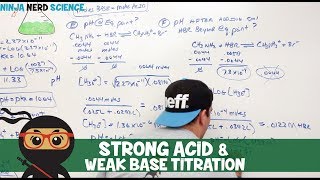
General Chemistry - Strong Acid & Weak Base Titration
Learn about strong acid and weak base titrations with practice problems, enhancing your understanding of chemical reactions and equilibrium in this comprehensive lecture.
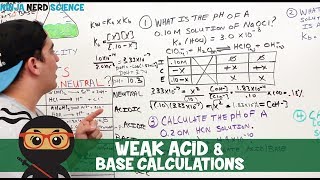
General Chemistry - Weak Acid & Base Calculations
Learn to solve weak acid and base calculations with practice problems, enhancing your understanding of general chemistry concepts and problem-solving skills.
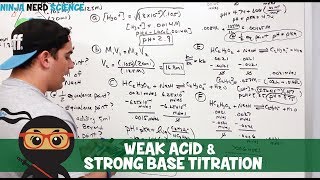
General Chemistry - Weak Acid & Strong Base Titration
Learn about weak acid & strong base titrations with practice problems, enhancing your understanding of general chemistry concepts and problem-solving skills.

General Chemistry - Acids & Bases
Comprehensive exploration of acid-base chemistry concepts, including definitions, properties, and reactions, enhancing understanding of fundamental chemical principles.
Organic Chemistry - Alcohol and Ether Mechanisms and Reactions
Explore alcohol and ether mechanisms and reactions in organic chemistry, covering key concepts and processes for a deeper understanding of these important compounds.
Organic Chemistry - Alcohol Mechanisms & Reactions
Practice problems on alcohols, ethers & epoxides, focusing on mechanisms and reactions. Enhance your understanding of organic chemistry concepts through hands-on problem-solving.

Anatomy of the Brain - Dissectible Model
Explore brain anatomy using a dissectible model, guided by Professor Zach Murphy. Gain insights into smaller structures and enhance your understanding of neuroanatomy through this detailed visual demonstration.

Immunology - Inflammation: Toll Like Receptors and Interferons
Explore toll-like receptors and interferons in inflammation, including signaling pathways. Gain insights into immune system mechanisms and their role in inflammatory responses.

Immunology - Inflammation: Complement Proteins
Explore complement proteins in inflammation, covering classical, alternative, and lectin pathways. Gain insights into immune system mechanisms and their role in inflammatory responses.

Immunology - Inflammation: Vascular Events
Explore vascular events in inflammation, including local chemical mediators, leukocytosis, margination, diapedesis, and positive chemotaxis. Gain insights into the physiological processes of the inflammatory response.

Immunology - Antibody Structure & Function
Comprehensive exploration of antibody types, structures, and functions in immunology. Covers IgG, IgA, IgM, IgE, and IgD, providing essential knowledge for understanding immune system responses.

Peroxisomes Structure & Function
Explore peroxisome structure and functions, including fatty acid oxidation, hydrogen peroxide metabolism, biosynthesis, and ethanol processing in this comprehensive cellular biology lecture.
Diabetes Mellitus - Type I and Type II: USMLE Step 2 Rapid Review
Comprehensive review of diabetes mellitus types I and II for USMLE Step 2, covering etiology, pathophysiology, clinical features, diagnosis, treatment, and complications in a concise, rapid-fire format.