Wave Function Evolver - Calculating Expectation Values - Episode 3
Explore wave function calculations, expectation values, and quantum mechanics concepts through interactive coding and visualization techniques.
Transforming the Preparation of Physics GTAs - Dr. Emily Alicea-Muñoz
Comprehensive GTA preparation program enhancing teaching skills, professional development, and learner-centered approaches for physics graduate students, with proven effectiveness through assessment.
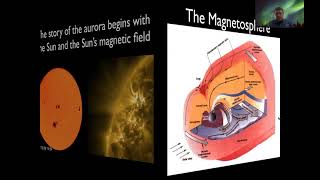
Auroral Currents
Explore the science behind auroral currents, from solar magnetic fields to Earth's magnetosphere, and their impact on navigation and technology. Gain insights from historical discoveries to modern space missions.
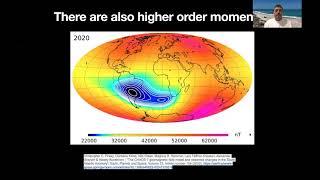
Planetary Magnetism Science
Explore planetary magnetism, dipole fields, Earth's magnetic structure, and other planets' magnetic properties in this concise lecture by Dr. Ramón López.
Breaking Out of the Physics Silo
Exploring interdisciplinary approaches to physics education, emphasizing risk-taking and personal growth for teachers to enhance their effectiveness and student engagement.
Electric Potential Calculation Using Double Integral - Part 1
Explore numerical integration to calculate electric potential of charged shapes using Scilab, with code examples and practical applications in physics.
Police Chase Simulation with Obstacles - Episode 7
Explore a physics simulation of a police chase with random obstacles, analyzing motion, probability, and decision-making using Scilab programming.
Double Pendulum Simulation: Coding and Energy Conservation - Part 5
Explore double pendulum physics through coding, focusing on energy conservation and chaotic motion. Skip algebra for practical implementation in VPython.
Pendulum Dynamics - Exploring Different Driving Functions
Explore pendulum behavior with different driving functions. Visualize and analyze changes in motion using Python simulations, including kick, sawtooth, and step functions.
Pendulum Dynamics in Phase Space - Damped Driven Pendulum Simulation
Explore damped driven pendulum behavior through phase space plots, with coding examples in VPython to visualize complex motion and periodic forces.
Pendulum Simulation - Breaking Simple Harmonic Motion
Explore pendulum motion beyond simple harmonic approximations through coding, visualizing how small angle assumptions break down as amplitude increases.
Wave Function Evolver: Lennard-Jones Simulation Analysis - Episode 10
Explore Lennard-Jones simulation behavior by modifying potential energy minimum locations. Augment code to analyze changes and generate insights for physics enthusiasts and programmers.
Gravity Simulator - Double-Planet System - Episode 3
Explore double-planet and trinary star systems using a gravity simulator. Learn to code physics simulations and visualize complex celestial interactions in VPython.
Gravity Simulator: Binary Star System - Episode 2
Explore gravitational interactions in binary star systems using a simulator. Learn about energy calculations, angular momentum, and the fascinating patterns of orbital motion.
Gravity Simulator - Sun and Earth Orbital Motion - Episode 1
Explore gravitational motion simulation using VPython, focusing on Sun-Earth dynamics. Learn about Euler-Cromer method, indices tracking, and Earth's scale in space.
Bouncy Balls Simulation - Temperature and Pressure Calculations - Episode 5
Explore temperature, pressure, and the Ideal Gas Law through bouncy ball simulations using VPython. Calculate and visualize ensemble properties in this engaging physics coding tutorial.
Bouncy Balls Collision Math - Episode 3
Explore elastic collision math for bouncy balls, covering conservation of momentum, parallel axis, and unit vectors. Practical application in coding physics simulations.
Projectile Motion Model Validation - Lecture 9
Explore projectile motion model validation through real-world examples and video analysis, enhancing understanding of physics concepts and practical applications.
Projectiles - Multiple Launches Using Loops
Explore projectile trajectories by systematically altering properties, enhancing understanding of physics concepts through coding and visualization techniques.
Quantum Mechanics for High School Teachers - Modeling Spin with Arrays in Python - Module 2
Explore quantum mechanics using Python arrays to model spin, measurements, and strange experiments, with hands-on challenges for high school physics teachers.
Training People to Teach with Computation
Strategies for integrating computation into physics courses, including expanding the circle of instructors, creating space for computational content, and exploring CS pathways for effective teaching.