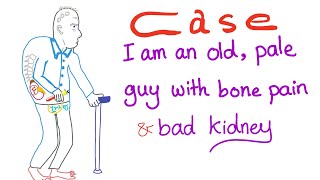
Case- Elderly Male With Bone Pain
Comprehensive review of multiple myeloma diagnosis, symptoms, imaging findings, lab results, complications, and treatment options for medical students and healthcare professionals.

Mast Cells in Allergic Asthma - Anaphylactic Shock
Comprehensive exploration of mast cells' role in allergic asthma and anaphylactic shock, detailing immune responses, mediator release, and physiological effects in various allergic reactions.
Causes of Hydrocephalus - What Is Going on in the Brain - Dr Najeeb
Comprehensive overview of hydrocephalus causes, including CSF overproduction, circulation abnormalities, and blockages. Explores various factors affecting cerebrospinal fluid dynamics in the brain.
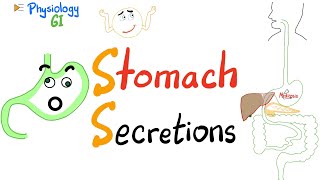
What Your Stomach Makes - Gastric Secretions - GI Physiology
Comprehensive exploration of gastric secretions, covering exocrine and endocrine functions, acid production mechanisms, and related physiological processes in the stomach.
Picmonic Microbiology - Campylobacter Jejuni, Vibrio Cholera, E.Coli Klebsiella
Animated mnemonics for key bacterial pathogens: Campylobacter jejuni, Vibrio cholera, E. coli, and Klebsiella pneumoniae. Learn their characteristics, virulence factors, and clinical presentations through engaging visual aids.
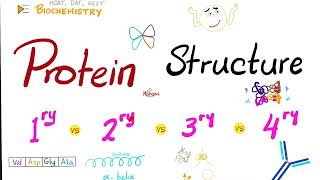
Protein Structure - Primary, Secondary, Tertiary, and Quaternary - Biochemistry
Explore protein structures from primary to quaternary levels, understanding their formation, characteristics, and roles in biochemistry and molecular biology.

Digestive System Mechanics - Digestion and Absorption
Explore the mechanics of digestion and absorption, covering gastrointestinal tract physiology, biochemistry, and common digestive issues. Learn about mechanical and chemical digestion processes.

The Gram-Positive Bacteria - Microbiology and Infectious Diseases
Explore Gram-positive bacteria, focusing on Staphylococci and Streptococci. Learn key characteristics, clinical relevance, and diagnostic features of these important pathogens in microbiology and infectious diseases.

Innate Immunity vs Adaptive Immunity - Complement System - Physiology Lectures Series
Comprehensive overview of innate and adaptive immunity, focusing on the complement system and its pathways. Explores key mechanisms of the body's defense against pathogens.
Picmonic Microbiology - Bacillus Anthracis, Bacillus Cereus, Mycobacteria
Explore key bacterial pathogens: Bacillus anthracis, B. cereus, and Mycobacteria. Learn their characteristics, associated diseases, and clinical presentations through animated mnemonics.

Muscle Contraction - Slow-Twitch vs Fast-Twitch - Isometric vs Isotonic - Muscle Physiology
Comprehensive overview of muscle physiology, covering contraction types, fiber differences, and structural components. Explores factors affecting muscle performance and efficiency.
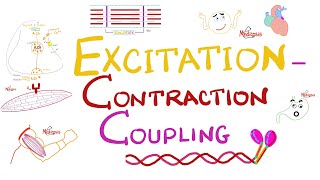
Excitation-Contraction Coupling - Muscle Physiology
Comprehensive exploration of muscle physiology, covering types, structures, and mechanisms of excitation-contraction coupling, with emphasis on key components and processes.
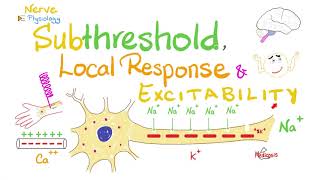
Subthreshold Stimulus, Local Response, Catelectrotonus, Anelectrotonus - Nerve Physiology
Explore nerve physiology concepts like subthreshold stimulus, local response, and electrotonic potentials. Learn about refractory periods and the all-or-none law in neural signaling.

Action Potential - Most Comprehensive Explanation - Nerve Physiology
Comprehensive explanation of action potential in nerve physiology, covering depolarization, repolarization, and hyperpolarization, with a focus on key concepts and mechanisms.
Picmonic Microbiology - Viridans, Streptococcus Pyogenes, Agalactiae, Bovis, Enterococci
Explore key gram-positive bacteria: Viridans, Streptococcus pyogenes, agalactiae, bovis, and Enterococci. Learn their characteristics, clinical significance, and diagnostic features through animated mnemonics.
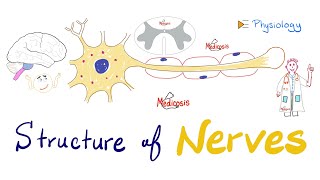
Structure of Neurons - Nerve Physiology
Explore neuron structure and nerve physiology, focusing on action potentials. Learn about the nervous system's components and their functions in this comprehensive overview.
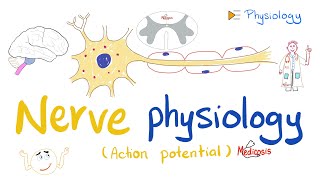
Nerve Physiology - Introduction to the Action Potential
Explore nerve physiology and the action potential in this comprehensive introduction, covering key concepts and mechanisms of neural signaling and communication.

Neurulation - Neural Tube & Neural Crest
Comprehensive exploration of neurulation, covering neural tube and neural crest formation in embryonic development. Builds on previous topics like gastrulation and blastulation.
Serum Osmolality - What Is the Osmolarity of Your Plasma?
Explore serum osmolality, its measurement, and clinical significance. Understand osmolality vs. osmolarity, dehydration, tonicity, and related concepts for improved patient care.
Picmonic Microbiology - Part 3
Explore key bacterial pathogens through animated mnemonics, focusing on Staphylococcus species. Enhance microbiology knowledge with engaging visuals and a comprehensive quiz.

Control of the Autonomic Nervous System - Baroreceptors, Juxtaglomerular
Explore autonomic nervous system control, baroreceptors, and juxtaglomerular apparatus. Learn about receptor types, agonists, antagonists, and blood pressure regulation mechanisms.