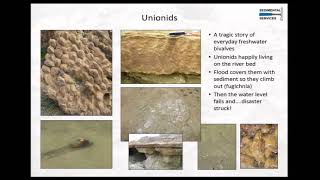
Almost Like Being There - New Approaches to Deciphering Animal Behaviour from Trace Fossils
Explore diverse trace fossils from worms to dinosaurs, uncovering ancient animal behaviors through innovative analysis techniques and recent discoveries in paleontology.
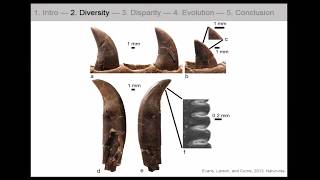
Morphology, Disparity, and Evolution of Theropod Teeth in the Late Cretaceous in Alberta
Explore theropod tooth evolution in Late Cretaceous Alberta through morphology and disparity analysis, revealing patterns across formations and time periods.
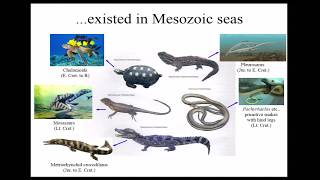
Global Distribution Achieved by Halisaurine Mosasaurs Explained by a New Discovery from Japan
New Japanese mosasaur skull discovery reveals insights into halisaurine survival strategies, explaining their global distribution in Cretaceous seas through unique adaptations and evolutionary traits.
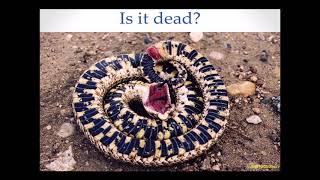
Snakes of Alberta
Learn to identify Alberta's native snakes, prevent encounters, protect habitats, and handle snake bites. Gain valuable insights on snake behavior, threats, and conservation efforts.
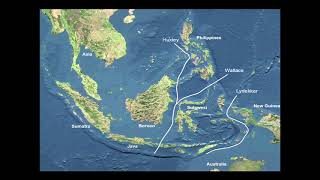
Ecological Opportunity and Adaptive Radiation of Fanged Frogs in Southeast Asia
Explore rapid speciation and evolution of fanged frogs in Southeast Asia, focusing on morphological diversity, ecological adaptations, and unique reproductive strategies.
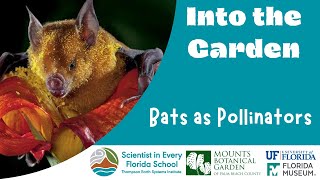
Into the Garden - Bats as Pollinators
Discover the vital role of bats as pollinators and insect controllers. Learn about Florida's bat species, their unique characteristics, and the challenges they face in this fascinating exploration of these misunderstood creatures.
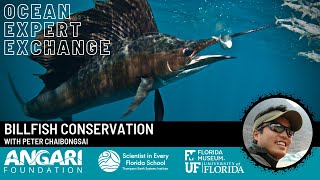
Ocean Expert Exchange - Billfish Conservation
Explore billfish conservation, including their characteristics, habitats, and tagging programs. Learn about research efforts and how to contribute to protecting these magnificent ocean creatures.
The Role of Microorganisms in the Everglades
Explore the vital role of microorganisms in the Everglades ecosystem, focusing on their impact on water quality and innovative methods for mitigating water pollution.
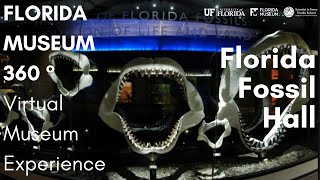
Florida Fossils - Evolution of Life and Land
Explore Florida's prehistoric past through a virtual tour showcasing fossil evolution across geological epochs, featuring ancient mammals, megalodon sharks, and the reasons behind their extinction.
Into the Garden - Bioaccumulation of Metals in Waterways
Explore bioaccumulation of heavy metals in aquatic ecosystems, focusing on the Mara River. Learn about environmental impacts, wetland management, and the importance of water quality for wildlife and human activities.
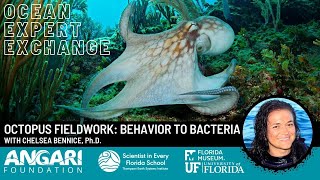
Octopus Fieldwork - Behavior to Bacteria
Explore octopus behavior, ecology, and microbiology with Dr. Bennice, an expert with 1,000+ hours of underwater research. Discover fascinating insights into these intelligent cephalopods through underwater photography and videography.
Wetlands - The Magic of Mud
Discover the crucial role of wetlands and their soil microorganisms in ecosystem resilience. Dr. Lisa Chambers explores the magic of mud and its impact on natural chemical cycles.
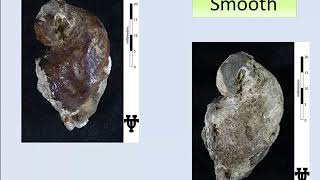
Removing Aged Consolidants from Historic Collections
Learn techniques for safely removing aged consolidants from historic fossil collections, focusing on a new procedure tested at the University of Texas.
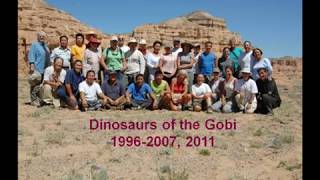
Extracting Data from Poached and Old Quarries in the Nemegt Formation of Mongolia
Exploring Mongolian fossil sites: challenges, techniques, and insights from the Nemegt Formation, including dealing with poaching and old excavations.
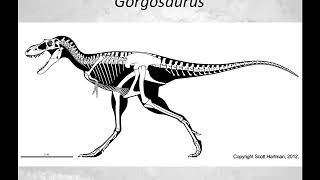
Scientific Communication of Fossil Preparation in the Digital Realm
Explore digital scientific communication in paleontology, focusing on fossil preparation techniques and their presentation to the public through social media and online platforms.
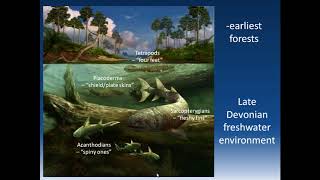
To Hay River and Back: Fieldwork on a 370-Million-Year-Old Beach in the Northwest Territories
Explore a 370-million-year-old beach in the Northwest Territories through paleontological fieldwork, fossil discoveries, and the challenges of excavating ancient marine life in remote Canadian landscapes.
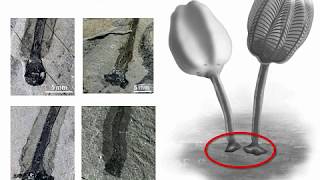
Community Structure in the Burgess Shale: Insights from a New Locality
Explore Burgess Shale's community structure through a new locality, examining preservation, ecology, and diversity of ancient marine life in this paleontological investigation.
Chasing Earthquake and Volcanism Signals in a Deep Marine Channel - The Hikurangi Channel New Zealand
Explore the Hikurangi Channel's geological history, examining earthquake and volcanic signals through sedimentary analysis of this massive deep marine system off New Zealand's coast.
Exploring Autogenic and Allogenic Processes in Lobyte3D
Explore autogenic and allogenic processes in deep-water fan systems using Lobyte3D, a stratigraphic forward model, to investigate signal recording and extraction in sedimentary strata.

Glacial Mars and Its Morphological Mysteries
Explore Mars' glacial landscapes, recent ice history, and morphological mysteries. Dr. Frances Butcher discusses glaciation, meltwater, and intriguing features like eskers and inverted channels on the Red Planet.
What Triggered the Cambrian Explosion? - Rachel Wood
Explore the triggers of the Cambrian Explosion, including oxygen stability, animal diversification, and predation's role in carbonate production, with insights from Ediacaran to Cambrian research.