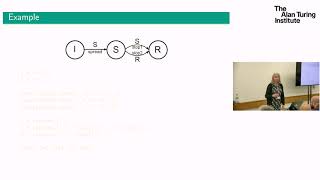
Integrating Inference with Stochastic Process Algebra Models - Jane Hillston, Edinburgh
Explore probabilistic programming for continuous-time systems using ProPPA, an extension of Bio-PEPA. Learn parameter inference methods and applications in biology, ecology, and urban transport.
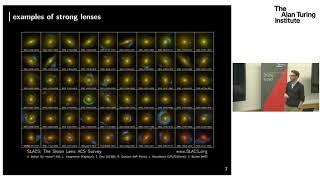
Exploring the Cosmos with Deep Learning
Explore how deep learning revolutionizes cosmology, from detecting gravitational lenses to generating galaxy images and modeling cosmic structures, addressing challenges in modern astronomical surveys.
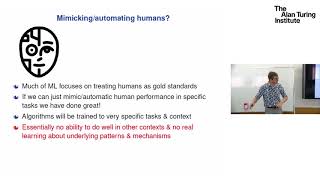
Beyond Tech - Machine Learning in Science & Policy - Professor David Dunson, Duke
Exploring machine learning applications beyond tech, highlighting challenges in science and policy. Discusses fair algorithms, interpretable models, and the need for targeted methods in complex domains.
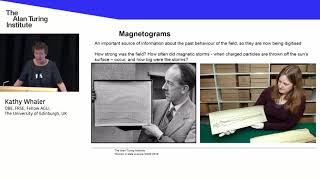
How Big Data Has Transformed and Is Transforming Geophysics
Exploring geophysical advancements: from analog instruments to digital data collection, satellite technology, and machine learning, revolutionizing Earth and planetary studies.
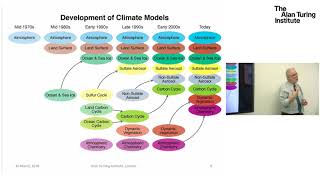
Responding to Complexity - Modelling and Organising Climate Data in CMIP6 - Dr Jeremy Walton
Explore climate data modeling in CMIP6, focusing on UK Earth System Model. Learn about processing pipelines, data conversion, and output analysis for advanced climate research.
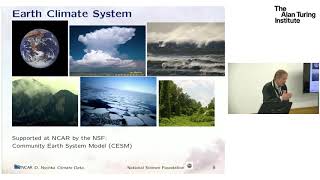
Climate Data Science: A Tour - Professor Doug Nychka, National Center for Atmospheric Research
Explore climate data science through statistical analysis, modeling, and Earth observation techniques. Learn about climate systems, data representation, and challenges in Earth system science.
Climate Change Mitigation and Adaptation
Showcasing climate forecasting and mitigation research to future-proof cities, build sustainable systems, and pre-empt climate security challenges through AI and data science innovations.
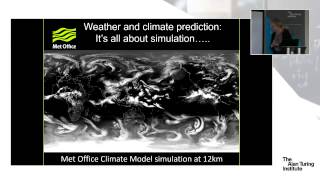
Big Data, Met Office and 21st Century Problems
Explore weather forecasting, climate prediction, and big data analysis at the Met Office. Learn about simulation techniques, ensemble forecasting, and addressing 21st-century environmental challenges.
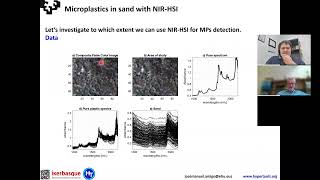
Classical and Generalized Least Squares
Explore advanced least squares techniques for analytical chemistry, including applications in microplastics detection and spectral analysis of biological samples.
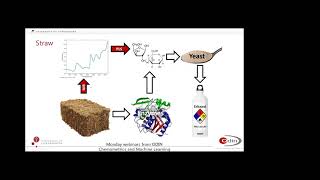
The Cage of Covariance
Explore strategies for handling correlated variables in data analysis, including orthogonalization techniques and predictive component methods.
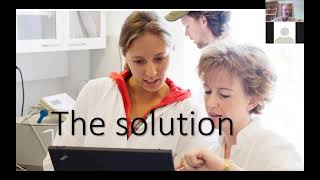
Fusing Calibration Models
Explore techniques for merging multiple calibration models to improve efficiency and robustness in quality control, with a focus on balancing simplicity and prediction accuracy.
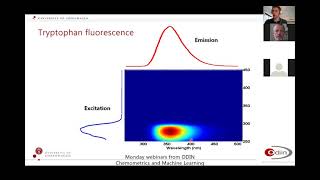
Fluorescence in One Hour
Explore fluorescence spectroscopy's principles, applications, and limitations. Learn about factors affecting signals, measurement techniques, and data analysis methods for sensitive compound detection.
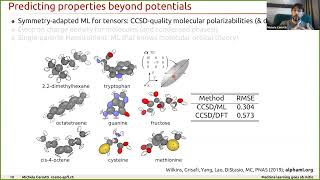
Machine Learning in Condensed Matter and Materials Physics
Explore machine learning applications in condensed matter physics, from electronic simulations to material engineering. Discover how ML enhances computational methods and enables new physical insights for exotic materials.
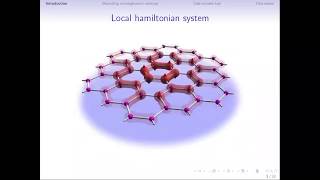
Entanglement Subvolume Law for 2D Frustration-Free Spin Systems
Explore entanglement entropy in 2D frustration-free spin systems, examining Hastings' proof, robust polynomials, and the Whole Screen Directivity Lemma.
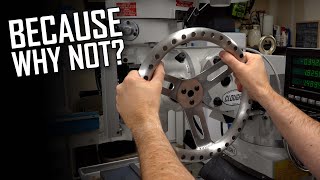
Installing a Custom Racing Wheel on My Milling Machine
Step-by-step guide to replacing a milling machine's speed handle with a steering wheel, including 3D printing, lathe work, and keyway slotting. Improves quill feed usability and positioning.

Geologic Time and Dating Rocks Without Isotopes - Biostratigraphy and Lithostratigraphy
Explore geological dating methods beyond isotopes, including biostratigraphy and lithostratigraphy. Learn how fossils and rock types help construct the geologic timescale and correlate rocks globally.
Towards Protocol Design for Quantum Entanglement Routing - Chen Qian, UC Santa Cruz
Explore quantum entanglement routing protocols for long-distance secret sharing in quantum networks. Learn about challenges, models, and algorithms for scalable quantum communication.
The CubeRover for Lunar Mobility as a Service
Explore CubeRover: an innovative, ultra-light lunar rover for diverse payloads. Learn about its modular design, scalability, and potential to revolutionize lunar exploration and commercial space ventures.
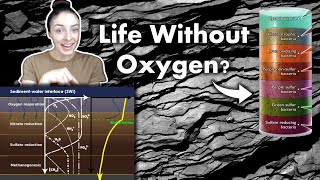
Life in Oxic, Suboxic, and Anoxic Sediments - Yes, Some Life Doesn't Require Oxygen!
Explore microbial life in sediment layers, from oxygen-rich to oxygen-free zones. Learn about diverse metabolic processes and their impact on organic matter decomposition in marine and freshwater environments.
Composition, Texture, and Classification of Sedimentary Rocks - Sed Strat 1
Explore sedimentary rock formation, classification, and characteristics. Learn about clastic, chemical, and biogenic types, textures, structures, and diagenesis effects on rock properties.
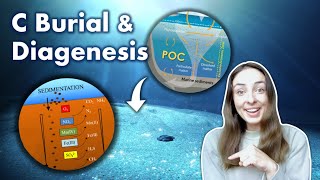
Organic Carbon Burial and Diagenesis - How Much Organic Carbon Is Actually Preserved?
Explore organic carbon burial and diagenesis in marine sediments, from production to preservation. Learn about microbial degradation, sediment reactions, and the surprisingly small fraction of carbon ultimately preserved.