Genomic Inbreeding - Introduction to Genomics Theory
Explore genomic inbreeding, runs of homozygosity, and their applications in detecting selection signatures and recessive disorders. Learn key concepts like identity-by-descent and inbreeding coefficients.
Selection Signatures - Introduction to Genomics Theory - Genomics 101
Learn about selection signatures in genomics, including genetic hitchhiking, types, detection methods, and analysis across populations. Ideal for beginners interested in SNP data and genomic concepts.
Genomic Admixture - Introduction to Genomics Theory
Explore genomic admixture in crossbreeding populations, covering definitions, interpretation, and practical considerations like ancestry informative SNPs. Ideal for beginners in genomics and SNP data analysis.
Genome-Wide Association Studies - Introduction to Genomics Theory
Explore genome-wide association studies (GWAS) in genomics, covering key concepts, applications, statistical challenges, and population structure considerations for pinpointing trait-influencing genomic regions.
Linkage Disequilibrium - Introduction to Genomics Theory
Explore linkage disequilibrium in genomics, its importance, metrics, and applications. Learn about LD block structure, genetic distance, and how it reveals population history and selection pressures.
SNP Chips - Introduction to Genomics Theory - Genomics 101
Beginner-friendly introduction to SNP chip technology in genomics, covering basic concepts, data handling, allele coding, and chip types. Ideal for those new to genomics seeking to understand SNP data analysis.

DNA and Genetic Markers - Introduction to Genomics Theory
Explore DNA basics, genomic revolution, and markers in this beginner-friendly introduction to genomics theory, covering fundamental concepts and their applications in modern science.
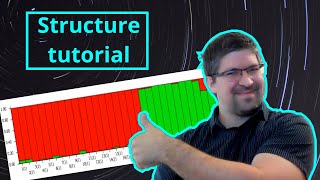
Structure Tutorial
Learn to use Structure software for population admixture analysis using SNP data. Covers data preparation, project setup, analysis execution, and result visualization with a goat genotype example.
VarLD- Linkage Disequilibrium Based Selection Signatures - A Comprehensive Tutorial
Comprehensive tutorial on using varLD software for analyzing selection signatures based on linkage disequilibrium, covering prerequisites, data preparation, execution, and result visualization.

1910s Saw Blade Filer Restoration
Detailed restoration of a 1910s saw blade filer, showcasing disassembly, repairs, machining new parts, and reassembly. Highlights the tool's history and intricate mechanics.

Quantum Physicist Dissects Ant-Man - Movie Physics
A quantum physicist analyzes the scientific accuracy of Ant-Man, exploring concepts like atomic distances, quantum realms, and shrinking technology while proposing alternative scenarios that balance scientific correctness with storytelling needs.
A Functional Classification of Glutamatergic Circuits in Cortex and Thalamus
Explore glutamatergic circuits in cortex and thalamus, focusing on functional classification, postsynaptic receptors, and metabotropic components. Gain insights into dynamic basal ganglia and modulation of driver inputs.
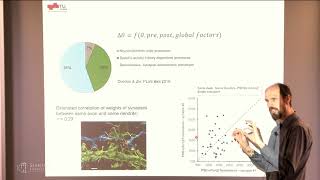
Dynamic Neural Network Structures Through Stochastic Rewiring
Explore stochastic rewiring in neural networks, covering plasticity, noise, and reward-based learning, with insights into parameter dynamics and experimental findings.
Does the Neocortex Use Grid Cell-Like Mechanisms to Learn the Structure of Objects?
Explore how the neocortex might use grid cell-like mechanisms to learn object structure, drawing parallels between spatial navigation and object recognition in the brain.
The Prefrontal Cortex as a Meta-Reinforcement Learning System
Explore the prefrontal cortex's role in meta-reinforcement learning, connecting neuroscience and AI through recurrent neural networks and cognitive tasks like Harlow's experiment.
Automated Reconstruction of Synaptic-Resolution Neural Wiring Diagrams
Explore automated reconstruction of neural wiring diagrams using advanced techniques like generative adversarial networks and crowdsourcing, with applications in connectomics and targeted brain data discovery.
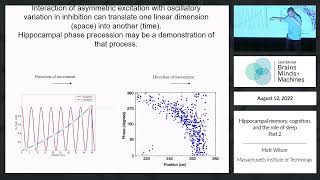
Hippocampal Memory, Cognition, and the Role of Sleep - Part 2
Explore hippocampal memory, cognition, and sleep's role through phase processing, decoding, spatial navigation, and neural mechanisms in this comprehensive lecture.
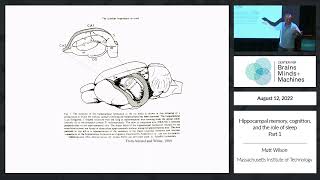
Hippocampal Memory, Cognition, and the Role of Sleep - Part 1
Explore hippocampal structure, memory coding, and electrophysiology techniques. Delve into working hypotheses and data interpretation in neuroscience research.
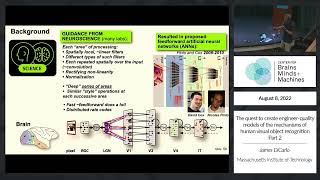
The Quest to Create Engineer-Quality Models of the Mechanisms of Human Visual Object Recognition - Part 2
Explore advanced neural models and mechanisms of human visual object recognition, including linear decoders, adversarial attacks, and individual variability in visual processing.

Faces
Explore primate face recognition, from neural substrates to computational principles, examining face cells, processing systems, and recognition architectures in this comprehensive overview.
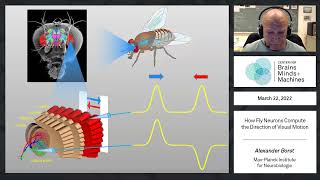
How Fly Neurons Compute the Direction of Visual Motion
Explore how fly neurons process visual motion direction, focusing on cellular mechanisms, biophysical models, and recent discoveries in Drosophila's neural circuits for motion detection.