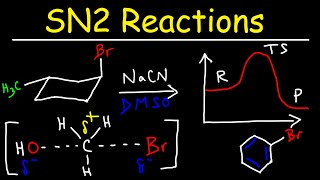
SN2 Reaction Mechanisms
Comprehensive introduction to SN2 reaction mechanisms, covering stereochemistry, substrate reactivity, nucleophilic strength, and practical applications in organic chemistry synthesis.
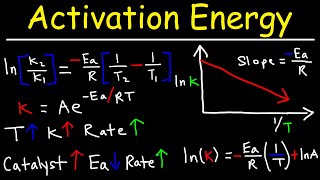
Collision Theory - Arrhenius Equation & Activation Energy - Chemical Kinetics
Explore collision theory, Arrhenius equation, and activation energy in chemical kinetics. Learn to calculate rate constants and understand energy diagrams for chemical reactions.
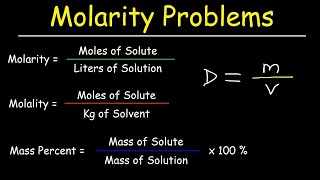
Molarity, Molality, Volume and Mass Percent, Mole Fraction and Density - Solution Concentration Problems
Learn to calculate solution concentrations using various methods, including molarity, molality, volume percent, mass percent, and mole fraction. Practical examples and problem-solving techniques provided.

Acids and Bases - Basic Introduction - Organic Chemistry
Comprehensive introduction to acids and bases in organic chemistry, covering reactions, conjugates, Brønsted-Lowry and Lewis definitions, and equilibrium concepts.

Crystal Field Theory
Introduction to crystal field theory, covering splitting diagrams, ligand fields, and magnetic properties of transition metal complexes. Explains high vs low spin configurations and their implications.

Physics - Basic Introduction
Comprehensive introduction to fundamental physics concepts, covering distance, velocity, acceleration, force, and Newton's laws for a solid foundation in mechanics.
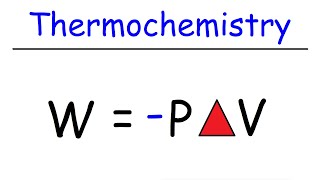
Thermochemistry Equations and Formulas With Practice Problems
Learn essential thermochemistry equations and formulas, and practice solving common problems to strengthen your understanding of this fundamental chemistry topic.

How Your Brain Organizes Information
Explore cognitive maps and how the brain organizes information for flexible behavior. Learn about hippocampal neurons, non-spatial mapping, graph theory, latent spaces, and factorized representations in neuroscience.
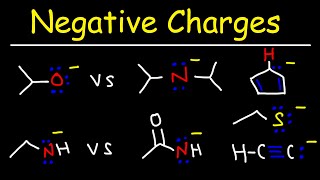
Stability of Negative Charges - Acids and Bases
Explore factors influencing negative charge stability in organic chemistry, including atomic size, electronegativity, resonance, and hybridization. Essential for understanding acids and bases.
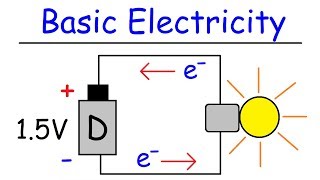
Electricity - Basic Introduction
Comprehensive introduction to electricity, covering voltage, current, resistance, circuits, and components. Ideal for beginners seeking a solid foundation in electrical concepts and principles.
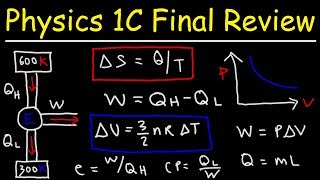
Physics 1C Final Exam Review - Entropy, Thermodynamics, Gas Laws, Specific Heat & Calorimetry
Comprehensive review of advanced physics concepts including thermodynamics, gas laws, heat transfer, and entropy. Covers theoretical principles and practical problem-solving techniques for final exam preparation.

Carbon-13 NMR Spectroscopy
Comprehensive introduction to carbon-13 NMR spectroscopy, covering decoupled and coupled spectra, DEPT, chemical shifts, and functional group analysis for organic compound identification.
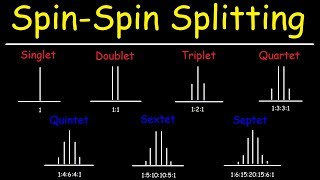
Spin Spin Splitting - N+1 Rule - Multiplicity - Proton NMR Spectroscopy
Comprehensive introduction to spin-spin splitting in proton NMR spectroscopy, covering N+1 rule, multiplicity, signal intensity ratios, and complex splitting patterns using practical examples.
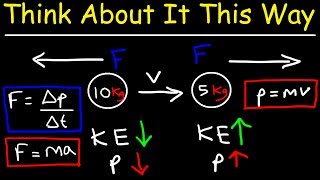
Physics - What Really Is a Force?
Explore the concept of force through momentum and energy transfer, with practical examples and formulas for a deeper understanding of physics principles.

Physics 2 - Basic Introduction
Basic introduction to electricity concepts including electric force, field, and potential, with practical problem-solving and calculations.

Carbohydrates - Haworth and Fischer Projections With Chair Conformations
Learn to convert Fischer projections of glucose to Haworth projections and chair conformations. Covers monosaccharides, disaccharides, polysaccharides, and key concepts in carbohydrate chemistry.
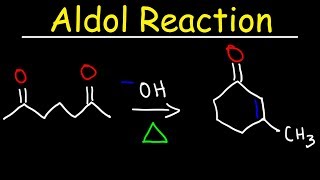
Aldol Addition Reactions, Intramolecular Aldol Condensation Reactions, Retro Aldol and Cross Aldol Reactions
Comprehensive overview of aldol reactions, including addition, condensation, intramolecular, retro, and cross aldol reactions. Covers mechanisms and provides practice problems for better understanding.
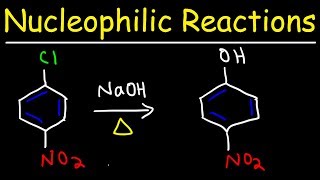
Nucleophilic Aromatic Substitution - Benzyne Intermediate and Meisenheimer Complex
Explore nucleophilic aromatic substitution reactions, including Meisenheimer complex and benzyne intermediate mechanisms, with practice problems and detailed explanations.
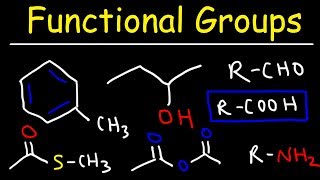
Functional Groups
Comprehensive introduction to organic chemistry functional groups, covering structures from alkanes to carbenes, essential for understanding molecular properties and reactions.
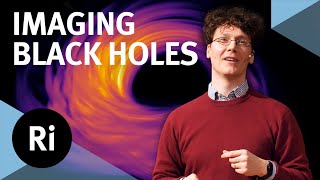
How to Photograph a Black Hole - With Ziri Younsi
Explore the groundbreaking journey of photographing black holes with physicist Ziri Younsi, delving into their nature, imaging techniques, and implications for our understanding of the universe.

The Immcantation Suite - A Collection of Open Source Software Tools to Study Antibodies
Explore Immcantation: open-source tools for antibody analysis. Translate genetic codes into immune system insights using Python and R packages, available as a Docker container with example workflows.