Dust Properties of Galaxies from a Data-Driven Hierarchical Model - John Forbes
Explore data-driven hierarchical modeling to uncover dust properties in galaxies, revealing insights into galaxy formation and evolution through advanced statistical techniques.
Computational and AI Funding Opportunities - Andreas Berlind (NSF)
Explore NSF funding opportunities for computational and AI research in astrophysics. Learn about available grants and how to apply for support in astrostatistics and machine learning projects.
Galaxy Zoo in the Deep Learning Era - Mike Walmsley
Exploring Galaxy Zoo's evolution with deep learning, focusing on self-supervised techniques and new tools for galaxy morphology analysis in the era of big astronomical data.
Galaxy Merger Reconstruction with Generative Graph Neural Networks - Yuan Sen Ting
Exploring galaxy merger reconstruction using generative graph neural networks, advancing our understanding of galaxy formation and evolution through innovative machine learning techniques.
Finding Environmental Measures Sensitive to Halo Properties Using Neural Networks
Exploring neural networks to identify environmental measures that reveal halo properties in galaxy formation studies, enhancing our understanding of cosmic structure evolution.
The Brightest Cluster Galaxy and Intracluster Light - Louise Edwards
Explore the Brightest Cluster Galaxy and Intracluster Light in this talk by Louise Edwards. Gain insights into galaxy clusters, their central galaxies, and the diffuse light between them.
Learning to Simulate the Universe with Deep Learning - Elena Giusarma
Explore deep learning techniques for simulating the universe, focusing on innovative approaches to model cosmic structures and enhance our understanding of galaxy formation and evolution.
Star Formation Histories of Galaxies Near and Far
Explore galaxy formation and evolution through star formation histories, using advanced statistical and machine learning techniques to analyze vast datasets from current and future astronomical surveys.
Outliers - How I Learned to Love Them, and Why You Should Too
Discover the value of statistical outliers in galaxy formation studies. Learn how anomalous galaxies challenge current paradigms and drive new insights in astrophysics and cosmology.
Tracing Dark Matter with Stars - Lina Necib
Explore innovative techniques for detecting dark matter using stellar dynamics. Learn how advanced statistical methods and machine learning are revolutionizing our understanding of galactic structure and evolution.
Using Algebraic Factorizations for Interpretable Learning - IPAM at UCLA
Explore Non-negative Matrix Factorization for interpretable learning in imaging, medicine, forecasting, and collaborative filtering. Learn implementation, online, and streaming variations.
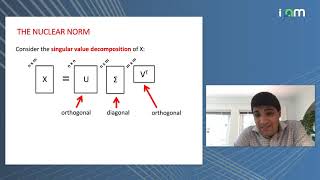
Tensor Decompositions and Their Applications
Explore advanced tensor decomposition techniques and their applications in latent variable models, phylogenetics, mixture models, and orbit retrieval with MIT's Ankur Moitra.
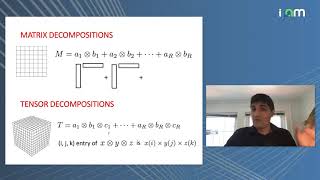
Tensor Decompositions and Their Applications
Explore tensor decompositions and their applications in latent variable models, focusing on Jennrich's algorithm and its use in various fields like phylogenetics and mixture models.
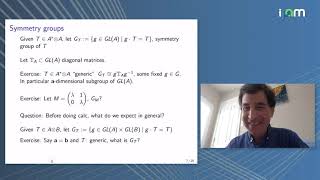
Introduction to the Geometry of Tensors
Explore the geometric perspective of tensors, their applications, and how this viewpoint enhances understanding in various fields. Gentle introduction suitable for beginners.
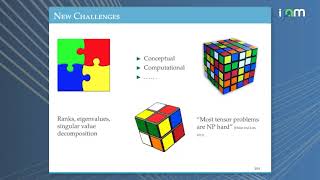
Low Rank Tensor Methods in High Dimensional Data Analysis
Explore low rank tensor methods for analyzing high-dimensional data in various fields. Learn about recent progress, challenges, and applications in extracting information from multilinear arrays.
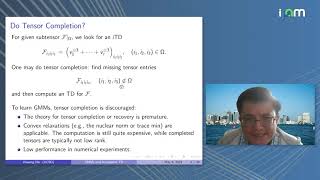
Learning Diagonal Gaussian Mixture Models and Incomplete Tensor Decompositions
Explore parameter learning in diagonal Gaussian mixture models through incomplete symmetric tensor decompositions, with applications in tensor approximation and stability analysis.
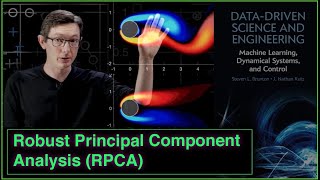
Robust Principal Component Analysis
Explore robust PCA for handling corrupted data in fields like fluid mechanics and image processing. Learn its applications and importance in data-driven science and engineering.
Workshop on Parameter Estimation with Bilby by Greg Ashton
Learn parameter estimation techniques for gravitational wave analysis using bilby software, focusing on Bayesian inference and practical applications in astrophysics.
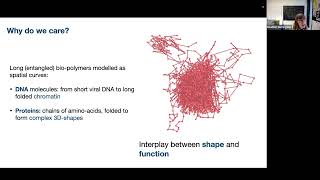
Shape of Data in Biology - Extending the PH Pipeline
Exploring spatial structure in biological data using topological data analysis, with focus on knotted proteins and introducing hyperTDA for interpretable, automated analysis of complex systems.
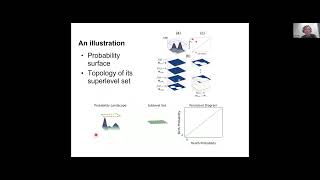
Non-Diffusive Vortexes at Transition State of Activated Process by Persistent Homology
Exploring non-diffusive dynamics in molecular transitions using persistent homology, revealing reactive vortexes and rotational fluxes at transition states of alanine-dipeptide isomerization.
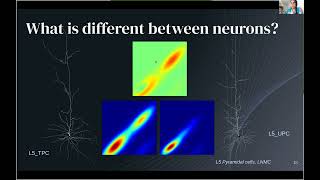
A Topological Understanding of Neuronal Morphologies
Exploring topological data analysis for neuronal morphologies, from single cells to networks. Highlights applications in classification, clustering, and solving inverse problems in neuroscience.