Probing Thermodynamic Stability With Generative Models - From Sampling to Coarse-Graining and Back
Exploring generative models for thermodynamic stability analysis, from sampling techniques to coarse-graining methods, with applications in nanoparticle assembly and functional materials design.
Accelerating the Discovery and Design of Nanoparticle Assemblies - Marjolein Dijkstra
Explore cutting-edge techniques for discovering and designing nanoparticle assemblies, focusing on mesoscale materials that combine atomic properties with structural complexity for advanced functional applications.
Self-Assembling Ultrathin Nanowires Into Bundles, Fibres & Transparent Electrodes - Tobias Kraus
Explore self-assembly of ultrathin nanowires into complex structures and their applications in transparent electrodes. Learn about hierarchical approaches to functional materials at the mesoscale.
Repurposing the Blueprint for Life Through Colloidal Crystal Engineering With DNA
Explore DNA-based colloidal crystal engineering for innovative materials design. Discover how nanoparticle assembly at the mesoscale combines atomic properties with structural complexity, opening new frontiers in functional materials.
From Geometrically Frustrated Assemblies to Metamaterials - Xiaoming Mao
Exploring the transition from geometrically frustrated assemblies to metamaterials, focusing on nanoparticle assembly and its applications in creating functional materials with unique structural properties.
Emergent Phenomena in Semiconductor Nanoparticle Assemblies - Tobias Hanrath
Explore emergent phenomena in semiconductor nanoparticle assemblies, focusing on mesoscale materials, quantum functions, and structural complexity. Gain insights from interdisciplinary perspectives in chemistry, physics, and engineering.
Macroscopic Nanoparticle Superlattices via Self-Assembly - Rob Macfarlane
Explore nanoparticle superlattice self-assembly, its applications, and future directions in materials science. Gain insights from MIT expert Rob Macfarlane on this cutting-edge field of research.
Self-Assembly of Electrostatically-Stabilized Nanocrystal Into Strongly Electronically Coupled Supercrystalline Solids - Dmitri Talapin
Explore nanocrystal self-assembly and supercrystalline solids formation, focusing on electrostatic stabilization and strong electronic coupling. Gain insights into hierarchical approaches for functional materials at the mesoscale.
Nonequilibrium Design Strategies for Functional Colloidal Assemblies - David Limmer
Explores nonequilibrium strategies for designing functional colloidal assemblies, focusing on mesoscale nanoparticle assembly and its applications in creating complex, quantum-enabled materials.
Dynamics and Emergent Complexity in Self-Assembled Nanoparticle Superlattices - Xingchen Ye
Explore dynamics and emergent complexity in self-assembled nanoparticle superlattices. Discover hierarchical approaches to functional materials operating at the mesoscale, combining atomic nature with structural complexity.
Coarse-Grained Simulations of Polymer-Grafted Nanoparticle Monolayers - Lisa Hall
Explore coarse-grained simulations of polymer-grafted nanoparticle monolayers in this talk by Lisa Hall, discussing advanced techniques for modeling complex nanostructures and their applications.

Anatomy Masterclass - The Abdominal Cavity
Comprehensive exploration of abdominal cavity anatomy, covering musculoskeletal borders, internal structures, and division schemes. Ideal for medical students and anatomy enthusiasts seeking in-depth understanding.

Strategies Without Frontiers - Game Theory in Security
Explore game theory concepts and strategies, from classic dilemmas to real-world applications. Learn about equilibrium, signaling, and iterated games in this comprehensive overview.
Terminal Cornucopia: Demystifying The Mullet - Lecture 4
Explore innovative security vulnerabilities in airport terminals and learn about unconventional weapon creation using everyday items, as demonstrated by security researcher Evan Booth.

Choosing Your Next Antenna: Types, Power, and Sizes - The Truth
Explore antenna types, power, and sizes for optimal wireless performance. Learn key factors in selecting the right antenna for your needs.

How to Build Happier and Healthier Cities
Discover how urban design impacts health, climate, and quality of life. Learn strategies for creating sustainable, equitable cities that prioritize people over cars.

Understanding COVID Testing and Prevention: View from a Primary Care Physician
Insights on COVID-19 testing and prevention from a Harvard-affiliated primary care physician, covering real-world experiences, vaccine information, and addressing audience questions.

Evaluating the Family After Sudden Death in the Young
Understand postmortem genetic testing and family evaluation after sudden cardiac death in young individuals. Learn about pathology, causes, and risk assessment for inherited cardiovascular diseases.

Fostering Change: ACMG's New Diversity, Equity and Inclusion Committee
Explore ACMG's new DEI Committee initiatives to increase diversity in medical genetics, including mentorship programs, expanded participation, and long-term strategies for inclusivity.
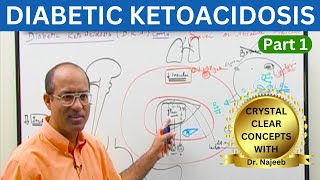
Diabetic Ketoacidosis - Symptoms, Causes, and Diagnosis - Part 1
Comprehensive exploration of diabetic ketoacidosis, covering symptoms, causes, and diagnosis. Delves into insulin deficiency, ketogenesis, and metabolic changes, providing valuable insights for medical professionals and students.
Physics-Constrained Reservoir-Computing for Turbulence and Chaotic Learning
Explore physics-constrained reservoir-computing for turbulence and chaotic learning, combining physical principles with empirical modeling to predict and optimize complex fluid flows in aerospace propulsion and turbulence.