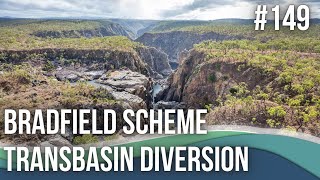
The Bradfield Scheme
Comprehensive analysis of the Bradfield Scheme, exploring feasibility, costs, and alternatives for Australia's proposed inter-basin water diversion project. Experts discuss modelling tools, financial assessments, and water security implications.
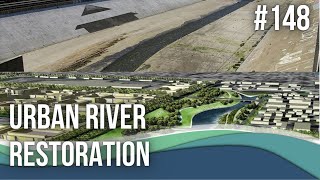
Escape From the Concrete Jungle- River Restoration Projects
Explore urban river restoration projects, focusing on the Los Angeles River and Australian case studies. Learn about benefits, challenges, and successes in rehabilitating concrete channels into natural waterways.

Flood Modelling Quality Control
Practical approaches to minimize errors in flood modeling, covering data quality, model design, and quality control processes for reliable results and effective risk management.

The Map of Black Holes - Black Holes Explained
Explore the fascinating world of black holes, from their creation and structure to detection methods and unsolved mysteries. Gain insights into spacetime curvature, classification, and cutting-edge theories.
Clojure Crash Course
Comprehensive introduction to Clojure's functional programming principles, covering syntax, data structures, functions, and core concepts for beginners in under an hour.
End-to-End Material Traceability for Increased Sustainability with GreenToken by SAP
Explore GreenToken by SAP's blockchain solution for supply chain transparency, addressing sustainability challenges in raw material traceability across industries like palm oil, metals, fashion, and hydrogen.

SAP Cloud for Sustainable Enterprises - Overview and Strategy
Overview of SAP's sustainability strategy, including SAP Cloud for Sustainable Enterprises, covering Climate Action, Circular Economy, Social Responsibility, and Holistic Steering and Reporting.

Reducing Waste and Improving Profitability - SAP Responsible Design and Production
Explore SAP's Circular Economy initiative and Responsible Design and Production solution to reduce waste, improve recyclability, and navigate EPR schemes for enhanced profitability and sustainability.

Introducing SAP Product Footprint Management - Overview and Demo
Explore SAP Product Footprint Management, a cloud-native solution for assessing environmental impact across product lifecycles. Learn its capabilities, features, and role in sustainability management.
Reducing Environmental Impact and Costs of SAP Workloads on IaaS
Explore how reducing IaaS costs for SAP workloads can lower environmental impact. Learn to create transparency on usage, reduce emissions, and optimize energy consumption using SAP Landscape Management Cloud.
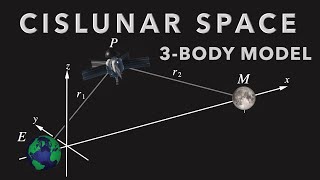
Cislunar Space - 3-Body Model of Orbital Dynamics Beyond the Geosynchronous Belt
Explore orbital dynamics beyond geosynchronous orbit using the 3-body model. Learn about Lagrange points, manifolds, and resonances in cislunar space, with practical MATLAB exercises and real-world applications.
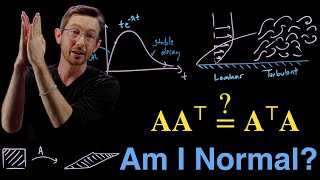
Non-Normal Linear Systems and Transient Energy Growth - Bypass Transition to Turbulence
Explore non-normal linear systems and their role in turbulence, including examples, code demonstrations, and applications in fluid dynamics and bypass transition.
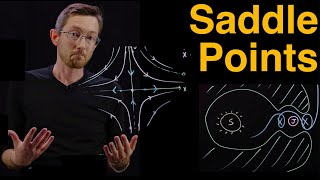
Systems of ODEs - Saddle Points and Instability
Explore unstable saddle points in 2D linear ODEs, their applications in energy-efficient transport, and analysis using eigenvalues, eigenvectors, and phase portraits.

Second-Order Ordinary Differential Equations - Solving the Harmonic Oscillator Four Ways
Explore four methods to solve second-order ODEs for harmonic oscillators: guessing, Taylor series, alternative guessing, and matrix systems. Gain practical problem-solving skills in differential equations.
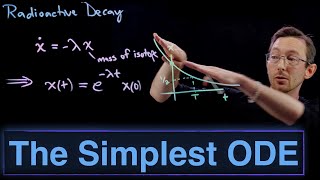
The Simplest Ordinary Differential Equation and Its Exponential Solution
Explore exponential solutions to simple ODEs through real-world examples like population growth, compound interest, and radioactive decay. Gain intuitive understanding of Euler's number and its applications.
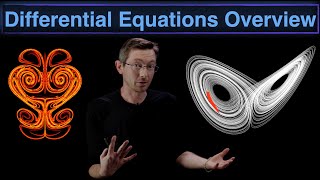
Differential Equations and Dynamical Systems - Overview
Explore dynamical systems and their applications in various fields. Learn classic and modern techniques for modeling real-world phenomena, from fluid dynamics to epidemiology.

Hyponatremia
Comprehensive exploration of hyponatremia, covering pathophysiology, types, diagnosis, and treatment strategies. Ideal for medical students and healthcare professionals seeking in-depth understanding.

Drugs for Heart Failure
Comprehensive exploration of heart failure drugs, covering pathophysiology, treatment options, and management strategies. Includes practice problems for mastery of this critical topic.

Parkinson's Disease Drugs
Comprehensive overview of Parkinson's disease medications, covering basal ganglia anatomy, pathophysiology, and various drug classes including L-Dopa, dopamine agonists, and enzyme inhibitors, with practice problems.

Autonomic Pharmacology - Adrenergic Agonists
Comprehensive exploration of adrenergic agonists, covering receptor types, target organ effects, and specific drugs. Includes graphical representations and practice problems for enhanced understanding of autonomic pharmacology.

Planet Simulation in Python - Tutorial
Learn to create a realistic planet simulation in Python, modeling orbits and gravity using astronomical data and physics principles for accurate planetary motion.