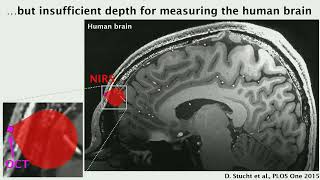
Scalable Human Brain Imaging with Time-of-Flight Filtered Diffuse Optical Interferometry
Explore advanced brain imaging techniques using time-of-flight filtered diffuse optical interferometry for scalable, non-invasive cerebral blood flow monitoring.
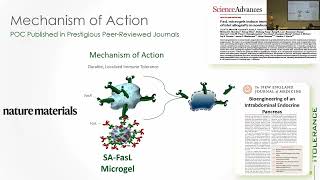
Building a Regenerative Medicine Start-Up Company - iTolerance, Inc.
Explore the journey of building iTolerance, Inc., a regenerative medicine start-up, with insights from Anthony Japour, M.D. on entrepreneurship in biotechnology.
Tune in and Dropout - How Data Augmentation Can Help Us Build Better Brain Decoders
Explore data augmentation techniques for improving brain decoders, enhancing neural signal interpretation and brain-computer interface performance.
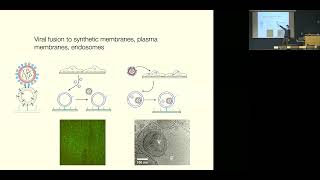
Physical Constraints on the Evolution of Viral Entry
Explore physical constraints on viral entry evolution with Dr. Peter Kasson. Gain insights into membrane dynamics, fusion mechanisms, and pandemic prediction through experimental and computational approaches.
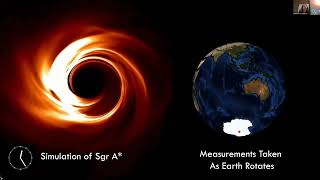
Moving Beyond the First Portrait of Our Milky Way's Black Hole by Leveraging Underlying Structure
Explore computational imaging techniques used to capture black hole images and leverage data structure to extract evolving details of the Milky Way's supermassive black hole.
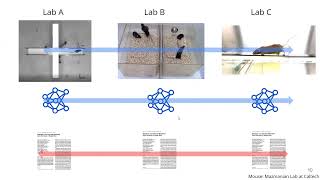
AI for Scientists: Accelerating Discovery through Knowledge, Data and Learning
Explore AI-driven scientific discovery, integrating machine learning with expert knowledge to automate data analysis and accelerate research across diverse domains.
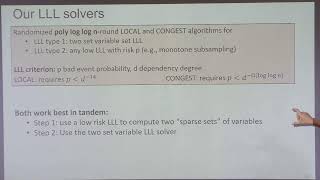
Sparsification for Communication-Efficient Distributed Symmetry-Breaking
Explore sparsification techniques for efficient distributed algorithms, focusing on local symmetry-breaking problems in graph theory and the CONGEST model.

Solving Integral Equations with Inti.jl - JuliaCon 2024
Explore Inti.jl for solving volume and boundary integral equations in mathematical physics. Learn about its user-friendly features, integration capabilities, and specialized routines for handling singular kernels.

Molly.jl - Molecular Dynamics in Julia
Explore Molly.jl for molecular dynamics simulations in Julia. Learn about its features, advantages, and applications in research, including differentiable molecular simulation and force field improvement.
Towards QMCPACK v4
Explore advancements in quantum Monte Carlo simulations with QMCPACK v4, focusing on new features and improvements for computational materials science research.
CPU and GPU Performance of the Batched Code - QMCPACK Workshop 2023
Explore CPU and GPU performance optimization techniques for batched code in quantum Monte Carlo simulations with QMCPACK.
Accurate Electronic and Magnetic Properties of 2D Materials Using Quantum Monte Carlo Methods
Explore quantum Monte Carlo methods for precise electronic and magnetic property calculations in 2D materials with Daniel Wines from NIST.
Spin Orbit Coupling in QMCPACK
Explore spin orbit coupling implementation in QMCPACK with Cody Melton's workshop presentation, covering advanced quantum mechanics concepts and computational techniques.
Surrogate Hessian Method for Geometry Optimization - QMCPACK Workshop 2023
Explore the surrogate Hessian method for efficient geometry optimization in quantum systems, presented by Jaron Krogel at the QMCPACK Workshop 2023.
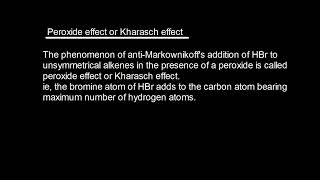
Peroxide Effect or Kharasch Effect
Explore the Peroxide effect and Kharasch effect, understanding their mechanisms and applications in organic chemistry.
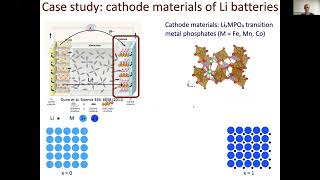
DFT+U and DFT+U+V: Basic Concepts and Applications - Advanced Quantum ESPRESSO Tutorial 2022
Explore DFT+U and DFT+U+V concepts, applications in materials science, and their impact on electronic localization and energetics in various systems.
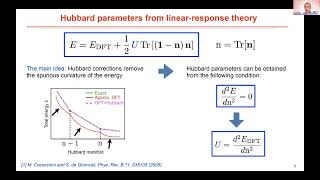
First-Principles Calculation of Hubbard Parameters Using Linear-Response Theory - Tutorial 2022
Learn advanced techniques for calculating Hubbard parameters using linear-response theory in DFT+U(+V) approach. Explore applications in materials science, including battery voltages and vacancy formation energies.
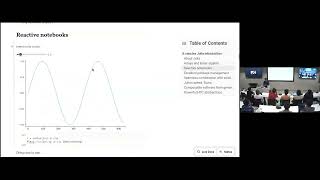
Julia for Materials Modelling
Explore Julia's potential in materials modeling, covering its advantages, ecosystem, and applications in atomistic simulations and density functional theory.
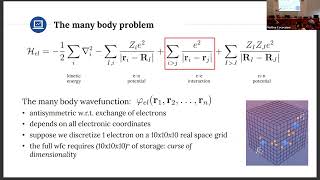
Introduction to Density-Functional Theory - QE School 2023 Lecture 1.2
Explore density-functional theory fundamentals, focusing on Hubbard and Koopmans functionals from linear response in advanced quantum calculations.
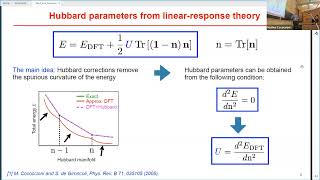
First-Principles Calculation of Hubbard Parameters Using Linear-Response Theory - QE School 2023
Explore first-principles calculation of Hubbard parameters using linear-response theory in advanced Quantum ESPRESSO applications for materials science.
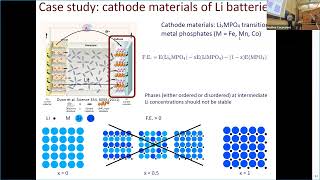
DFT+U and DFT+U+V: Basic Concepts and Applications - Lecture 3.1
Explore Hubbard and Koopmans functionals in Density Functional Theory, focusing on applications in battery materials and addressing limitations of standard DFT methods.