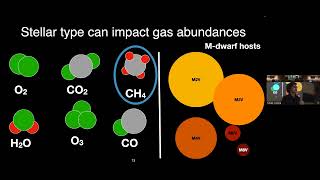
There's More to Life Than O2 - Assessing Biosignatures in Terrestrial Exoplanets
Explore biosignatures beyond oxygen in exoplanet spectroscopy, assessing detectability and environmental context for potential extraterrestrial life.
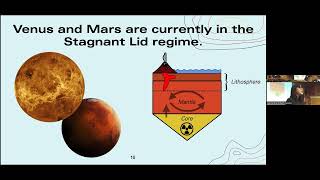
Predicting Outgassing Rates for L 98-59 b with an Interior Model - Astrobiology Research Presentation
Explore interior modeling of L 98-59 b to predict outgassing rates and atmospheric composition, supporting JWST exoplanet observations and characterization efforts.
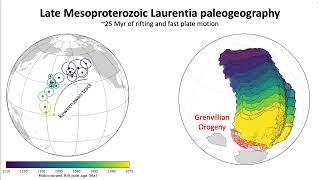
Laurentia's Grenville Loop: Tracking Rodinia Across the Mesoproterozoic to Neoproterozoic Boundary
Explore Laurentia's Grenville Loop and Rodinia's paleogeography through new paleomagnetic data. Gain insights on Mesoproterozoic-Neoproterozoic plate motions and implications for Grenville pole ages.
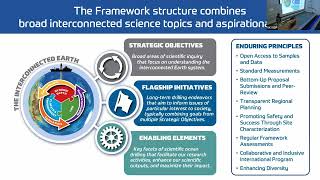
The 2050 Science Framework: Exploring Earth by Scientific Ocean Drilling
Explore Earth's future through scientific ocean drilling with the 2050 Science Framework overview by Dr Roz Coggon.
Asteroid 101: Introduction to Asteroids - Krum High School Presentation
Explore asteroid science through a high school student presentation, part of NASA's ExMASS program for lunar and asteroid exploration.
ANGSA: New Apollo Mission to Taurus Littrow - Bridging Apollo and Artemis
Explore the ANGSA mission, bridging Apollo and Artemis programs, and discover new insights from Apollo samples at Taurus Littrow.
Technologies Disrupting Brain Health
Explore groundbreaking neurotechnologies and solutions bridging the gap in brain health care, unlocking the brain's potential for recovery and optimization at any age.
Berkeley Lab's Breakthroughs in Exascale Supercomputing and AI Energy Efficiency
Explore Berkeley Lab's journey from atomic age to supercomputing forefront. Discover exascale computing challenges, energy efficiency innovations, and future HPC directions with specialized hardware and chiplets.
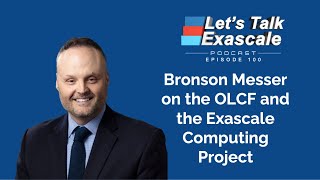
Reflecting on the 'Why' Behind Supercomputing Simulations - Advancing Science
Explore supercomputing's role in scientific advancement with insights from an expert on simulation applications and exascale computing.
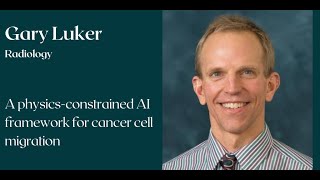
Physics-Constrained AI Framework for Cancer Cell Migration
Explore a physics-constrained AI framework for understanding cancer cell migration, enhancing research in radiology and biomedical engineering.
GENIE: Generative Foundation Models for Automated Climate Science
Explore generative foundation models for automated climate science with Rose Yu's GENIE project, advancing AI applications in environmental research.
Scientific Feasibility (ScFy)
Explore scientific feasibility with Erica Briscoe, delving into the concept of ScFy and its applications in research and innovation.
Foundation Models for Materials Synthesis
Explore foundation models for materials synthesis, focusing on AI-driven approaches to accelerate discovery and innovation in materials science.

Open Source and Design - Enhancing Projects Through Collaboration
Explore the synergy between open source and design, learning how collaboration enhances projects and fosters an inclusive, sustainable ecosystem.
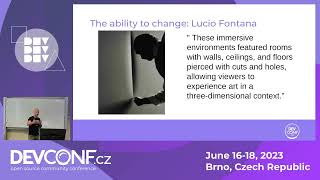
Why ChatGPT is Not Einstein and It Will Never Be
Explore the limitations of AI in innovation and the potential risks of overreliance, comparing ChatGPT's capabilities to Einstein's groundbreaking theories.
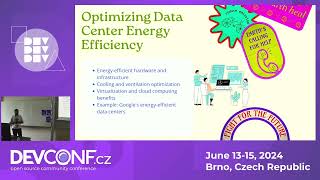
Sustainable Coding: Green Practices for Future-Friendly Software Development
Explore eco-friendly coding practices to reduce software's environmental impact. Learn optimization techniques for energy-efficient applications and data centers, contributing to a greener digital future.
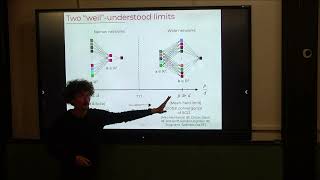
Phase Diagram of Stochastic Gradient Descent in High-Dimensional Two-Layer Neural Networks
Explore the phase diagram of Stochastic Gradient Descent in high-dimensional two-layer neural networks, focusing on its behavior and implications.
Recoupling Coefficients and Quantum Entropies in Condensed Matter Physics and Quantum Field Theory
Explore recoupling coefficients and quantum entropies in condensed matter physics and quantum field theory with insights from M. Christandl.
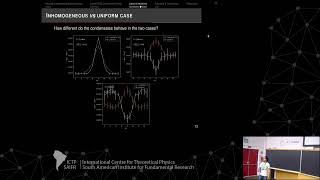
Lattice QCD with an Inhomogeneous Magnetic Background
Explore Lattice QCD simulations with inhomogeneous magnetic fields, uncovering their impact on strongly interacting matter and advancing our understanding of quantum chromodynamics.
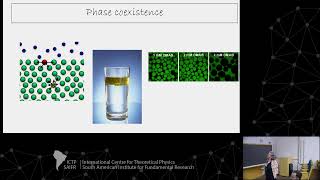
Phase Coexistence, Interface Tension and Convexity of Thermodynamic Potentials
Explore phase coexistence, interface tension, and thermodynamic potential convexity in condensed matter theory with expert insights from IFUSP.
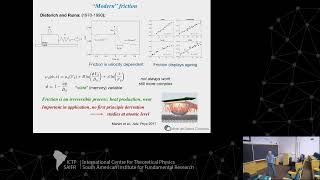
Markov Dynamics and Entropy Production in a Prandtl-Tomlinson Model for Friction
Explore Markov dynamics and entropy production in friction models, focusing on the Prandtl-Tomlinson approach for advanced condensed matter theory insights.