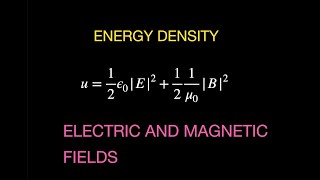
Finding the Energy Density for Electric and Magnetic Fields
Derive electric and magnetic field energy densities through step-by-step calculations and explanations.
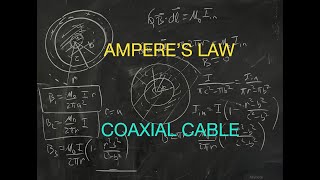
Ampere's Law: Magnetic Field due to a Coaxial Cable
Explore magnetic fields in coaxial cables using Ampere's Law, understanding key principles and applications in electromagnetic theory.
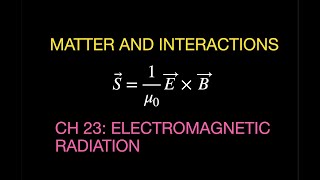
Matter and Interactions: Electromagnetic Radiation - Chapter 23 Summary
Explore electromagnetic radiation, Maxwell's equations, and the Poynting vector in this concise chapter summary on fixing Ampere's Law and wave pulses.
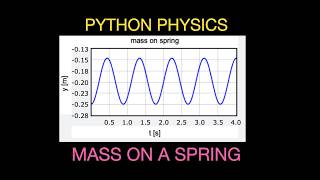
Python Physics: Hooke's Law and Modeling a Mass on a Spring
Explore Hooke's Law and model mass-spring systems using Python, enhancing your understanding of physics concepts through practical coding.
Python Physics: Force Needed to Push a Block Up an Incline with Friction
Explore force calculations for pushing a block up an inclined plane with friction using Python, applying physics principles to real-world scenarios.
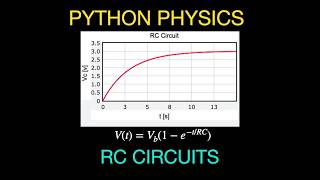
Python Physics: Modeling RC Circuits without Differential Equations
Model RC circuit voltage over time using Python, avoiding differential equations. Learn numerical calculations for practical circuit analysis.
Python Physics: Modeling LR and LRC Circuits
Model LR and LRC circuits using Python, exploring electrical concepts and enhancing programming skills for physics simulations.
Python Physics: Conservation of Momentum for the Earth-Moon System
Explore conservation of momentum in the Earth-moon system using Python, enhancing understanding of fundamental physics concepts.
Using Vernier's Graphical Analysis with Go Direct Sensor Cart - Data Collection and Collision Demonstration
Explore data collection using Graphical Analysis and Vernier Sensor cart with fan. Learn collection options, demonstration techniques, and analyze collisions in physics experiments.
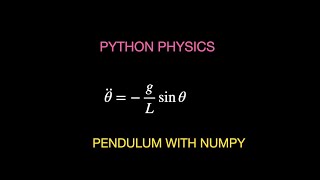
Python Physics: Modeling a Pendulum with Jupyter Notebooks
Model a pendulum's motion using Python and Jupyter Notebooks. Learn to apply Newton's second law in polar coordinates and visualize the results through practical coding exercises.
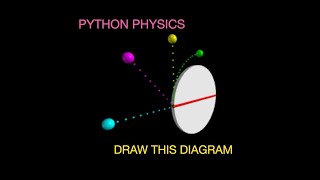
Python Physics: Using Web VPython to Illustrate a Physics Question
Animate a ball falling off a moving circular path using Web VPython to visualize a classic physics problem.
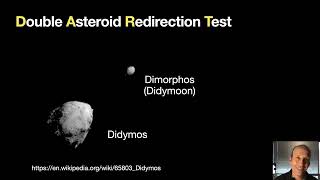
Modeling the DART-Dimorphos Collision in Python
Model the DART-Dimorphos collision using Python, exploring binary orbits, elastic and inelastic collisions, and conservation of momentum. Experiment with different parameters to understand asteroid redirection techniques.
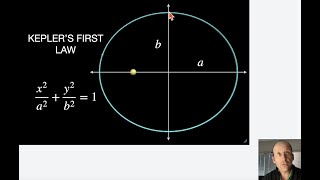
Modeling Kepler's First Law with Python
Model Kepler's first law of planetary motion using Python, demonstrating elliptical orbits through code implementation and visual plotting.
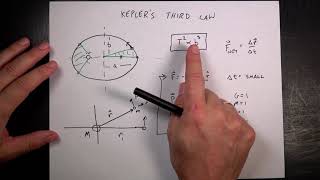
Demonstration of Kepler's Third Law Using Python
Explore Kepler's Third Law through Python modeling, calculating orbital periods and semi-major axes for various orbits to verify the law's validity.
Modeling a Bouncing Ball with Python
Model a bouncing ball using Python, exploring physics concepts and coding techniques to simulate realistic motion and collisions.
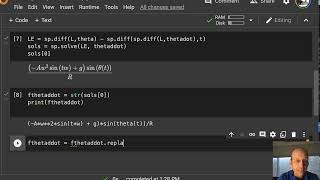
Modeling Kapitza's Inverted Pendulum with Python
Explore Kapitza's inverted pendulum through Python modeling, using Lagrangian mechanics to simulate this fascinating physics phenomenon.
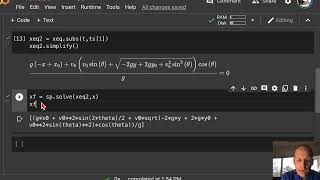
Solving Projectile Motion Problems with Python and SymPy
Explore projectile motion problem-solving using Python and SYMPY, focusing on range calculation and launch velocity determination.
Can ChatGPT Make a VPython Program for Orbital Motion?
Explore ChatGPT's ability to create a VPython program simulating ISS orbital motion, examining code output and discussing limitations.
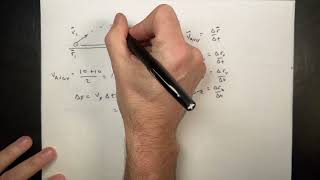
Projectile Motion With Vectors and Python
Explore projectile motion using vectors and Python, solving for flight time, distance, and maximum height of a launched ball.
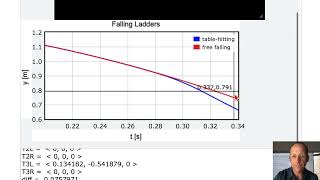
Modeling the Falling Ladder Problem with Python
Explore Python modeling of falling ladder dynamics, comparing scenarios and analyzing accelerations for enhanced physics understanding.
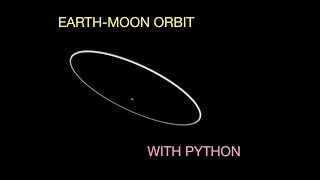
Modeling the Earth-Moon System with Python
Model the Earth-Moon system using Python to simulate orbital dynamics and explore celestial mechanics.