Pre-training Molecular Graph Representation with 3D Geometry
Explore molecular graph representation learning, leveraging 3D geometry for enhanced drug and material discovery through self-supervised learning and the GraphMVP framework.
Near-atomistic Modeling of Chromatin - Insights into Structure and Dynamics
Explore near-atomistic modeling of chromatin structure, folding pathways, and sol-gel transitions. Gain insights into genome organization and chromatin behavior under various conditions.
Quantitative Modeling of Magnetic Materials at the Atomic Scale
Explore quantitative modeling of magnetic materials at atomic scale, focusing on atomistic spin dynamics and quantum thermostat implementation for accurate thermodynamic calculations.
Using Sequence Data to Predict the Self-Assembly of Supramolecular Collagen Structures
Explore collagen self-assembly prediction using amino acid sequences. Learn to design custom periodic collagen structures for novel biomimetic materials.
Exploring Chemical Reactions Through Automation and Machine Learning
Explore efficient strategies for generating machine learned potentials to study reaction mechanisms in gas-phase and solution, achieving ab initio accuracy with minimal computational investment.
A Weak Convergence Viewpoint on Invertible Coarse-Graining
Explore weak convergence in invertible coarse-graining, combining force-matching with neural networks to recover fine-grained free energy surfaces in biomolecular systems.

Ab Initio Charge Transport of Ionic Fluids: Invariance Principles and Topological Invariants
Explore ab initio charge transport in ionic fluids, combining invariance principles and topological quantization to redefine oxidation numbers and electrical conductivity calculations.
Fully Quantum (Bio)Molecular Simulations - Dream or Reality?
Explore quantum-mechanical and machine learning advances in molecular simulations, their potential impact, and challenges in achieving fully quantum dynamics of complex biomolecular systems.
Information Scrambling: A Path-Integral Perspective
Explore quantum information scrambling, its quantification through Lyapunov exponents, and the role of path integrals in understanding universal bounds on chaos in thermal quantum systems.
Deltoidal Icositetrahedron Faceting on Alpha-Iron Crystals from the Moon's Surface
Explore crystallographic analysis of lunar iron crystals, examining unique deltoidal icositetrahedron faceting and its implications for understanding crystal growth in the lunar environment.
A Quantum Computing Algorithm to Speed Up Metropolis Sampling
Explore a quantum algorithm for accelerating Metropolis sampling in multidimensional systems, leveraging wave function collapses for non-local configuration space moves.
Solvated Electron: First Principles and Machine Learning Approaches
Explore advanced modeling of solvated electrons using machine learning, overcoming challenges in accuracy and efficiency to study structure, dynamics, and properties across temperatures.
Modelling Solution Chemistry for Transition Metal Complexes
Explore advanced techniques for modeling chemical reactions in solution, focusing on explicit solvent interactions and their impact on transition metal complexes and catalysis.
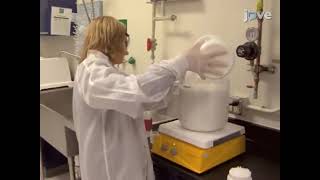
JOVE Convergent Polishing
Explore a convergent polishing process developed by Lawrence Livermore National Laboratory researchers for advanced materials and surfaces.

Reverse Engineering the Visual System
Explorez les mécanismes du système visuel humain à travers une approche d'ingénierie inverse, révélant ses complexités et son fonctionnement fascinant.
Brain-Inspired Multimodal Deep Learning
Explore brain-inspired approaches to multimodal deep learning, enhancing AI systems with cognitive-like capabilities.
AI for Physical Models with Geometric Tools
Explore geometric tools for integrating AI into physical models, enhancing understanding and application of advanced modeling techniques.
Introduction to Quantum Computing and Quantum Technology
Explore quantum computing fundamentals, mechanics, advantages, and applications in various industries. Gain insights into quantum machine learning for data science.
Identifying Biomarkers of Cardiovascular Diseases with Machine Learning
Explore machine learning techniques for identifying cardiovascular disease biomarkers, enhancing early diagnosis and prevention strategies using UK longitudinal study data.
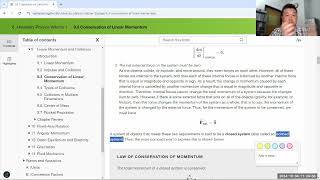
Physics 4A - Chapter 9 Overview - Fall 2024
Explore fundamental concepts of linear momentum, collisions, and conservation laws in classical mechanics. Gain insights into key principles of Newtonian physics.

Force Formulas - Static Friction, Kinetic Friction, Normal Force, Tension Force, and Free Body Diagrams
Master force formulas and free body diagrams for static friction, kinetic friction, normal force, and tension force. Gain essential physics skills through practical examples and comprehensive explanations.