Physical Limits to Cognition - How I Learned to Stop Worrying and Love Black Hole Thermodynamics
Explore the intersection of information theory, cognitive science, and black hole thermodynamics to understand fundamental limits of physically-embodied computational systems and cognitive processes.
Testing if Consciousness Collapses the Wavefunction - A Quantum Physics Investigation
Explore the controversial relationship between consciousness and quantum wavefunction collapse, examining theoretical foundations and potential experimental approaches to testing this intriguing hypothesis.

The Path to Sentient Robots: AI Consciousness in the Light of New Insights into the Functioning of the Brain
Explore groundbreaking research on AI consciousness through quantum electrodynamics, examining how brain-ZPF coupling and self-organized criticality could lead to sentient robots.
Two Paradigms of the Unconscious and What They Might Tell Us About Consciousness
Explore the intersection of Neo-Freudian unconscious theory and dual-process cognition to gain fresh perspectives on consciousness, unconscious processing, and their relationship.

Entropy, Enthalpy, and Gibbs Free Energy - Chemistry Spontaneity Formulas
Master essential chemistry concepts of entropy, enthalpy, and Gibbs free energy through clear formula explanations and practical examples for understanding reaction spontaneity.
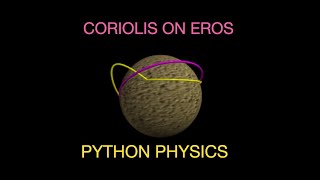
Classical Mechanics: Modeling Coriolis Force for a Kicked Ball on Eros
Explore the fascinating effects of Coriolis force by modeling the trajectory of a kicked ball on asteroid Eros, using Python to visualize non-inertial reference frames.
Classical Mechanics: Throwing a Ball in a Rotating Space Station
Explore the physics of throwing and catching a ball in a rotating space station, analyzing motion patterns and gravitational effects through computational modeling.

Do You Need a Subwoofer? A Guide to Studio Monitor Enhancement
Explore the practical considerations of adding a subwoofer to your studio setup, including genre-specific benefits and real-world demonstrations with the Kali Audio WS-6.2.
Studio Acoustic Design and Treatment - Essential Concepts and Implementation
Delve into studio acoustic design fundamentals with expert Gavin Haverstick as he shares practical insights on room treatment, speaker placement, and budget-friendly solutions for optimal sound quality.

Calibrating Studio Monitors - Guide to the Kali SM5 Advanced Loudspeaker
Master the calibration process for Kali SM5 studio monitors, learning essential setup techniques and optimization methods to achieve precise, professional-grade audio monitoring in your studio space.
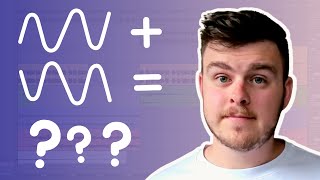
Understanding Phase Cancellation in Music Production and Audio Mixing
Master the concept of phase cancellation in audio production through practical examples of kick drums, basslines, instruments, and stereo synths to improve your mixing decisions.
Fluid Audio Image 2 Studio Monitors Review and Comparison
Dive into a detailed evaluation of Fluid Audio Image 2 monitors, exploring their sound quality, construction, DSP features, and performance comparisons with high-end alternatives like Adam A8H and Hedd Type 20.
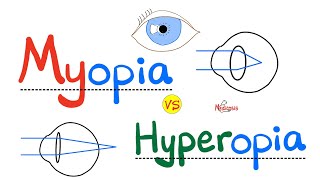
Myopia and Hypermetropia: Understanding Near and Far Sightedness - Ophthalmology Series
Understand the key differences between myopia and hypermetropia, including their causes, symptoms, and corrective measures using convex and concave lenses in ophthalmology.
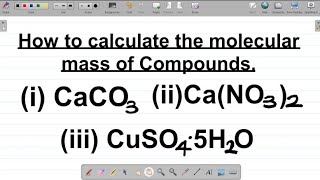
Relative Molecular Mass: How to Calculate the Relative Molecular Mass of a Compound
Learn how to calculate relative molecular mass through step-by-step guidance, understanding its meaning, units, and practical application in compound analysis.
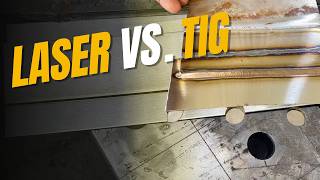
Laser versus TIG Welding Speed Comparison on Stainless Steel
Discover the speed comparison between laser and TIG welding techniques on stainless steel lap joints, featuring pulse settings and lay wire methods at 36 inches per minute.
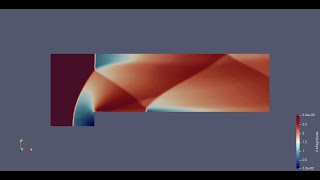
Shock Wave Simulation with rhoCentralFoam in OpenFOAM
Master shock wave simulation techniques using rhoCentralFoam in OpenFOAM through step-by-step guidance on setup, implementation, and results analysis for high-speed compressible flow modeling.
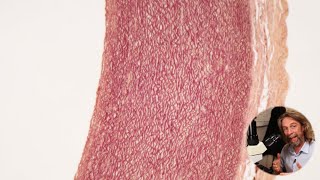
Microscopic Anatomy of the Aorta - Understanding Cardiovascular Disease and Atherosclerosis
Explore the cellular and tissue structure of the aorta to understand cardiovascular diseases, including atherosclerosis and aortic dissection mechanisms.

Reconstructing Every Haplotype with De Novo Assembly
Discover advanced techniques for haplotype-resolved de novo genome assembly, focusing on phased assembly graphs and innovative methods for diploid and polyploid genome reconstruction.
ML-Enabled Genetic Association Studies of High-Content Phenotypes
Explore cutting-edge machine learning applications in genetic association studies, focusing on high-content phenotypes and innovative frameworks like HistoGWAS for analyzing tissue phenotypes in histology cohorts.
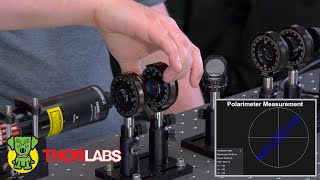
Light's Polarization Changes After Reflecting from a Metal Mirror
Explore how metallic mirrors affect light's polarization state, including practical demonstrations of S- and P-polarized light reflection and measurement techniques using advanced optical equipment.
How One Line of Code Led to the Mars Polar Lander Catastrophe
Uncover the fascinating story of how a single software error led to the Mars Polar Lander's devastating crash, exploring crucial lessons in spacecraft engineering and the importance of thorough testing.