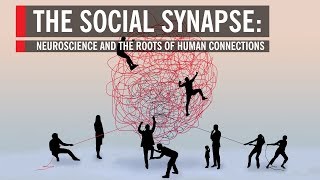
Neuroscience and the Roots of Human Connections - The Social Synapse
Explore the neuroscience behind human social connections, examining how our brains orchestrate communal behavior and group interactions, and why our social nature is crucial to our success as a species.

The Matter of Antimatter - Answering the Cosmic Riddle of Existence
Explore the cosmic mystery of antimatter's absence in our universe with leading physicists, delving into theories, experiments, and potential applications of this enigmatic substance.
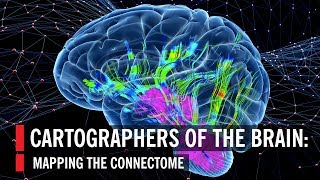
Cartographers of the Brain - Mapping the Connectome
Explore the ambitious Human Connectome Project with leading neuroscientists as they discuss brain mapping, connectivity, and its potential impact on understanding and treating neurological disorders.

The Promise of Human Regeneration - Forever Young
Experts explore regenerative medicine's potential to revolutionize healthcare, from lab-grown organs to tissue engineering, discussing current advancements and future implications for human health and longevity.

When -bin-sh Attacks - Revisiting "Automate All the Things"
Explores human factors in automation, challenges for system administrators, and strategies for coping with complex socio-technical systems. Discusses resilience, expertise development, and the ironies of automation.
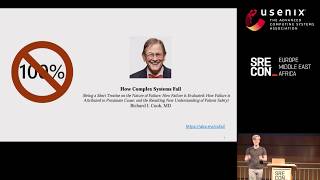
Building Resilience - How to Learn More from Incidents
Discover strategies to enhance organizational resilience through improved incident learning. Explore research-backed approaches to post-incident reviews and avoid common investigation pitfalls.
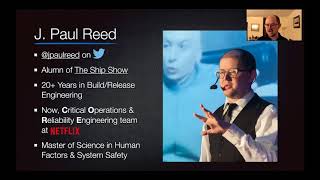
When - Bin - Sh Attacks - Revisiting Automate All the Things
Explores challenges and impacts of pervasive automation in SRE, discussing human factors, potential harm, and strategies for effective implementation in complex socio-technical systems.
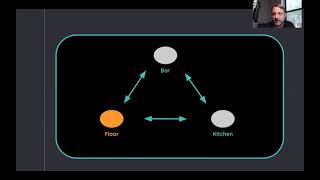
Food for Thought - What Restaurants Can Teach Us about Reliability
Explore how restaurant operations parallel computer system reliability, drawing insights from dining experiences to enhance understanding of complex system management and fault tolerance.
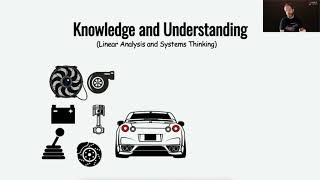
Learning More from Complex Systems
Explore complex systems' traits and learn better approaches to incident analysis beyond linear root-cause methods. Gain insights from history, science, and philosophy to enhance understanding of resilience in modern organizations.
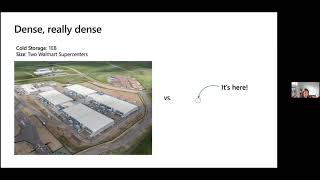
DNA Data Storage and Near-Molecule Processing for the Yottabyte Era
Explore DNA data storage and near-molecule processing for the yottabyte era, including encoding, decoding, random access, and potential for hybrid electronic/molecular computing systems.
Quantum Reality - Space, Time, and Entanglement
Explore quantum physics principles with experts, covering space, time, entanglement, black holes, and practical applications in this thought-provoking discussion moderated by Brian Greene.

My Society My Self
Explore the science of self-identity with top experts as they discuss how neurons, culture, and morality shape our perception of who we are and how we view others.
The Beauty of Balance
Explore the pervasiveness of symmetry in nature, art, and science with experts discussing its role in design, mathematics, and future implications for our understanding of the world.
Game Change – CRISPR's Brave New World
Explore CRISPR gene-editing technology's potential to revolutionize medicine, agriculture, and energy. Experts discuss its rapid adoption, applications, ethical considerations, and future impact on treating diseases and solving global challenges.

Awakening the Mind - A Celebration of the Life and Work of Oliver Sacks
A multimedia tribute celebrating the life and work of Dr. Oliver Sacks, featuring stories, reflections, and performances from friends, colleagues, and patients, highlighting his impact on medicine and storytelling.
Coming to Grips With Gravity
Explore the mysteries of gravity, dark matter, and dark energy with leading scientists. Delve into cutting-edge research, historical developments, and potential future breakthroughs in our understanding of this fundamental force.
Life in Our Image – The Ethics of Altering the Human Genome
Explore the ethical implications of altering human DNA with leading scientists and bioethicists. Discuss synthetic biology, disease resistance, human evolution, and the moral challenges of genome editing.
Flame Challenge - What is Sound?
Interactive exploration of sound through demonstrations, expert insights, and winning explanations judged by 11-year-olds. Covers hearing mechanisms, species differences, and acoustic principles.

Beyond Beauty - The Predictive Power of Symmetry
Explore symmetry's role in nature, from honeycomb patterns to Einstein's theories. Leading scientists discuss its significance in physics, mathematics, and our understanding of the universe's fundamental laws.

My Neurons, My Self
Explore the intersection of neuroscience, philosophy, and psychology as experts discuss consciousness, self-awareness, memory, and the nature of human identity in this thought-provoking panel.
Science and Story - The Instinct for Curiosity
Award-winning writers discuss transforming complex scientific concepts into engaging literature, sharing insights on human anatomy, social psychology, and the art of science communication.