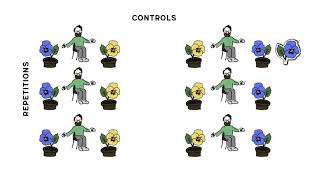
Scientific Literacy 101
Explore the scientific system, research process, and critical assessment of scientific communication. Gain insights into academic structures, funding, and challenges in modern science.
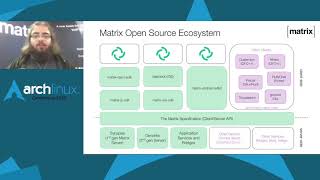
Enter the Matrix - Install Your Own Matrix Server on Arch Linux - Arch Conf 2020
Learn to install and configure your own Matrix server on Arch Linux, joining a federated network for secure, decentralized real-time communication. Explore Synapse setup, ecosystem, and key features.
How to Become an OpenStreetMap Pro
Enhance your OpenStreetMap skills with advanced tools, techniques, and ecosystem knowledge. Learn from years of mapping experience and improve your contributions.
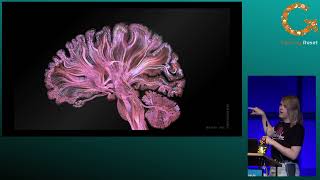
After the Metaverse: An Introduction to Brain-Machine Interfaces - Lucy Fauth - Media.CCC.De
Explore the future of human-computer interaction through brain-machine interfaces. Learn about current technologies, engineering challenges, and ethical considerations in this emerging field.
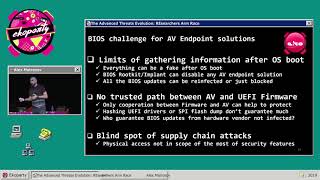
The Advanced Threats Evolution- REsearchers Arm Race - Alex Matrosov - Ekoparty Security Conference - 2019
Explore the evolution of advanced threats and defensive software, focusing on persistent methods at hardware and firmware levels. Gain insights into modern security gaps and potential solutions.
Do Certain Types of Developers or Teams Write More Secure Code?
Explore factors influencing secure code development, including developer experience, team dynamics, and work environment. Learn how human and environmental elements impact software security.
Human Factors That Influence Secure Software Development
Explores human factors influencing secure software development, including environmental conditions, developer characteristics, and team dynamics. Discusses strategies to identify and mitigate vulnerability-prone code before issues arise.
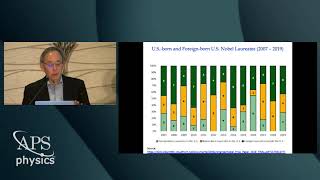
Rising Above the Gathering Storm - Open Science and Intellectual Property
Explore open science, intellectual property, and global innovation challenges with Nobel laureate Steven Chu. Gain insights on balancing scientific collaboration and national security in a changing world.
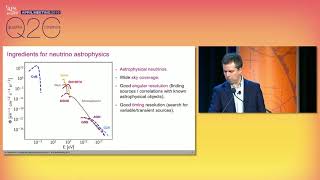
Recent Advances in Neutrino Physics
Explore recent advances in high-energy neutrino astronomy, including astrophysical flux discovery and potential blazar source identification. Learn about detection methods and future prospects in this cutting-edge field.
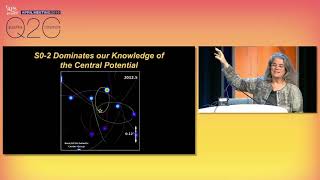
Our Galactic Center - A Unique Laboratory for the Physics & Astrophysics of Black Holes
Exploring the Galactic center's supermassive black hole through high-resolution imaging and stellar orbit measurements, revealing unexpected phenomena and testing Einstein's theory of relativity.

Physics and Society - Physics and Social Media
Exploring the impact of social media on physics communication, this talk discusses benefits and challenges for scientists engaging online, emphasizing public outreach and breaking stereotypes.
Engaging the Physics Community in Nuclear Threat Reduction
Exploring nuclear threat reduction strategies and the role of physicists in advocating for disarmament, emphasizing the urgency of addressing current global nuclear risks.
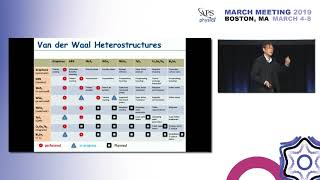
Stacking Atomic Layers One by One - Quest for New Materials and Physics
Explore atomic-scale heterostructures and emerging physics in 2D quantum materials. Learn about stacking techniques, high-mobility graphene, and novel phenomena like magic angles and quasicrystals.
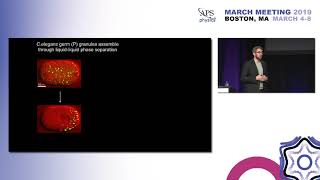
Intracellular Liquid Condensates - New Approaches to Understand and Control Biomolecular Phase Transitions in Living Cells
Exploring intracellular phase transitions and their role in organizing cellular contents, with focus on liquid-liquid phase separation and new approaches for spatiotemporal control.
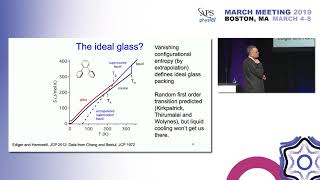
The Design and Growth of Ultra-Stable Glasses
Explores physical vapor deposition for creating ultra-stable glasses with controlled molecular packing, discussing dense structures, anisotropic ordering, and applications in organic electronics.
Machine Learning and the Real Space Renormalization Group
Explore the intersection of machine learning and renormalization group theory, focusing on real-space applications and information theory perspectives in physics.
Advances in Machine Learned Potentials for Molecular Dynamics Simulation
Explore machine learning advancements in molecular dynamics simulations, covering symmetries, training methods, and applications in hydrocarbon reactions and IR spectra analysis.
Opportunities for Infusing Physics into AI - ML Algorithms
Explore the fusion of physics and AI algorithms, covering neural programming, hierarchies, equations, and applications in autonomous systems and technology.
Learning Quantum with Generative Models
Explore generative models for quantum state learning, covering neural networks, RBMs, and applications to GHZ states and local Hamiltonians.
Understanding Neutrino Interactions Using Deep Learning
Explore deep learning applications in neutrino physics, from classifying interactions to analyzing events, with insights on future developments in particle detection.
From Reinforcement Learning to Spin Glasses - The Many Surprises in Quantum State Preparation
Explore quantum state preparation, reinforcement learning, and spin glasses, uncovering surprising connections and insights in this cutting-edge physics research presentation.