New Ideas on Tensor Networks for Entanglement in Quantum Many-Body Systems
Explore new applications of tensor networks in quantum systems, including random networks, material properties, and learning tasks. Gain insights into capturing entanglement and analyzing complex quantum phenomena.
Non-interpenetration in Thin-film Models of Elastic Solids
Explore non-interpenetration in thin-film models for elastic solids, focusing on dimension reduction, membrane regimes, and suitable conditions for preventing material penetration.
Integral Representation and T-Convergence for Free-Discontinuity Problems
Explore integral representation and T-convergence for free-discontinuity problems in GSBV p(.) space, focusing on variable exponent energies and their asymptotic behavior.
Variational Methods for Hyperbolic Evolutions and Fluid-Structure Interactions
Explore variational approaches to hyperbolic evolutions and fluid-structure interactions, focusing on well-posedness results for solid evolutions and fluid-solid interactions.
The Expression Problem and Lenses - Functional Programming Concepts
Explore functional programming concepts like the Expression Problem and Lenses with Tony Morris. Learn advanced techniques to enhance code flexibility and maintainability.
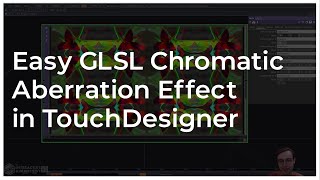
Easy GLSL Chromatic Aberration in TouchDesigner
Implement chromatic aberration effects in TouchDesigner using GLSL pixel shaders. Learn to shift and scale RGB channels for subtle vintage looks or extreme visual experiments.
AI and Machine Learning in Drug Discovery and Development
Explore AI's revolutionary impact on drug discovery and healthcare with Daphne Koller. Gain insights into machine learning applications in biology, protein folding, and interdisciplinary collaboration for future medical breakthroughs.
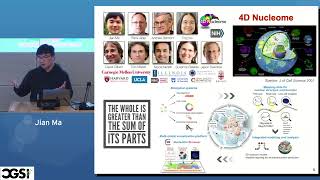
Machine Learning for Single-Cell 3D Epigenomics
Explore machine learning techniques for analyzing single-cell 3D epigenomics, focusing on genome structure and integrative Hi-C analysis methods for advanced biomedical research.
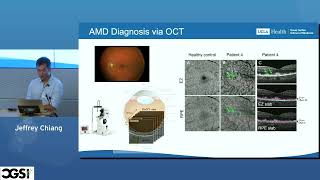
Strategies for Integrating Deep Learning with Current Biomedical Research
Explore strategies for integrating deep learning in biomedical research, focusing on automated identification of clinical features from medical imaging and prediction of disease progression.
Phenomics in Drug Discovery: Microscopy and Machine Learning - Day 4
Explore phenomics in drug discovery through microscopy and machine learning techniques with expert Anne Carpenter.

Binding Affinity Prediction with Machine Learning-Based Docking - Lab 2
Explore ML-based docking techniques for predicting binding affinity in drug discovery, featuring insights from experts Stephan Thaler and Cristian Gabellini.
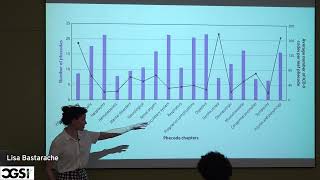
Fun with Phecodes - From PheWAS to PheRS
Explore Phecodes for electronic health record research, from PheWAS to PheRS. Learn applications, tools, and best practices for phenotype-genotype analysis and biobank data science.
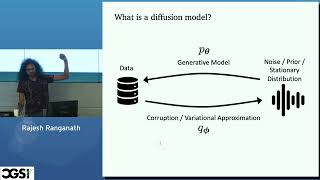
Deep Generative Models in Medicine - CGSI 2023
Explore deep generative models in medicine, covering robustness, interpretability, missing data, language models, and diffusion techniques for improved medical applications and research.
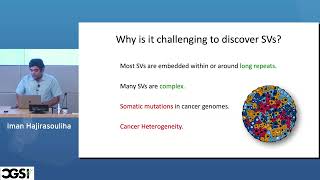
Applications of Deep Learning to Genomics and Digital Pathology
Explore deep learning applications in genomics and digital pathology, focusing on cutting-edge research and practical implementations in healthcare.
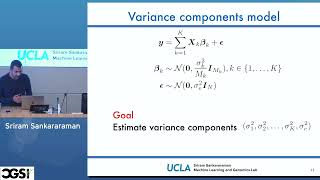
Machine Learning for Biobank-Scale Genomic Data - CGSI 2022
Explore machine learning techniques for analyzing large-scale biobank data, focusing on genetic architecture, variance components, and interactions in complex traits. Gain insights from UK Biobank applications.
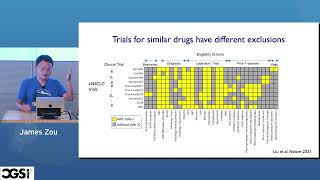
How to Perform In Silico Clinical Trials Using EHR
Learn to conduct in silico clinical trials using electronic health records, exploring innovative approaches to evaluate oncology trial eligibility criteria with real-world data and AI.
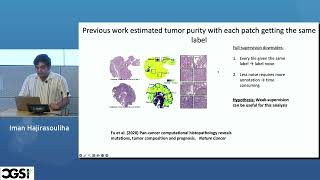
Applications of Deep Learning in Digital Pathology and Embryology - CGSI 2023
Explore deep learning applications in digital pathology and embryology, focusing on AI-driven blastocyst ploidy prediction and tumor purity assessment from H&E slides.
Neural Networks in System Models: Applications and Examples
Explore data-driven physical modeling with neural networks in system models, unlocking new applications and connections.
Computational Tools for Blockchain Forensics
Harness Wolfram Language for blockchain analysis, forensics, and visualization. Learn to read and write transactions, explore FTX token case study, and integrate with ChatGPT.
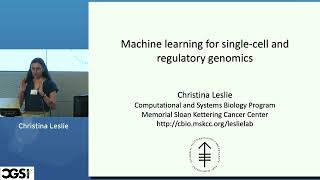
Machine Learning Models for Single Cell and Regulatory Genomics - CGSI 2023
Explore machine learning models for single-cell and regulatory genomics, focusing on recent research and applications in computational biology.
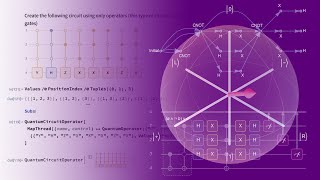
Quantum Circuits: Introduction to Wolfram Quantum Computation Framework
Explore quantum computing with Wolfram's framework, covering states, transformations, algorithms, and circuits using symbolic expressions and Wolfram Language.