
Elements Towards Functional Safety Use Cases with Linux in Automotive
Explore Linux's role in automotive functional safety, focusing on warning signs in instrument clusters as a starting point for more complex safety-critical applications.

How ELISA Is Helping Use Linux in Safety-Critical Systems
Explore how the ELISA Project facilitates Linux adoption in safety-critical systems, enhancing reliability and security for critical applications across industries.
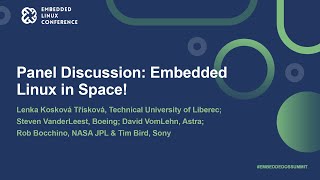
Embedded Linux in Space - Panel Discussion
Explore the current trends and future prospects of Linux in space missions with industry experts, discussing its effectiveness in satellites, rockets, and cubesats.
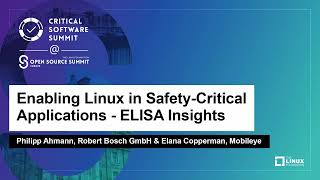
Enabling Linux in Safety-Critical Applications - ELISA Project Overview
Explore ELISA project's efforts to enable Linux in safety-critical systems, covering goals, strategies, work groups, and challenges in automotive, medical, and industrial IoT applications.
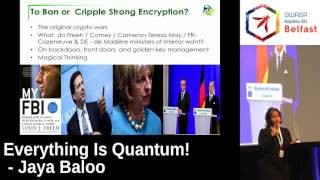
Everything Is Quantum - Cryptography in the Age of Quantum Computing
Explore quantum computing's impact on cryptography, data protection strategies, and government surveillance. Learn about current developments, projects, and future implications for cybersecurity.

Coding Adventure: Simulating Fluids
Explore particle-based fluid simulation techniques, from basic physics to advanced concepts like smoothed particles, density calculation, and pressure forces, with practical coding examples and optimizations.
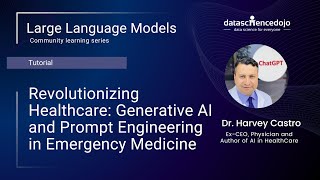
AI in Emergency Medicine - Use ChatGPT in Healthcare
Explore how Generative AI and ChatGPT are transforming Emergency Medicine, enhancing patient care, diagnostics, and medical research while addressing ethical considerations and future prospects.
Language Models for Quantum Simulation - IPAM at UCLA
Explore how language models like GPT are revolutionizing quantum simulation, with focus on their application in learning quantum states in Rydberg atom arrays and potential impact on quantum computing.
Quantum Error Correction - Lecture 1
Explore quantum error correction fundamentals, including strategies to protect quantum information from decoherence and errors in quantum computing systems.
Quantum Algorithm for Simulating Coupled Classical Oscillators - IPAM at UCLA
Quantum algorithm for simulating classical oscillators: efficient simulation of 2^n coupled oscillators, exponential speedup over classical computers, applications in energy estimation and BQP-complete problems.
Integrating AI and Machine Learning in Life Sciences - Allen School Colloquia
Exploring AI integration in life sciences, covering explainable AI, COVID-19 detection, cancer precision medicine, and biological discovery through advanced machine learning techniques.
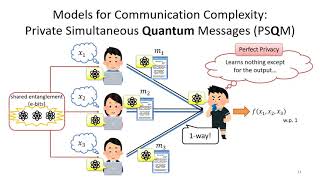
Communication Complexity of Private Simultaneous Messages Protocols - 2021 ITC Conference
Exploring communication complexity in private simultaneous messages protocols, examining quantum advantages and demonstrating gaps between classical and quantum models in secure multiparty computation.
Computer Vision to Phenotype Human Diseases Across Physical and Molecular Scales
Innovative computer vision algorithms for disease phenotyping across scales, from video-based heart function assessment to spatial transcriptomics and immune cell dynamics, with focus on robust and human-compatible AI.
Machine Learning-based Design of Proteins and Small Molecules
Explore machine learning approaches for protein engineering, focusing on data-driven design to create proteins with desired properties and the challenges of extrapolation in predictive modeling.
FarmBeats: An AI and IoT Platform for Data-driven Agriculture
Explore FarmBeats, an innovative IoT platform revolutionizing agriculture with AI-driven data collection from sensors, cameras, and drones. Learn how it overcomes connectivity challenges and enhances farm productivity.
Learning for Never-before-seen Biomedicine
Exploring machine learning methods for predicting never-before-seen biomedical scenarios, focusing on novel class and cohort situations using ontologies and multiscale knowledge graphs.
Bandits - Lecture 5
Explore multi-armed bandit algorithms and their applications in decision-making under uncertainty with Professor Kevin Jamieson from the University of Washington.
Accelerating Scientific Discovery in Biomedicine Using Artificial Intelligence
Exploring AI's potential to accelerate biomedical discoveries, focusing on genomics and personalized medicine. Discusses cost-effective genome sequencing, automated literature curation, and reliable disease risk prediction.
Computer Vision for Global-Scale Biodiversity Monitoring
Exploring AI-driven earth observation systems for real-time biodiversity monitoring and conservation, addressing challenges in ecological data analysis and promoting collaborative, interdisciplinary approaches.
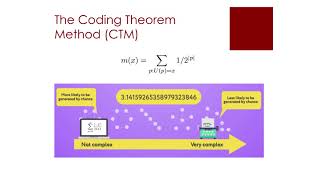
Computing the Uncomputable: The Coding Theorem Method - Unit 6, Module 2
Explore the Coding Theorem Method for computing uncomputable functions, delving into algorithmic information dynamics and its applications in causality and living systems.
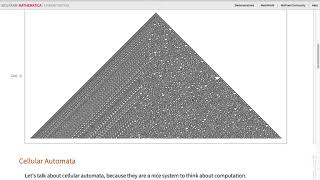
Cellular Automata: Algorithmic Information Dynamics in Living Systems
Explore cellular automata, a computational model for complex systems, and their applications in studying causality and living systems from networks to cells.