Polygenic Means to Test and Refine Depression Disease Models
Explore polygenic methods for testing and refining depression disease models, focusing on phenotype integration, symptom differences, genetic heterogeneity, and epistasis in complex traits.
The Functional Architectures of Human Diseases and Complex Traits: From Polygenicity to Variant Function
Explore functional architectures of human diseases and complex traits, focusing on polygenicity and variant function in genomics research.

Genome-wide Prediction of Disease Variants with a Deep Protein Language Model
Explore genome-wide prediction of disease variants using deep protein language models. Learn cutting-edge techniques for identifying potential genetic causes of diseases.

Confounding in Biobanks: Challenges and Implications
Explore confounding factors in biobank research and their impact on genetic studies, focusing on educational attainment and height analyses.
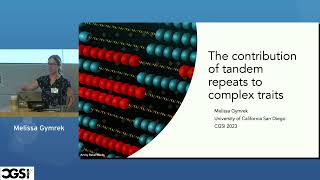
Dissecting the Contribution of the Repeatome to Complex Traits
Explore the impact of repetitive DNA sequences on complex traits through genome-wide association studies, focusing on short tandem repeats and their role in human phenotypes and gene expression.

Predicting the Epigenome from DNA Sequence - Are We There Yet?
Explore predicting epigenomes from DNA sequences using deep learning methods. Discover limitations, data analysis techniques, and latest research in computational genomics.
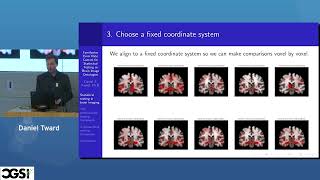
Familywise Error Rate Control for Statistical Testing in Brain Image Ontologies
Explore familywise error rate control in brain image ontologies, covering statistical testing, spatial patterns, and advanced techniques for neuroimaging analysis.
Combining Biobanks and Cohort Studies - The Best of Both Worlds
Explore the integration of biobanks and cohort studies to enhance genetic research and improve understanding of complex diseases.
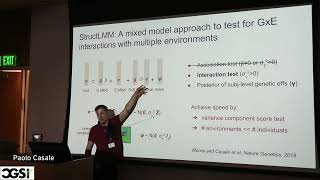
Mixed Models in Genomic Analyses and Imaging Studies
Explore mixed models in genomics and imaging, focusing on efficient set tests, Gaussian process priors, gene-environment interactions, and neural networks for histologic feature quantification.
Harnessing Genome Dynamics for Phylogenetic Reconstruction
Explore advanced phylogenetic reconstruction techniques using genome dynamics, including horizontal gene transfer, gene content, and microsynteny-based approaches for prokaryotes and angiosperms.
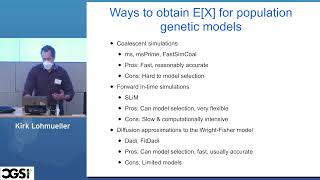
The Poisson Random Field Model in Population Genetics
Explore the Poisson Random Field model's applications in population genetics, gaining insights into its theoretical foundations and practical implications.
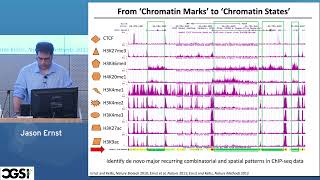
A Tutorial on Computational Methods for Modeling and Analyzing Epigenomic Data
Explore computational methods for modeling and analyzing epigenomic data, covering ChromHMM, multivariate Hidden Markov Models, and integrating multiple chromatin markers across cell types.
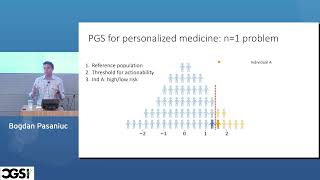
Personalized Genomic Medicine Using Large-Scale Biobanks Linked with Medical Records
Explore personalized genomic medicine using large-scale biobanks and medical records. Learn about leveraging genomic diversity for discovery and promoting precision health research in diverse populations.
Lessons from the Largest Genome-Wide Association Study of Human Height
Explore insights from the largest genome-wide association study on human height, examining genetic variants, heritability, and the impact of rare variations on this complex trait.
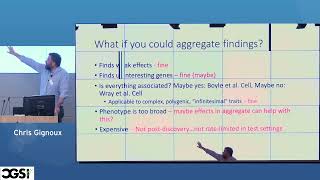
Applying Polygenic Scores at Biobank Scale - CGSI 2022
Explore applying polygenic scores at biobank scale, examining reporting standards, reproducibility, health disparities, and clinical applications in genomic risk prediction.
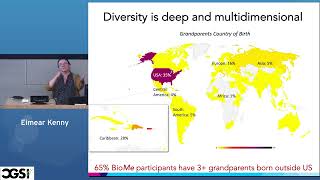
Population Genetics in an Era of Genomic Health
Explore population genetics' role in genomic health, focusing on electronic health records, personalized medicine, and genetic disease identification in specific populations.

Overview of Rare Variant Analysis in Whole Genome Sequencing Association Studies
Explore rare variant analysis techniques for whole genome sequencing studies. Learn statistical methods, study designs, and powerful tools for uncovering genetic associations in large-scale genomic data.
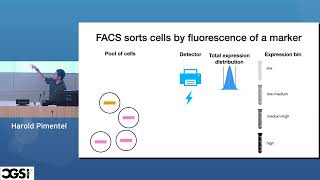
Inference Methods for High-Throughput CRISPR Screens - CGSI 2022
Explore inference methods for high-throughput CRISPR screens, focusing on regulatory gene discovery in human T cells and the architecture of immune networks.

How Genetics Can Help Untangle Institutionalized Health Inequity
Explore how genetic research can address health inequities, focusing on case studies involving racial disparities in medical diagnoses and treatment decisions.
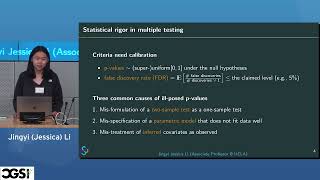
Statistical Rigor in Genomics Data Science
Explore statistical rigor in genomics data science, focusing on differential expression methods, p-value calibration, and high-throughput data analysis techniques for improved accuracy in genomic research.
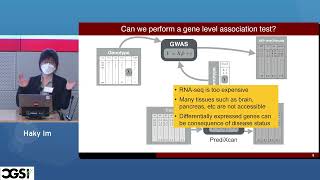
Integrating Multiple Omic Data to Improve Mechanistic Understanding and Prediction
Explore integrating multiple omic data to enhance mechanistic understanding and prediction in genomics. Learn techniques for improving data interpretation and predictive modeling in computational biology.