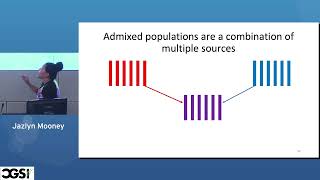
On the Number of Genealogical Ancestors Tracing to Source Groups in Admixed Populations
Explore genealogical ancestry in admixed populations through a mechanistic model. Gain insights into African American history and the impact of the Trans-Atlantic Slave Trade on genetic heritage.
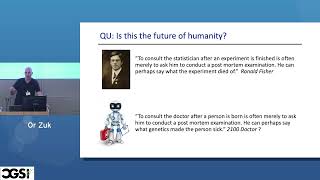
Evaluating the Potential Benefits of Embryo Screening Using Polygenic Scores for Multiple Traits
Explore the potential and limitations of embryo screening using polygenic scores for multiple traits. Analyze ethical considerations and scientific challenges in this emerging field of reproductive genetics.
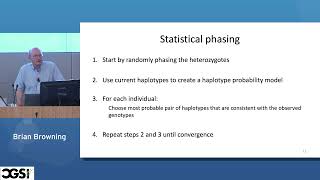
Haplotype Phasing: Methods and Accuracy
Explore haplotype phasing methods and accuracy with Professor Brian Browning. Learn about fast two-stage phasing, integrative estimation, and genotype error impacts on trio-based accuracy.
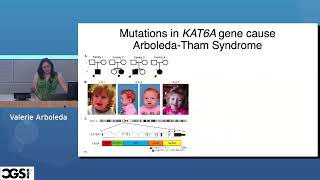
Integration of Monogenic and Common Variants in Human Disease - CGSI 2022
Explore the integration of monogenic and common variants in human disease, focusing on complex traits, congenital heart defects, and the challenges of phenotyping rare diseases.
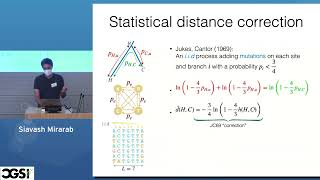
Distance-Based Phylogenetics: Past, Present, and Future - CGSI 2022
Explore distance-based phylogenetics' evolution, from theoretical foundations to cutting-edge applications in ecological sample identification and deep learning for phylogenetic placement.
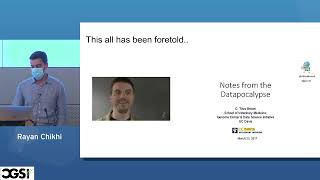
Recent Progress Towards Petabase-Scale Genomics
Explore recent advancements in petabase-scale genomics, focusing on efficient whole-genome assembly techniques and large-scale sequence alignment for viral discovery.

Sardinia Population History and Complex Trait Variation - CGSI 2022
Explore Sardinia's unique genetic history and its impact on complex trait variation, uncovering insights into population dynamics, selection, and disease risk.
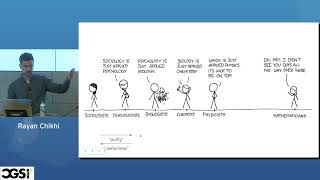
Living in the Future of Genomics
Explore cutting-edge genomics research and its future implications with insights from Rayan Chikhi at the Computational Genomics Summer Institute.
Computational Biomedicine: Epigenetics, Liquid Biopsy, and Alternative Polyadenylation Therapy
Explore computational biomedicine, focusing on epigenetics, liquid biopsy, and alternative polyadenylation therapy. Gain insights into cutting-edge research and applications in genomics and cancer detection.
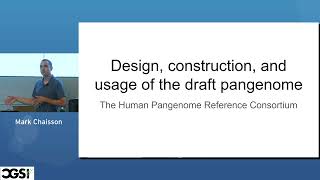
Design, Construction, and Usage of the Draft Pangenome - CGSI 2023
Explore the design, construction, and application of draft pangenomes in genomics. Learn about structural variations, gene expression impacts, and efficient genotyping techniques using cutting-edge pangenome approaches.
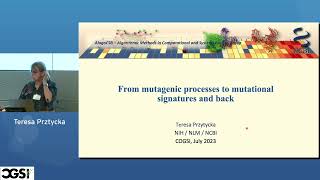
From Mutagenic Processes to Mutational Signatures and Back
Explore mutagenic processes and mutational signatures in cancer genomics. Uncover DNA repair contributions, influence networks, and novel approaches to understanding cancer mutational landscapes.
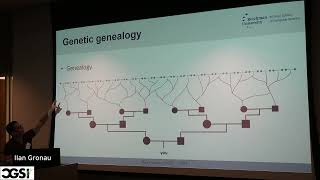
Generating Realistic Chromosome-Scale Simulations for Population Genomics Studies
Explore realistic chromosome-scale simulations for population genomics using advanced tools and techniques. Learn to generate accurate models for genetic studies and research.
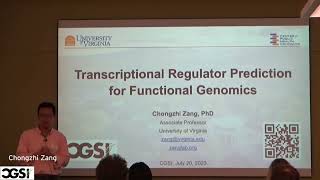
BART: A Transcriptional Regulator Prediction Method for Functional Genomics
Explore BART, a powerful method for predicting transcriptional regulators in functional genomics. Learn its applications, underlying algorithms, and impact on gene regulation research.

SwabSeq: Sequencing-based Detection of Pathogens - CGSI 2023
Explore SwabSeq, a sequencing-based method for detecting pathogens like SARS-CoV-2. Learn about its high-throughput capabilities, lean principles for quality improvement, and applications in COVID-19 testing.
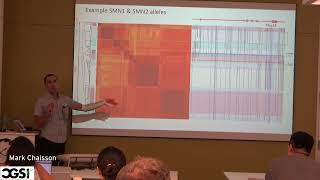
Genotyping Allele-Specific Copy Number Variants Using Pangenomes
Explore allele-specific copy number variant genotyping using pangenomes. Learn advanced techniques for analyzing complex genomic variations in human populations.
Computational Methods for Modeling and Analyzing Epigenomic Data - CGSI 2023
Explore computational methods for modeling and analyzing epigenomic data, focusing on chromatin state discovery, genome annotation, and cross-species conservation in functional genomics.
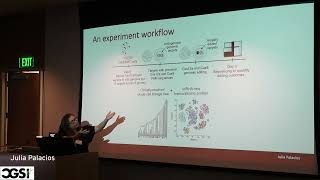
Inference from Single Cell Lineage Tracing Data Generated via Genome Editing
Explore single-cell lineage tracing via genome editing, covering inference methods, design parameters, and data analysis for understanding cellular phylodynamics and evolution.
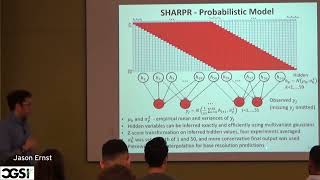
Leveraging High-throughput Functional Characterization Data to Dissect and Annotate Human Regulatory Regions
Explore high-throughput functional characterization techniques for dissecting and annotating human regulatory regions, leveraging advanced genomic mapping and integrative epigenomic approaches.
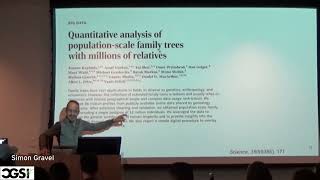
Population Genetics in Large Genealogies
Explore population genetics using large genealogies, focusing on data analysis, relationship inference, and historical insights from Quebec's French Canadian population.
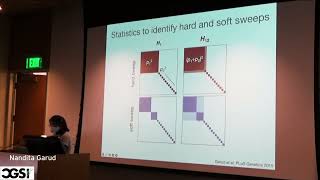
Detection of Hard and Soft Sweeps from Population Genomic Data
Explore detection methods for hard and soft selective sweeps in population genomics, focusing on Drosophila studies and statistical approaches.
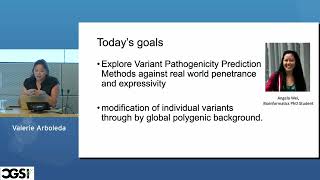
Biobanks from a Pathologist's Viewpoint - CGSI 2023
Explore biobanks from a pathologist's perspective, focusing on genetic disorders, variant classification, and the interplay between monogenic and polygenic factors in disease expression.