The Do's and Don'ts of Error Handling
Explore error handling best practices for fault-tolerant systems, focusing on Erlang principles like "Let It Crash" and concurrent programming techniques for robust software design.
Rethinking Microservices with Stateful Streams
Explore how stateful streams can revolutionize microservices architecture, addressing common challenges and enhancing system scalability, resilience, and performance.
How Google SRE and Developers Work Together
Discover Google's SRE engagement model for building reliable, scalable services. Learn how SREs and developers collaborate to ensure efficiency and maintainability in complex systems.
Stateful and Reactive Stream Processing Applications Without a Database
Explore stateful & reactive stream processing without databases. Learn to architect continuous, reactive applications using modern tech stacks like Kafka Streams, Spring Boot, and more.
Beyond Vim and Emacs - A Scalable UI Paradigm
Explore a scalable UI paradigm that goes beyond traditional text editors, offering insights into innovative interface design for enhanced productivity and user experience.
Working Around the GIL with Asyncio
Explore asyncio and shared memory techniques to overcome GIL limitations, enhancing CPU-intensive data processing performance across macOS and Windows Subsystem for Linux.
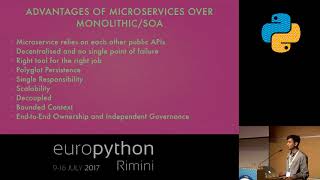
Pythonist View on Microservices & Containerization
Explore microservices and containerization in Python, covering implementation, advantages, Docker usage, CI/CD approaches, and trade-offs for loosely coupled system design and deployment.
One Microservices is No Microservice - They Come in Systems
Explore the challenges and solutions of building microservices-based systems, focusing on distributed systems complexities and a new development approach for creating scalable, flexible JVM microservices.
Monitoring Reactive Applications
Explore monitoring challenges and solutions for reactive applications, including tracing techniques and best practices for cloud-based architectures.
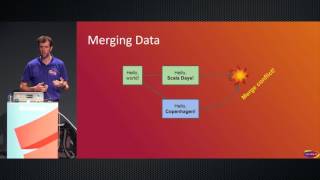
Building High Available Systems with Akka Distributed Data
Learn to build highly available distributed systems using Akka Distributed Data. Explore CRDTs, data replication, and practical implementation with a live demo.
Communicating Sequential Goroutines
Explore communicating sequential goroutines, CSP concepts, and their applications in microservices architecture with Adrian Cockcroft's insightful GopherCon talk.
Because Fuck Photoshop
Explore designing systems in the browser, moving beyond static assets to create evolving, flexible web solutions. Learn efficient workflows, animation libraries, and version control for modern web development.
Stairway to Cloud - Orleans Framework for Building Halo-Scale Systems
Explore the Orleans Framework for building scalable cloud systems, focusing on virtual actors, stateful middle tiers, and its origins in Microsoft Research and game development.
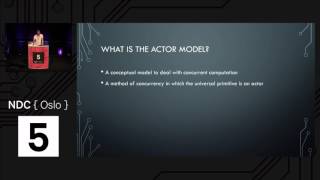
Getting Realtime with Akka.NET, React and Redux
Introduction to actor model for building reactive, scalable systems. Demonstrates Akka.NET backend with ASP.NET Core, React+Redux frontend, and real-time updates using distributed actors, including on Raspberry Pis.
Authorization for Modern Applications
Explore modern application authorization strategies, focusing on separating identity, permissions, and business logic using PolicyServer for scalable and maintainable security architecture.
From Reactive Extensions to Reactive Streams
Explore reactive programming evolution from Rx.NET to reactive streams, focusing on Akka.NET streams implementation and their versatile applications in networking and event sourcing.
Enhancing Gen-AI with Rust - Scalable AI Systems
Explore Rust's potential in building scalable AI systems, focusing on its core features, advantages for AI applications, and future prospects in the field.
A Peek Inside Erlang's OTP
Explore Erlang's OTP framework, its design principles, and behaviors. Learn about process models, pattern matching, and how OTP enhances Erlang for building scalable and fault-tolerant systems.

Elixir - Easy Fun for Busy Developers
Discover Elixir: Ruby-like syntax meets Erlang's power. Learn to build scalable, fault-tolerant systems with a fun, developer-friendly toolset. Ideal for Java programmers seeking robust alternatives.
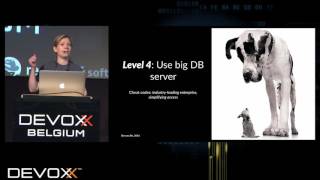
It is Tough to Be an Application in 2016 - Lagom Can Help
Exploring Lagom framework for building scalable, distributed systems that meet modern application demands of high load, real-time performance, and continuous availability.
Business Event-Driven Architecture and Governance in Action
Implement Event-Driven Architecture effectively with a Center of Excellence. Learn from real-life experiences in large industries to set up strong foundations, define designs, and guide development teams.