Go Containerless on Kubernetes with WebAssembly and Rust - Conf42 Rustlang 2024
Explore containerless deployment on Kubernetes using WebAssembly and Rust. Learn advantages, limitations, and practical implementation for efficient, secure application deployment.
Type Safe Data Validation Using Pydantic v2
Master Pydantic v2's new APIs, type system interactions, and Rust-powered internals for robust data validation in Python, including PEP 593 and PEP 695 features.
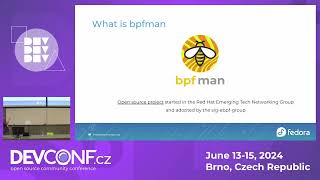
Orchestrating eBPF Programs in Kubernetes
Explore eBPF technology in Kubernetes, focusing on Bpfman for simplified deployment. Learn about practical applications, security considerations, and industry adoption of this revolutionary kernel technology.

Give Rust a Chance for High-Performance Data Processing in Python
Explore high-performance data processing in Python using Rust modules. Create Rust modules with Python bindings and discover why Rust is replacing C in data libraries.

Writing Python like it's Rust - More Robust Code with Type Hints
Leverage Python type hints to create robust, maintainable code with fewer tests. Learn to design APIs that prevent misuse and build trustworthy programs.
Responsive Parallelism with Synchronization
Explore a novel approach combining static and dynamic techniques to prevent priority inversion in concurrent programs using mutexes and condition variables, enhancing responsiveness and efficiency.
Rust on Morello - POCL'24
Explore Rust programming on the Morello architecture, focusing on memory safety and capability-based security features.
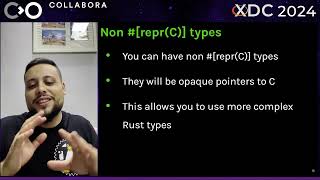
Porting the Nouveau Image Library to Rust - A Practical Rewrite Strategy
Discover practical strategies for integrating Rust with C codebases through a real-world case study of porting the Nouveau Image Library, including interoperability techniques and common pitfall solutions.
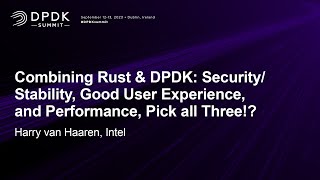
Combining Rust and DPDK: Security, Stability, and Performance Optimization
Explore how Rust APIs can enhance DPDK functionality through improved security, user experience, and performance optimization while processing network packets efficiently.
Python, Rust, and Regexes: A Look Back at Text Parsing
Explore how Sentry combines Python and Rust for efficient text parsing, featuring practical insights and implementation strategies for cross-language development.
Architecting Native Python Extension Modules - Best Practices and Trade-offs
Discover best practices for building high-performance Python extension modules in C, C++, and Rust, focusing on architecture decisions that balance speed, usability, and maintainability.
Sudos and Sudon'ts - Peering Inside Sudo for Windows
Delve into Windows security mechanisms through an analysis of Sudo for Windows, exploring process elevation, ALPC services, and Rust-Windows API interactions while uncovering potential security vulnerabilities.
Atomics and Memory Model for Rust Code in Kernel
Explore atomics and memory models in Rust for kernel development, focusing on implementation challenges and solutions for Linux systems.

Adventure of a Lifetime: Extract Method Refactoring for Rust
Explore automated 'Extract Method' refactoring for Rust, addressing ownership and lifetime challenges through program transformations and repair procedures. Gain insights into advanced code refactoring techniques.

A Grounded Conceptual Model for Ownership Types in Rust
Explore a systematic approach to teaching Rust's ownership types, featuring a new assessment tool, conceptual model, and visualizations to improve learner understanding of memory safety concepts.

Verus: Verifying Rust Programs Using Linear Ghost Types
Explore Verus, an SMT-based tool for formally verifying Rust programs. Learn how it leverages Rust's linear types and borrow checking to prove functional correctness in low-level, high-assurance systems.
Flux: Liquid Types for Rust
Explore Flux, a refined type system for Rust that enhances verification of low-level pointer programs. Learn how it combines logical refinements with Rust's ownership mechanisms for efficient and ergonomic type-based verification.
Suki: Choreographed Distributed Dataflow in Rust
Explore Suki, a Rust DSL for implementing streaming dataflow with explicit compute placement, enabling fine-grained control and global optimization in distributed systems.
RefinedRust: A Type System for High-Assurance Verification of Rust Programs
Explore RefinedRust, a novel type system for verifying both safe and unsafe Rust code. Learn about its implementation, evaluation, and potential impact on high-assurance software development.
Actix-Telepathy: Distributed Actor Programming in Rust
Explore Actix-Telepathy, an extension for Rust's Actix library enabling remote messaging and clustering support for distributed applications using the actor programming model.
Does Rust SPARK Joy? Safe Bindings from Rust to SPARK, Applied to the BBQueue Library
Explore safety guarantees in Rust-SPARK language bindings, focusing on the BBQueue circular buffer library. Learn about maintaining compile-time safety across language boundaries in embedded systems.