Get the Best of Both Worlds - Integrating Rust with Other Languages
Explore techniques for seamlessly integrating Rust with other programming languages, leveraging its performance and safety features while maintaining compatibility with existing codebases.
Decentralized and Stateful Serverless Computing on the Internet Computer Blockchain
Explore the Internet Computer blockchain's innovative approach to decentralized, stateful serverless computing, addressing scalability, persistence, and deterministic scheduling challenges.
Mongrel Monads, Dirty, Dirty, Dirty
Explore advanced error handling techniques in C++, including monadic wrappers, standardization efforts, and a new lightweight solution for unified error management in high-performance applications.
Hacker’s Guide to Web Assembly
Explore WebAssembly's basics, speed advantages, and applications. Learn how to build web apps using C/C++/Rust, with live demos and coding examples for a hands-on understanding of this powerful technology.
Building Modern Native Applications with Gradle
Explore modern native application development using Gradle, covering C/C++, D, Rust, Go, cross-platform builds, and integration with tools like GNU Make, CMake, Doxygen, and Conan.
Three Years of Rust - A Look Around
Comprehensive overview of Rust's evolution, features, and industry adoption. Explores current capabilities, future developments, and changes since its inception.
Anchored Metadata
Explore anchoring techniques for associating metadata with code, separate from source files. Learn about spor, a tool implementing this approach, and its applications in mutation testing.
Lessons Learned From the Rust Ecosystem That Can Be Adopted Elsewhere
Explore Rust's ecosystem and tooling innovations, learning how its user-friendly approach can inspire improvements in other programming languages and development workflows.
A Friendly Introduction to Rust for C++ Developers
Friendly introduction to Rust for C++ developers, highlighting key features, similarities, and differences. Includes code comparisons and insights on memory safety, performance, and low-level control.
Coroutines - C++ vs Rust
Explore the design differences between C++ and Rust coroutines, comparing their implementations, trade-offs, and approaches to asynchronous programming in systems languages.
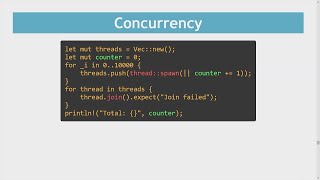
Rust for the Recalcitrant C++ Programmer - ACCU 2023
Comparative exploration of Rust features for C++ programmers, highlighting ownership, type system, immutability, pattern matching, and concurrency, with practical examples and discussions.
Callable Objects in Java, C#, Rust, and C++ - You Are a Parenthesis
Explore callable objects across Java, C#, Rust, and C++, comparing language approaches and introducing a small library change for enhanced functionality in C++.
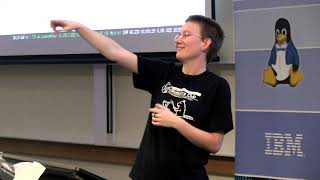
Rust for IOT
Explore Rust for embedded systems: architecture support, paradigm shifts, and techniques for microcontrollers. Survey of outstanding embedded Rust projects in the ecosystem.

Growing TypeScript and Rust
Explore TypeScript and Rust's growth, collaborative design, and open-source project management techniques. Gain insights into successful language development and community-driven innovation.

Securing Container Runtimes - How Hard Can It Be?
Explore container runtime security vulnerabilities, their root causes, and potential solutions through kernel-space and user-space protections, applicable beyond container environments.
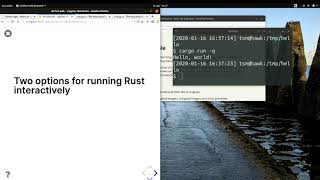
Introduction to Rust - for People Who Have Never Used a Compiler
Practical tutorial on building a command-line utility in Rust, covering language essentials, tooling, and resources for beginners. Suitable for those new to compiled languages.

A Journey to Performance - Using Rust in Mercurial
Explore Rust's impact on Mercurial's performance, focusing on 'hg status' optimization. Learn about interoperability, data structures, and version control internals for significant speed improvements.

Intro to Rust
Explore Rust's unique features, including parallel execution, memory management, and safe concurrency, with insights on its extensibility and community-driven development.
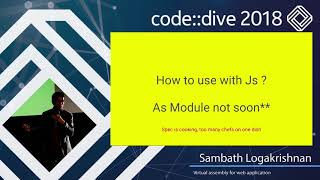
Virtual Assembly for Web Application
Explore WebAssembly's potential to boost web app performance using pre-optimized execution code, LLVM, and languages like C++ or Rust. Learn about DOM access, JavaScript integration, and multithreading in WebAssembly.
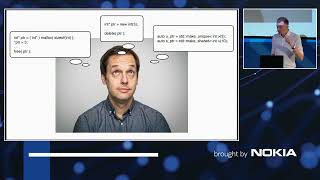
What C and C++ Developers Can Learn from Rust
Explore how Rust's ownership model, memory safety features, and modern practices can enhance C/C++ development, improving code reliability and efficiency.

Rust - Hack Without Fear
Explore Rust's ownership concept, memory safety, and parallelism advantages. Learn how Rust combines low-level control with high-level programming, ensuring thread safety and efficient abstractions.